


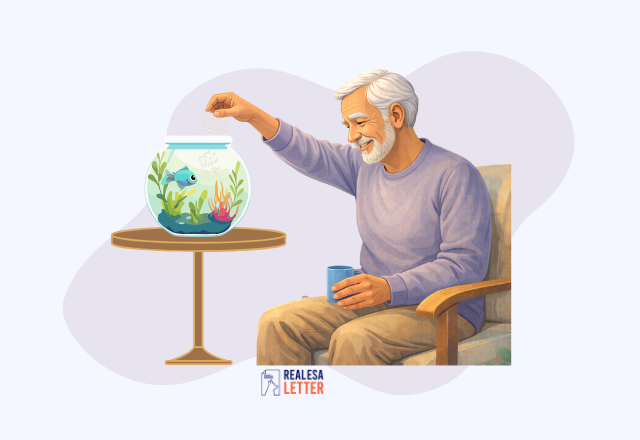
While dogs and cats dominate the ESA conversation, fish are emerging as a surprisingly effective option for mental health support.
Emotional support fish represent a perfect intersection of therapeutic benefits and practical accessibility. For individuals living with anxiety, depression, PTSD, or other mental health conditions who cannot accommodate traditional ESAs due to housing restrictions, allergies, or lifestyle constraints, fish offer a legitimate path to emotional wellness without the demands of higher-maintenance animals.
This guide explores the science, benefits, legal protections, care needs, and documentation for emotional support fish.
What Is an Emotional Support Fish?
An emotional support fish is any fish species recommended by a licensed mental health professional, such as a psychologist, psychiatrist, therapist, or clinical social worker, to provide therapeutic benefits to someone with a diagnosed mental or emotional disability.
The key distinction from service animals is this: emotional support fish don't perform trained tasks. Their value comes from their presence, the quiet rhythm of their movement, the visual calm of a well-kept tank, and the gentle structure that comes with caring for another living thing.
When a licensed provider determines that a fish is necessary for a patient's mental health treatment and issues an ESA letter, that fish gains official legal status as an emotional support animal.
Can Fish Be Emotional Support Animals?
Yes, fish can serve as legitimate Emotional Support Animals (ESAs), and the science backs it up. While they may not cuddle up next to you on the couch, fish offer a unique and genuinely therapeutic form of emotional support that is increasingly recognized by mental health professionals.
Fish are especially well-suited for people who cannot care for high-maintenance animals due to physical limitations, busy schedules, or housing restrictions. Their graceful movements and vibrant colors create a naturally calming environment, while the gentle sound of a running aquarium filter works almost like built-in white noise, quietly reducing stress in the background of your daily life.
Watching fish swim also doubles as an effortless form of mindful meditation. Their rhythmic, flowing motions give your brain a gentle focal point, making it easier to slow down, breathe, and feel more grounded.
For anyone managing anxiety, depression, PTSD, or chronic stress, that kind of low-effort, always-available calm is exactly what daily mental health support looks like.
Are Fish Good Emotional Support Animals?
Yes, and for many people, fish are actually the ideal ESA choice.
What makes them stand out is the combination of genuine therapeutic benefit with minimal day-to-day demands. You feed them, you clean their tank periodically, and that's largely it.
No walks, no training, no worrying about space, noise complaints, or whether your landlord will approve. Fish are welcomed in most housing situations, which means in many cases, you may not even need an ESA letter to keep one.
There's also no limit on how many you can have. Unlike dogs or cats, getting approved for multiple fish is straightforward, so you can build out a full aquarium if that's what gives you the most therapeutic benefit.
Research actually supports this: studies show that tanks with more fish and greater species diversity produce stronger reductions in blood pressure, heart rate, and cortisol levels than tanks with fewer fish.
In short, fish give you real, research-backed emotional support without the lifestyle disruption that comes with most other ESAs. For the right person, that's not a compromise it's the whole point.
The Science-Backed Benefits of Emotional Support Fish
Research into aquarium therapy reveals compelling evidence for fish as legitimate mental health companions. Multiple studies confirm that watching fish produces measurable physiological changes including drops in blood pressure, heart rate, and cortisol levels with effects growing stronger in tanks with greater fish variety and biodiversity.
These aren't just anecdotal claims. From clinical care facilities to personal living rooms, the therapeutic benefits of emotional support fish have been documented across a wide range of conditions and settings.
- Stress and Anxiety Relief
When stress hits, most people reach for a dog or a cat but fish offer something uniquely effective. A study published in the National Library of Medicine found that watching fish can measurably reduce stress, lower blood pressure and heart rate, and decrease cortisol levels in the body.
The mechanism behind this is well understood. Fish movement provides what psychologists call "soft fascination," gentle enough to avoid cognitive overload, engaging enough to pull your mind away from anxious thought loops.
This is the foundation of Attention Restoration Theory, which explains why even a few minutes of aquarium watching can reset an overwhelmed nervous system.
For people managing generalized anxiety disorder, social anxiety, or panic disorder, an ESA fish tank creates a portable calm space that works before guests arrive, during a stressful workday, or right before bed.
- Combating Loneliness and Depression
A single fish swimming in a well-lit tank is often enough to make a room feel less empty. Research shows that fish can provide a genuine sense of companionship comparable in some dimensions to dogs, cats, and other emotional support animals, particularly for people living alone.
Beyond companionship, the act of caring for another living being directly counters the apathy and withdrawal that characterize depression. Feeding your fish, maintaining their tank, and watching them respond to their environment gives you a daily sense of purpose and routine. Mental health professionals consistently identify both as protective factors against depressive episodes.
- Better Sleep and Insomnia Relief
This is one of the most underrated benefits of emotional support fish, and one your bedroom setup can take full advantage of.
Fish tanks produce a soft, consistent sound from the filter and water movement. This functions as natural white noise, helping your brain shift out of an alert state and into the slower rhythms associated with sleep onset.
For people whose insomnia is driven by anxiety, racing thoughts, or hypersensitivity to environmental noise, a fish tank near the bedroom can:
- Mask disruptive sounds like traffic or neighbors
- Signal to the brain that the environment is safe and calm
- Provide a gentle focal point for winding down before sleep
Unlike a white noise app, a fish tank is alive, and that subtle difference matters neurologically (more on that below).
- Low Maintenance, High Return
One barrier that stops many people from getting an ESA is the responsibility. Fish clear that hurdle entirely.
Unlike dogs or cats, an ESA fish doesn't need walks, can't destroy furniture, and won't wake you at 3 AM. You can leave for work, spend a night at a friend's place, or even keep a second tank at your office without logistical stress. This makes fish ideal for:
- People in apartments with pet restrictions
- Those with physical limitations that make caring for active animals difficult
- Anyone whose mental health is already stretched thin and needs support without added pressure
The care commitment, feeding, and periodic tank cleaning are manageable and actually therapeutic in its own right, providing gentle structure to your day.
- Neurological Benefits: Why Your Brain Loves Watching Fish
The calming effect of fish isn't a placebo. It operates through three well-documented neurological pathways:
Attention Restoration Theory (ART): Fish movement engages attention gently, giving your prefrontal cortex — the brain region governing emotional regulation and decision-making — recovery time from chronic stress.
The Biophilia Hypothesis: Humans carry an evolutionary affinity for living things and water sources. Aquariums tap into this ancient wiring, triggering responses your brain associates with safety and sustenance.
Rhythmic Movement and Meditation: The flowing, repetitive motion of fish creates a natural anchor for mindfulness. Observation can induce a light meditative state, quieting the default mode network the brain system responsible for rumination, worry, and anxiety.
- Clinical Applications Across Mental Health Conditions
Mental health professionals increasingly recommend fish as part of structured treatment plans. Current evidence supports their use for:
- Anxiety disorders — routine fish care provides structure; observation offers immediate relief
- Depression — caring for a living being restores purpose and combats apathy
- PTSD — fish offer companionship without triggering hypervigilance
- Autism spectrum disorders — aquariums provide calming sensory input without overstimulation
- Dementia in elderly patients — aquariums in care facilities have been shown to reduce agitation and improve nutritional intake
Preliminary research suggests that interacting with fish in aquariums may benefit well-being, including mood and nutritional intake, though more rigorous studies are needed.
- Nature Access in Urban Environments
For city dwellers with no yard, limited outdoor access, or mobility restrictions, an aquarium functions as a living window to the natural world. Studies on nature exposure consistently show that even simulated or indirect contact with natural environments reduces psychological stress and improves mood.
A fish tank brings a self-contained aquatic ecosystem into any room, delivering the restorative power of nature without requiring you to leave your apartment.
Are Emotional Support Fish Protected by Law?
Yes and understanding your rights is just as important as knowing the benefits. Once a licensed mental health professional issues you an ESA letter, your fish gains official legal status and specific federal protections kick in.
Your Housing Rights Under the Fair Housing Act
The Fair Housing Act (FHA) requires landlords and housing providers to make reasonable accommodations for individuals with documented disabilities. In plain terms: even if your building has a strict "no pets" policy, your landlord must allow your emotional support fish with a valid ESA letter.
This protection matters more than most people realize. According to housing discrimination data, 89% of landlords comply when presented with legitimate documentation from a licensed professional meaning proper paperwork is often all that stands between you and keeping your ESA.
Important exemptions to know:
- Owner-occupied buildings with four or fewer units may not be covered
- Single-family rentals rented without a broker may also be exempt
What About Airlines and Public Spaces?
ESA fish protections are specifically tied to housing they do not extend to airlines or public spaces.
Following 2021 Department of Transportation rule changes, airlines are no longer required to accommodate any emotional support animals in the cabin. Fish were rarely permitted even before this policy change due to practical safety concerns.
Unlike service dogs, ESA fish have no public access rights. You cannot bring your fish into restaurants, stores, or other public spaces under ESA protections.
How to Make Your Fish an Official ESA
The process is straightforward. Your fish becomes a legally recognized ESA when a licensed mental health professional, such as a psychologist, psychiatrist, therapist, or licensed clinical social worker determines that the animal's presence is necessary for your mental health treatment and issues a formal ESA letter.
That single document is what separates a pet fish from a protected emotional support animal under federal law.
What a valid ESA letter must include:
- Provider's license number, type, and state of licensure
- Confirmation of your diagnosed mental or emotional disability
- Statement that the ESA is part of your treatment plan
- Provider's signature and date
⚠️ Be cautious of online services that sell "instant" ESA letters without a genuine clinical evaluation. Housing providers can and do reject fraudulent documentation.
Best Fish Species for Emotional Support
Selecting the right fish species enhances therapeutic benefits while ensuring successful long-term care. The ideal emotional support fish combines visual appeal, appropriate activity level, hardiness, and compatibility with your experience level.
Betta Fish (Siamese Fighting Fish)
Therapeutic Qualities: Bettas display remarkable personality and interactive behavior, often recognizing their owners and swimming to the glass during feeding. Their elaborate fins create mesmerizing movement patterns ideal for meditation and stress reduction.
Care Level: Beginner-friendly
Tank Size: Minimum 5 gallons (despite marketing of smaller containers)
Lifespan: 3-5 years
Temperament: Solitary; males must be housed individually
Mental Health Benefits: The one-on-one bond possible with bettas makes them excellent for individuals needing personal connection without overwhelming social demands. Their responsive behavior provides feedback and interaction that combats feelings of isolation.
Goldfish
Therapeutic Qualities: Goldfish are active, social, and display curiosity toward their environment. Their bright coloring and graceful swimming patterns create visual interest, while their social nature when kept in groups models healthy interaction.
Care Level: Beginner to intermediate
Tank Size: Minimum 20 gallons for fancy varieties; 40+ gallons for common goldfish
Lifespan: 10-20 years with proper care
Temperament: Peaceful and social
Mental Health Benefits: The longevity of goldfish provides stable, long-term companionship. Their social behavior when kept in pairs or groups demonstrates connection without aggression, which can be comforting for individuals processing relationship trauma.
Guppies
Therapeutic Qualities: Guppies' constant activity and vibrant colors provide engaging visual stimulation. Their breeding behavior (they're livebearers) can offer gentle reminders of life cycles and growth.
Care Level: Beginner-friendly
Tank Size: Minimum 10 gallons for a small group
Lifespan: 2-3 years
Temperament: Peaceful community fish
Mental Health Benefits: The lively nature of guppies creates an energized but non-chaotic environment. For individuals with depression, their activity can provide gentle motivation and liveliness without demanding direct interaction.
Tetras (Neon, Cardinal, Ember)
Therapeutic Qualities: Tetras school naturally, creating synchronized swimming patterns that are mesmerizing to observe. Their iridescent coloring catches light beautifully, creating dynamic visual effects.
Care Level: Beginner to intermediate
Tank Size: Minimum 10 gallons (prefer groups of 6+)
Lifespan: 5-10 years
Temperament: Peaceful schooling fish
Mental Health Benefits: The schooling behavior demonstrates cooperation and unity, which can be symbolically meaningful. The gentle requirement to keep them in groups teaches basic community principles without the complexity of human relationships.
Corydoras Catfish
Therapeutic Qualities: These bottom-dwelling fish have endearing personalities and peaceful dispositions. Their constant foraging behavior and occasional "glass surfing" provide entertainment and visual interest at different tank levels.
Care Level: Beginner-friendly
Tank Size: Minimum 10 gallons for a small group
Lifespan: 5-10 years
Temperament: Peaceful and social
Mental Health Benefits: Their gentle scavenging behavior creates a sense of purpose and natural ecosystem balance in the tank. Watching them work together models cooperation and persistence.
Why Fish Excel as Low-Maintenance Emotional Support Animals
Unlike ESA dogs or ESA cats that require considerable living space, an ESA fish adapts to environments ranging from studio apartments to large homes. A basic 10-gallon aquarium occupies approximately 2 square feet of counter space—less room than a microwave.
This spatial efficiency makes fish ideal for:
- Urban apartment dwellers with limited square footage
- Individuals in shared living situations where larger animals might disturb roommates
- People in transitional housing or temporary accommodations
- Those living in senior communities with space restrictions
Allergy-Friendly Companionship
Pet allergies affect an estimated 10–20% of the global population, with cat and dog allergens being the most common triggers. While some people turn to hypoallergenic dogs or hypoallergenic cats to reduce symptoms, these animals can still produce allergens that cause reactions. Fish, by contrast, produce no dander, fur, or airborne allergens, making them an ideal option for individuals who want emotional support animals but suffer from allergies.
For families where some members have allergies, but others need ESA support, fish offer a compromise that provides therapeutic benefits without health consequences.
Minimal Time Commitment
For individuals managing mental health challenges, the time demands of pet care can become overwhelming during difficult periods. Fish require approximately 30 minutes to 1 hour of maintenance weekly—a manageable commitment that provides structure without becoming burdensome.
Daily tasks include:
- Feeding: 2-3 minutes, once or twice daily
- Visual health check: 1-2 minutes while feeding
Weekly tasks include:
- Partial water changes: 15-30 minutes
- Filter maintenance: 5-10 minutes
- Tank cleaning (spot cleaning): 10-15 minutes
Quiet Companionship for Noise-Sensitive Individuals
Fish provide silent companionship, making them ideal for people with noise sensitivities, those working from home, individuals with certain neurological conditions, or anyone living in noise-restricted housing. The gentle hum of a filter motor typically measures around 30-40 decibels, quieter than a refrigerator.
Travel and Flexibility
While travel with fish requires planning, modern automatic feeders can maintain feeding schedules for up to two weeks, and aquarium maintenance can be paused for short periods. This flexibility exceeds that of dogs, which require daily walks and cannot be left alone for extended periods.
Emotional Support Fish Basic Care Requirements
Responsible ownership is part of the therapeutic process. A healthy, thriving fish is a better support animal than a stressed or sick one and the good news is that keeping fish healthy is not complicated. It just requires consistency.
The Right Environment
Everything starts with a stable tank. For most small species, a 10- to 20-gallon aquarium is the right starting point. Bigger tanks aren't just for aesthetics larger water volumes stay chemically stable longer, which means less work for you and less stress for your fish.
Three things your tank cannot go without:
- A filter. This is non-negotiable. A filter removes waste and houses the beneficial bacteria responsible for breaking down toxins through the nitrogen cycle. Without one, ammonia builds up quickly and kills fish within days.
- A heater. Tropical species like bettas, guppies, and tetras need water kept between 75–80°F. Room temperature fluctuates too much to rely on without one.
- A cycling period. Before adding fish, your tank needs 2–4 weeks to establish its bacterial colony. Skipping this is the most common reason new fish die within the first week.
Feeding and Cleaning
Two rules cover 90% of fish care mistakes:
Don't overfeed. It's the single most common cause of fish death. Feed a small pinch of high-quality flake or pellet food once daily your fish should finish it within 60 seconds. Uneaten food sinks, rots, and spikes ammonia levels fast.
Do your weekly water changes. Remove roughly 25% of the tank water every week and replace it with fresh, dechlorinated tap water. This takes less than 15 minutes and prevents the slow buildup of waste compounds that no filter can fully eliminate on its own. It's the most important maintenance habit you can build.
That's largely it. No walks, no grooming appointments, no vet visits for routine care. The time investment is minimal the payoff is not.
What Does It Cost to Get an Emotional Support Fish?
Fish are among the most affordable ESA options available but knowing the real numbers upfront helps you plan without surprises. Here's an honest breakdown of what to expect.
Initial Costs
Tank and Equipment: $170–$300: A complete beginner setup tank, filter, heater, lighting, and basic decorations — typically runs $170–$300 for a 10 to 20-gallon freshwater aquarium. Budget setups can come in lower if you buy secondhand, but cutting corners on filtration or heating is a false economy that leads to sick fish and replacement costs.
Fish: $5–$50+: Common species like bettas and goldfish typically cost $5–$15 at most pet stores. Community fish like guppies, tetras, and mollies fall in a similar range. Rarer or more visually striking species can cost $30–$50 or more per fish, but a beautifully therapeutic tank doesn't require expensive species.
ESA Letter: $149–$199: To make your fish an officially recognized ESA, you need a letter from a licensed mental health professional. Legitimate ESA letters from reputable online providers generally cost $149–$199 and include a clinical assessment and proper documentation. Be cautious of services offering free or heavily discounted letters these are typically fraudulent and will be rejected by landlords.
Monthly Ongoing Costs
Expense | Estimated Monthly Cost |
Fish food | $5–$15 |
Water conditioner & treatments | $5–$15 |
Filter media replacements | $5–$10 |
Electricity (heater, filter, light) | $3–$10 |
Total | ~$18–$50/month |
Monthly costs are genuinely minimal a full month of fish keeping typically runs less than a single dinner out.
Unexpected Costs Worth Knowing
Veterinary care: $50–$100 per visit: Aquatic vets are specialists, and visits are rare but conditions like ich or fin rot do occasionally require treatment. Many fish illnesses can be managed with over-the-counter medications ($10–$20), making vet visits uncommon for routine cases.
Equipment replacement: Heaters and filters don't last forever. Budget roughly $30–$60 every few years for equipment replacement.
Setting Up Your Therapeutic Aquarium: A Mental Health-Focused Approach
Tank Selection and Placement Psychology
Size Considerations: Counterintuitively, larger tanks are easier to maintain due to greater water volume stability. For therapeutic purposes, a 10-20 gallon tank strikes an ideal balance between manageable maintenance and sufficient space for interesting aquascaping.
Placement Strategy: Position your aquarium where you naturally spend reflective time—near a meditation space, beside a reading chair, or visible from your bed if nighttime anxiety is an issue. Research shows that line-of-sight access to nature elements reduces stress by 8-10%.
Avoid placement near:
- High-traffic areas with constant noise and vibration
- Direct sunlight (causes algae growth and temperature fluctuations)
- Heating or cooling vents
- Television speakers or sound systems
Creating a Calming Aquascape
The therapeutic value of fish extends beyond the animals themselves to encompass the entire aquatic environment. Evidence-based aquascaping for mental health emphasizes:
Natural Elements: Incorporate live plants like Java fern, Anubias, or Amazon swords. A 2015 study in the Journal of Physiological Anthropology found that interaction with living plants reduces physiological and psychological stress, with effects compounding when combined with aquatic animal observation.
Complexity and Hiding Spaces: Create visual interest through varied structures while providing security for fish. Proper hiding spots reduce fish stress, which in turn creates calmer, more natural behaviors for observation.
Color Psychology: Blue-tinted backgrounds promote calmness, while natural brown and green tones create connections to nature. Avoid overly bright, artificial colors that may cause visual stress.
Substrate Selection: Natural gravel or sand in earth tones creates a more authentic aquatic environment than neon-colored gravel, enhancing biophilic responses.
Equipment for Low-Maintenance Success
Filtration: Quality filtration reduces maintenance frequency. Hang-on-back filters offer easy access, while canister filters provide superior filtration for larger tanks with less frequent cleaning.
Lighting Timers: Automated lighting maintains consistent day-night cycles for fish health while eliminating another daily task. LED fixtures consume minimal electricity (typically $3-5 annually) and produce less heat than traditional bulbs.
Heaters: Tropical fish require stable temperatures (typically 75-80°F). Modern heaters with thermostats maintain temperature automatically, requiring no daily attention.
Water Testing Kits: API Master Test Kit or similar allows monitoring of ammonia, nitrite, nitrate, and pH levels—critical for early problem detection before fish show stress.
The Nitrogen Cycle: Foundation of Low-Maintenance Care
Understanding the nitrogen cycle is essential for successful long-term fish keeping. This biological process converts toxic fish waste (ammonia) into less harmful compounds through beneficial bacteria.
Cycling a new tank (4-6 weeks before adding fish) establishes these bacterial colonies, creating a self-sustaining ecosystem that requires minimal intervention once established. Many beginners fail by adding fish immediately, leading to water quality problems and stress for both fish and the owner.
Fishless cycling using pure ammonia sources allows the nitrogen cycle to establish without endangering animals, resulting in a stable environment ready to provide therapeutic benefits from day one.
How Fish Care Routines Support Mental Health
The structured routine of fish care provides mental health benefits beyond observation. For individuals with depression, anxiety, or PTSD, establishing consistent, manageable routines creates stability and purpose.
Mindful Feeding Practice
Transform feeding from a task into a therapeutic ritual:
- Preparation: Take three deep breaths before approaching the tank
- Observation: Spend 30 seconds watching fish behavior before feeding
- Intentional feeding: Dispense food slowly, observing individual fish responses
- Gratitude moment: Acknowledge the mutual care relationship
- Post-feeding observation: Watch for 2-3 minutes, noting changes in behavior or appearance
This five-minute practice incorporates mindfulness, attention training, and connection—all evidence-based interventions for mental health.
Weekly Maintenance as Meditation
Water changes and tank cleaning, often viewed as chores, can become meditative practices:
- The rhythmic action of siphoning gravel promotes a flow state
- Focused attention on water chemistry provides present-moment awareness
- Physical engagement with water has documented calming effects
- Visible results (clearer water, happier fish) provide immediate positive feedback
Reframe maintenance as "caring for your care," recognizing that tending your emotional support fish is an act of self-care.
How Emotional Support Fish Compare to Other ESAs
Choosing an emotional support animal is a personal decision — and fish won't be the right answer for everyone. But they are the right answer for more people than most assume. Here's how they stack up against dogs, cats, and other traditional ESAs across the factors that actually matter.
Financial Commitment
Most people underestimate what a dog or cat actually costs. Between adoption fees, routine vet visits, food, grooming, and boarding, traditional ESA owners typically spend $1,000–$3,000 per year and that's without any emergency medical bills.
An ESA fish flips that equation entirely. After the one-time setup investment of $170–$300, ongoing monthly costs rarely exceed $50. Over a single year, the difference between owning an ESA fish and an ESA dog can exceed $2,500.
Mental health support shouldn't come with a financial burden that creates new stress. For anyone on a fixed income, tight budget, or simply prioritizing value, fish win this category without contest.
Time and Lifestyle Impact
Dogs need daily walks, ongoing training, and regular grooming. Cats require less, but still demand consistent attention, litter maintenance, and can't easily be left alone for extended periods. Fish need 30 seconds of feeding per day and a 15–20 minute water change once a week. That's it.
Fish are the only ESA that genuinely adapts to your schedule rather than dictating it. Whether you work long hours, travel occasionally, or simply have limited physical energy, a fish fits into your life without restructuring it.
Housing Compatibility
Dogs and cats face real obstacles in many housing situations breed restrictions, size limits, weight caps, and elevated pet deposits are common barriers even with ESA documentation.
Fish face almost none of these. A 20-gallon tank fits on a desk in the smallest studio apartment. There are no noise complaints, no neighbor concerns, and no landlord objections based on the animal itself. For renters navigating housing restrictions, fish are the path of least resistance.
The Interaction Trade-Off
This is the one area where honesty matters most and where fish genuinely lose ground.
You cannot hold a fish. There's no physical warmth, no response to your voice, no greeting at the door after a hard day. For people who need tactile comfort during a crisis something to hold during a panic attack, a presence that actively responds to them a fish will not deliver that. That's a real limitation worth acknowledging.
What fish offer instead is something quieter: consistent, pressure-free presence. They don't need attention when you're depleted. They don't add demands to days when you're already overwhelmed. For people managing depression, chronic fatigue, sensory sensitivities, or social exhaustion, that kind of low-demand companionship isn't a consolation prize it's precisely what they need.
The bond with a fish is built through observation and care, not physical touch. For the right person, that bond is just as meaningful. It's simply different.
Obtaining an ESA Letter for Your Fish
While fish don't require public accommodation, proper ESA documentation protects your housing rights and validates the therapeutic relationship with your healthcare provider.
Consider obtaining an ESA letter if:
- You live in or are seeking "no pets" housing
- Your landlord has expressed concerns about your fish
- You have multiple tanks or a larger aquarium setup
- You're moving and want to ensure housing accommodation
- Your therapist has recommended aquarium therapy as part of your treatment
The Legitimate ESA Letter Process
Step 1: Establish Care with a Licensed Provider:
Work with a licensed mental health professional (LMHP) in your state—this includes psychiatrists, psychologists, licensed clinical social workers (LCSW), or licensed professional counselors (LPC).
Step 2: Discuss ESA Recommendation:
During treatment sessions, discuss how to ask your doctor for an emotional support animal. Legitimate providers assess whether an ESA is clinically appropriate for your specific mental health needs.
Step 3: Receive Proper Documentation:
A valid ESA letter includes:
- Provider's letterhead with contact information
- Provider's license number and state
- Statement that you have a mental health condition recognized in the DSM-5
- Confirmation that your emotional support fish are part of your treatment plan
- Provider's signature and date
- Renewal date (typically annual)
Common Challenges and Solutions
Challenge: Fish Dying Despite Proper Care
Mental Health Impact: Unexpected fish loss can trigger grief, feelings of inadequacy, or exacerbate depression.
Solutions:
- Test water parameters immediately to identify problems
- Research species-specific needs; ensure compatibility
- Quarantine new fish before adding to the main tank
- Remember that fish lifespan varies; some species naturally live only 2-3 years
- Frame loss as a natural cycle, not personal failure
Therapeutic Reframing: Fish loss, while difficult, can provide opportunities to process grief in a lower-stakes environment, building emotional resilience.
Challenge: Algae Overgrowth
Mental Health Impact: Visual disorder in your therapeutic space can increase anxiety and feelings of being overwhelmed.
Solutions:
- Reduce lighting duration (8 hours maximum)
- Decrease feeding amounts (overfeeding fuels algae)
- Add algae-eating species (nerite snails, otocinclus catfish)
- Perform regular water changes
- Consider live plants that outcompete algae for nutrients
Challenge: Vacation Care
Mental Health Impact: Worry about fish during travel can prevent necessary self-care, such as vacations.
Solutions:
- Automatic feeders for trips up to 2 weeks
- Trusted friend or pet sitter with written instructions
- Vacation feeding blocks (for shorter trips)
- Local aquarium stores often offer fish-sitting services
Planning Tip: Practice using automatic feeders while at home to ensure proper function and feeding amounts.
Challenge: Equipment Failure
Mental Health Impact: Unexpected problems can trigger anxiety, especially if they threaten your fish's wellbeing.
Solutions:
- Keep a backup heater and air pump
- Monitor equipment during daily feeding checks
- Replace mechanical equipment every 3-5 years preventatively
- Consider battery-powered air pumps for power outages
Advanced Therapeutic Activities with Emotional Support Fish
Aquarium Journaling
Combine fish keeping with therapeutic writing by maintaining an aquarium journal:
- Document fish behaviors and personality observations
- Record water parameters and maintenance dates
- Reflect on how tank changes parallel life changes
- Note correlations between your mood and tank observation time
- Track fish growth as a metaphor for personal development
Studies show that expressive writing about pets provides similar mental health benefits to writing about human relationships, with reduced risk of rejection sensitivity.
Photography and Creative Expression
Aquarium photography offers creative engagement with your emotional support fish:
- Smartphone photography requires no special equipment
- Focuses attention and promotes mindfulness
- Creates shareable content for positive social interaction
- Documents fish growth and tank development
- Provides calming activity during high-stress periods
Biophilic Design Integration
Expand therapeutic benefits by integrating your aquarium into broader biophilic design principles:
- Position near natural light (indirect) with plants nearby
- Use natural materials (wood, stone) in surrounding decor
- Create sightlines from multiple room areas
- Incorporate water sounds through open-top tanks or small fountains
- Add living plants around the aquarium space
Research consistently shows that environments incorporating multiple nature elements provide compounding mental health benefits.
In summary, emotional support fish offer an accessible and effective option for individuals seeking mental health support without the demands of traditional ESAs. Their proven therapeutic benefits, combined with low maintenance needs, minimal space requirements, and affordability, make them a practical choice for many people managing anxiety, depression, PTSD, or related conditions.
The calming presence of fish and the meditative nature of watching an aquarium can help reduce stress, promote mindfulness, and establish gentle daily routines. This quiet form of companionship provides emotional stability without overwhelming individuals who may already feel emotionally or physically taxed, making fish a uniquely supportive option.
As awareness grows around the diverse forms emotional support can take, fish are increasingly recognized as legitimate therapeutic companions. If you’re considering an emotional support fish for housing accommodations, consult with a licensed mental health professional to determine whether this option fits your treatment plan.
Many people also ask where can I get an ESA letter online — reputable platforms like RealESALetter.com connect you with licensed providers who can conduct proper evaluations and issue legally compliant ESA letters that support both your wellness goals and housing needs.
Frequently Asked Questions
Can fish really help with anxiety and depression?

Yes, scientific research confirms that fish observation reduces anxiety symptoms and improves mood. Studies show measurable decreases in heart rate and blood pressure within minutes of aquarium observation.
The combination of visual stimulation, routine care, and biophilic connection creates multiple therapeutic pathways. Fish are particularly effective for individuals who experience social anxiety with traditional pets like dogs that require public interaction.
Do I need an ESA letter for my fish?
You only need an ESA letter if you live in housing with pet restrictions and want legal protection for your fish under the Fair Housing Act. If your landlord already allows fish or you own your home, an ESA letter isn't necessary for the therapeutic benefits.
However, documentation can be valuable if you're moving to new housing or have multiple tanks that might otherwise violate pet policies.
What is the lowest maintenance fish for beginners?
Betta fish are often considered the lowest maintenance option for beginners, requiring only a 5-gallon tank, weekly partial water changes, and daily feeding. However, goldfish in appropriately sized tanks (20+ gallons) are extremely hardy and forgiving of beginner mistakes.
For community tanks, white cloud mountain minnows tolerate temperature fluctuations and water chemistry variations better than most species, making them excellent starter fish.
How much does it cost to keep emotional support fish?
Initial setup costs range from $100-300 for a complete beginner system (tank, filter, heater, decorations, and fish). Ongoing monthly costs typically run $15-40, including food, water conditioner, and electricity.
Annual costs average $200-500, significantly less than traditional ESA animals. The most cost-effective approach uses larger tanks (20+ gallons), which remain stable longer and require less frequent intervention. Costs vary widely based on location, pet size, and individual needs.
How long do emotional support fish live?
Lifespan varies dramatically by species: bettas live 3-5 years, goldfish 10-20+ years with proper care, guppies 2-3 years, and tetras 5-10 years. Longer-lived species provide more extended companionship but require greater commitment.
The predictable lifespan of fish (unlike the uncertainty with rescue dogs or cats) can actually provide comfort for individuals who struggle with unpredictability.

WRITTEN BY
Dr. Avery Langston
Dr. Avery Langston is a licensed clinical therapist with more than 12 years of professional experience in emotional support animal (ESA) assessments, mental health counseling, and evidence-based therapeutic interventions. With a strong foundation in clinical psychology and a passion for mental-health education, Avery has guided thousands of individuals through the ESA qualification process while promoting emotional healing and stability. As a senior content contributor for RealESALetter.com, Avery focuses on writing accurate, accessible, and legally informed articles on ESA rights, housing protections, and mental wellness. Her mission is to help readers understand their ESA benefits clearly and confidently, backed by real clinical expertise.

Share this Article