Sign In / Create Account
How to Get an Emotional Support Animal?
To get an Emotional Support Animal (ESA), you must qualify through a licensed mental health professional and receive a legitimate ESA letter. This letter may provide Fair Housing Act protections, including waived pet fees, but it does not grant public access rights.

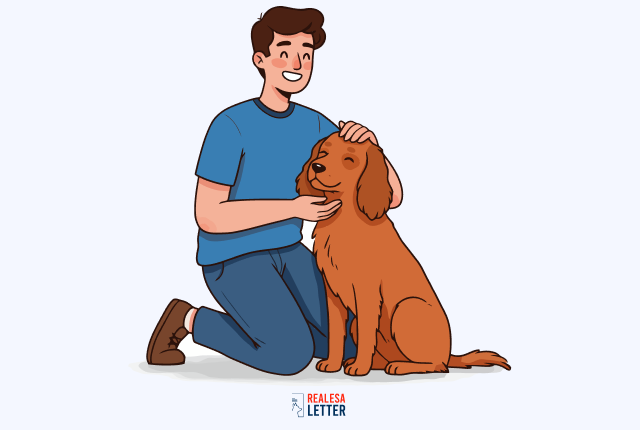
The ESA letter itself is the only documentation you need, and it must come from a verified licensed provider who has genuinely evaluated your situation. Any website or service claiming to offer official ESA registration or instant certification without a real clinical assessment is not a legitimate source.
Now, let's walk through each step of the process to help you successfully obtain your ESA, the responsibilities of the ESA owner, and how to get its prescription.
Key Takeaways
Start With a Real Evaluation: A therapist licensed in your state must assess you. The visit can happen in person or by video.
What the Letter Must Show: It needs the provider's name, license number, license state, and issue date. It must also confirm your need.
Five States Want 30 Days First: California, Montana, Arkansas, Iowa, and Louisiana require a 30-day relationship with your provider.
Price and Wait Time: Real letters cost $150 to $600. Delivery takes 24 hours to 30 days. Anything under $50 is likely a scam.
HUD Changed Course on May 22, 2026: Federal complaints now follow the ADA trained-task test. State laws in California, New York, Florida, and Illinois still protect ESAs.
You Can Still Sue: The Fair Housing Act was never changed. You have about two years to file a private claim.
Housing Rights Only: Your letter waives no-pet rules and pet fees. It gives no access to work, school, stores, or planes.
Owner Duties Apply: Keep the animal vaccinated, house-trained, and quiet. Bad behavior can get it removed.
Many Animals Qualify: Dogs, cats, rabbits, and birds all count. You can use a pet you already have.
What Are the Steps to Get an Emotional Support Animal
The process involves four critical stages that work together to establish legitimate ESA status. Each step builds on the previous one, ensuring you have both the medical foundation and legal protection you need. Skipping or rushing any stage can result in denied housing accommodations or invalid documentation.
Follow these steps carefully to navigate the system correctly.
Obtain a Licensed Provider Assessment
Meet with a licensed therapist, psychiatrist, counselor, or doctor to discuss your mental health condition and whether an ESA would benefit you. Your appointment can be conducted in-person or via telehealth, making it accessible regardless of location.
Important State Requirements: Five states (California, Montana, Arkansas, Iowa, and Louisiana) require a minimum 30-day relationship with your provider before they can issue an ESA letter. This ensures the provider has adequate time to properly evaluate your condition and determine if an ESA is appropriate for your situation.
The evaluation establishes the foundation for your entire ESA qualification and ensures you receive legitimate support rather than relying on fraudulent documentation.
Get Valid ESA Documentation
Your licensed provider will issue an official ESA letter on their letterhead. It must include their name, license number, state of licensure, date issued, and confirmation of your disability-related need for an emotional support animal.
Cost & Timeline:
- Cost: $150 – $600
- Timeline: 24 hours to 30+ days (varies by state requirements)
This official letter is your legal proof that your animal qualifies as an ESA. Use it when dealing with landlords, housing authorities, or other relevant parties.
Every RealESALetter.com letter is issued on the clinician's letterhead and includes their state license number, license type, issue date, and direct contact information, so a housing provider can verify it under the Fair Housing Act.
Understand the 2026 Housing Rule Change (ESA vs. PSD)
An emotional support animal provides comfort through its presence and is not required to have any special training. The Fair Housing Act's reasonable-accommodation provision has never contained a training requirement.
What changed is enforcement, not the law. On May 22, 2026, HUD's Office of Fair Housing and Equal Opportunity (FHEO) issued guidance stating it will assess assistance-animal complaints using the Americans with Disabilities Act standard, an animal "individually trained to do work or perform tasks." In practice, FHEO will generally not pursue federal complaints involving untrained, comfort-only ESAs.
Three things did not change:
- The Fair Housing Act itself was not amended, and it still prohibits treating a documented assistance animal as a pet.
- You keep a private right of action; you can still file suit in federal or state court, generally within two years.
- State and local laws are unaffected. Many states, including California, New York, Florida, and Illinois, protect ESAs in housing regardless of the federal change. Check your state's rules.
If your animal is trained to perform a specific disability-related task (for example, deep pressure therapy or interrupting a panic episode), it may qualify as a psychiatric service dog (PSD), which is protected in both housing and public places. Compare the two options before you decide.
Eligible animals: emotional support dogs, cats, rabbits, birds, and other domesticated animals can serve as ESAs. You can keep a pet you already own, adopt from a shelter, or get a new one.
Understand Your Fair Housing Rights
Present your ESA letter to your landlord as a reasonable-accommodation request under the Fair Housing Act. With valid documentation, housing providers are generally required to allow your ESA in no-pet housing and waive pet fees and deposits. After HUD's May 2026 guidance, federal enforcement is strongest where the animal performs a trained task; your statutory rights and state-law protections still apply otherwise (see the 2026 housing rule change above).
Response Timeline: Expect a response within 10 business days.
Important note (2026): After HUD's May 2026 guidance, FHEO generally will not pursue a federal complaint for an untrained ESA. That does not strip your rights; the Fair Housing Act still applies, many states protect ESAs independently, and you can pursue a private claim.
A valid letter from a licensed provider remains your key documentation, and a PSD offers stronger, portable protection if your animal performs a trained task.
How to Get an Emotional Support Animal Prescription?
To get an emotional support animal (ESA) prescription, you need an official ESA letter from a licensed mental health professional (LMHP), therapist, psychiatrist, or healthcare provider who is licensed in your state and who has evaluated your condition directly.
This letter serves as the legal prescription, verifying you have a qualifying mental health condition, and that an emotional support animal is a recommended part of your treatment plan.
An ESA prescription is the formal documentation that legally establishes your need for an emotional support animal and supports your housing rights under the Fair Housing Act. (Federal enforcement narrowed for untrained ESAs in May 2026; see the section above.)
Important Things to Avoid When Getting an ESA Prescription
Avoid websites claiming to offer "official" ESA certificates or registrations, or those selling letters without a real evaluation. There is no national ESA registry recognized by law, and websites selling generic ESA IDs, certificates, or registry numbers have no legal validity. Since HUD's May 2026 guidance, a letter from a provider who never genuinely evaluated you is also weaker if a housing dispute arises.
The only legitimate document is an ESA letter from a licensed mental health professional who has directly evaluated your condition.
Avoid the misconception that ESAs have public access rights. Emotional support animals are not service animals under the ADA and cannot accompany you in restaurants, stores, or on airplanes.
Avoid providers who issue a letter without a real consultation. A legitimate provider must evaluate your condition through a genuine appointment, in person or by telehealth, before issuing any letter.
Avoid paying excessive fees. Legitimate providers generally charge $150 – $600; extremely cheap letters (under $50) often indicate fraudulent services that won't hold up.
Understand the difference between an ESA and a psychiatric service dog. An ESA provides comfort and needs no special training. A PSD is individually trained to perform a disability-related task and is protected in both housing and public places. After HUD's May 2026 guidance, federal enforcement narrowed for untrained ESAs, but the Fair Housing Act, private lawsuits, and state protections still apply, and a PSD is the more portable option if your animal performs a trained task.
What Are the Responsibilities of an ESA Owner?
ESA owners have real responsibilities. You are legally responsible for your animal's health, hygiene, and behavior, and ESA rights are limited to housing only (no public access). After HUD's May 2026 guidance, federal enforcement narrowed for untrained ESAs, but the Fair Housing Act, private lawsuits, and state protections still apply (see the 2026 housing rule change above).
Your Daily Care Responsibilities
As an emotional support animal owner, you have specific legal and ethical obligations:
- Maintain proper hygiene and grooming of your emotional support animal
- Keep your animal vaccinated against common diseases (required by law)
- Ensure your animal is house-trained and does not damage the rental property
- Control your animal's behavior so it doesn't disturb neighbors or create noise complaints
- Take your animal to veterinary appointments for regular health maintenance
- Keep your ESA documentation current (renew the letter if a landlord or provider requests it)
- Pay for any repairs or damages caused by your animal
- Report changes in your mental health condition to your provider that might affect your ESA need
What Happens If Your ESA Misbehaves
While your landlord must accommodate your ESA under the Fair Housing Act, this protection has limits. Your animal is still required to follow standard rental agreement expectations.
If your ESA shows aggressive behavior toward residents or guests, your landlord may require the animal to be removed from the property. The same may apply if your ESA causes repeated property damage or creates excessive noise disturbances.
Your landlord may also take action if the animal interferes with other residents' peaceful enjoyment of their homes. Additionally, if your ESA injures someone or poses a direct threat to the health and safety of others, it may be removed despite having a valid ESA letter.
What Your ESA Needs
- An ESA letter from a licensed mental health professional who has evaluated your condition
- Appropriate behavioral control in your unit and common areas
- Current vaccinations and regular veterinary care
Where federal enforcement is limited: after HUD's May 2026 guidance, FHEO generally will not pursue a federal complaint for an untrained, comfort-only ESA. Your statutory rights, private lawsuits, and state-law protections remain, and a trained psychiatric service dog carries the strongest, portable protection.
Keeping Your ESA Letter Current
While there is no federal requirement to renew your ESA letter, many housing situations require updated documentation. If you move to a new apartment or house, your new landlord may request a current ESA letter. Some landlords ask for renewals every year or every few years to confirm your continued need for the animal. Contact your licensed mental health provider to renew your ESA letter if your landlord or a new housing provider requests it.
Your Responsibility: Understanding ESA Limitations
Your ESA letter grants you housing protections only. It does NOT give you:
- Permission to take your animal to work, school, or public businesses
- Public access rights like service animals have
- Exemption from standard pet behavior expectations in your home
- Any rights beyond housing covered under Fair Housing Act
Understanding these boundaries is part of responsible ESA ownership.
Why You Need an ESA Letter
Without official documentation your animal is legally treated as a regular pet with no special protections or accommodations. An ESA letter serves as a formal recommendation from a licensed mental health professional establishing your need for an emotional support animal as part of your treatment or care plan.
RealESALetter.com connects you with a licensed mental health professional in your state who can evaluate your condition and issue an ESA letter.
What an ESA Letter Does for You:
- Housing Protection:
Under the Fair Housing Act, landlords and university housing providers are required to waive no-pet policies and cannot charge you pet deposits or monthly pet rent. This applies to most rental housing, including apartments, condos, and student dormitories, giving you the right to live with your support animal without facing additional financial burdens.
- Proof of Legitimacy:
The letter demonstrates to property managers and housing authorities that your animal serves a genuine therapeutic purpose for a diagnosed mental or emotional condition. It establishes that your need is medically recognized and not simply a personal preference.
- Travel Consideration:
Although ESAs no longer hold federal flight protections within the US, certain international airlines policies may still honor an ESA letter voluntarily. It is always recommended to contact your airline in advance to understand their specific policies before traveling with your support animal.
To be legally recognized the letter must be written on official letterhead and signed by a licensed mental health professional or doctor who holds an active license in your state. It should clearly state your diagnosis your need for an ESA and the provider's license number and contact information. Most letters require annual renewal to remain valid for housing purposes.
Ready to start? Connect with a licensed mental health professional who can evaluate your condition and issue your ESA letter. Begin your evaluation.
Frequently Asked Questions
Does insurance cover emotional support animals?

Health insurance generally does not cover an ESA or the cost of an ESA letter, though you may be able to use HSA or FSA funds for a licensed provider's evaluation.
Separately, renters' or homeowners liability insurance may cover injury or property damage caused by your animal, but coverage varies by policy and some insurers exclude certain breeds. Check your specific policy.
How long does it take to get an emotional support animal?
Getting an ESA letter takes 24 hours to 5 business days with most online providers; the variation depends on your state's requirements and whether a 30-day provider relationship is required (California, Montana, Arkansas, Iowa, and Louisiana). Finding and adopting the animal itself can add additional time if you don't already own a pet.
How to get an emotional support cat?
Other than dogs, cats also make great emotional support animals. They make great pets and ESAs for people who are looking for a little independent animal. However, to qualify your cat as an emotional support cat, you follow the same process.
- Ask the therapist to check your symptoms
- Talk about your condition and how the cat will be useful for you
- Take any tests, online or in-person
- Get the letter, if cleared
The process to get an emotional support cat is simple, and you will not have to go through a lengthy process for it.
How to get an emotional support animal without a doctor?
You don't need a doctor; you need a licensed mental health professional (therapist, psychiatrist, counselor, LCSW, LMFT, LPC). Your primary care doctor can write an ESA letter if they have mental health credentials, but most people get letters from mental health specialists instead. The key is that your provider must be licensed in your state.
How to get an emotional support animal registered?
There is no official ESA registry. Websites selling ESA registrations, certificates, or ID cards are scams with no legal value. The only legitimate document you need is an ESA letter from a licensed mental health professional. Do not waste money on fake registry services.
How to get an emotional support animal certificate?
There is no such thing as an ESA certificate. Websites selling certificates are fraudulent. The only legitimate document is an ESA letter from a licensed mental health professional on official letterhead. Do not pay for fake ESA certificates, registrations, or ID cards; they hold zero legal weight.
How do I get my pet emotional support animal approved?
To get your pet approved as an Emotional Support Animal (ESA), consult a licensed mental health professional about your mental health condition and whether an ESA is right for you.
If approved, they will issue an official ESA letter establishing your disability-related need. No registration, certificate, or training is required for an ESA. If your animal performs a trained disability-related task, ask about a psychiatric service dog instead, which carries stronger, portable protection.
How to get an emotional support animal online?
You can complete the entire process online. A licensed provider can evaluate you by telehealth and, if appropriate, issue your ESA letter electronically, usually within a few business days. Telehealth evaluations are valid as long as the provider is licensed in your state and conducts a genuine assessment.
Harper Jefcoat is a content writer with 10+ years of experience covering ESA laws, mental wellness, and emotional support animal benefits. As a blog author for RealESALetter, he educates readers on ESA regulations and promotes ethical documentation practices.

Precious Lester is a licensed mental health counselor and qualified supervisor licensed by the Florida Board of Clinical Social Work, Marriage and Family Therapy and Mental Health Counseling, with active licenses across 21 states.

Don't worry. Your pet stays with you.
Housing law is on your side
- 1A few questions. That's your paperwork
- 2A licensed therapist reviews your case
- 3Official ESA letter, ready to send
Not accepted? Full refund, guaranteed