Sign In / Create Account
Emotional Support Dog Breeds for ADHD - A Complete List
The right dog depends on which ADHD presentation you have. Hyperactive presentations do best with a high-energy dog that matches your pace, like a Labrador or Golden Retriever. Inattentive presentations do better with a low-demand companion, like a Cavalier King Charles Spaniel. Combined presentations need an adaptable breed, such as a Standard Poodle.

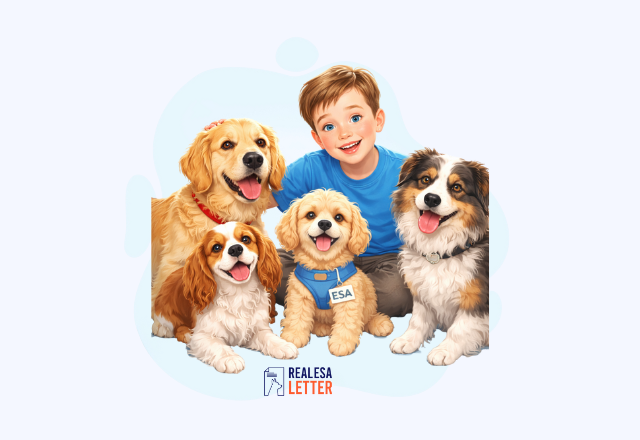
Legally, any dog breed can qualify as an ESA because emotional support animals do not require specialized task training. However, choosing a breed with a stable temperament can provide greater emotional support and help create routine, improve focus, and manage ADHD-related challenges.
Let's explore which dog breeds are best for ADHD, how to choose the right match, and how to qualify for a legitimate ESA letter.
Key Takeaways
- Temperament Beats Breed: The best ESA dogs for ADHD are calm, emotionally sensitive, and bond closely with their owner.
- Match Your Presentation: Hyperactive suits high-energy Labs and Goldens. Inattentive suits low-demand Cavaliers. Combined suits adaptable Goldens and Poodles.
- Twelve Recommended Breeds: Labrador, Golden Retriever, Cavalier King Charles Spaniel, Poodle, German Shepherd, Doodles, Beagle, Boxer, Corgi, Bernese Mountain Dog, English Spaniel, and rescue or mixed breeds.
- Small-Space Picks: Cavaliers, Beagles, Corgis, and Miniature Poodles suit apartments. Labs, Goldens, and Standard Poodles adapt with committed daily exercise.
- Allergy-Friendly Choices: Poodles and Doodles are low-shedding. Both need professional grooming every 4 to 8 weeks.
- Three Ways Dogs Help ADHD: They build external structure, provide dopamine-seeking stimulation, and ground emotional dysregulation.
- Costs Run $850 to $2,400 a Year: Cavaliers are the cheapest to keep. Standard Poodles are the most expensive, mostly on grooming.
- Rescue Is a Real Option: Adoption fees run $50 to $200 against $800 to $2,000 from a breeder.
- Plan for the Long Term: Match grooming, exercise, and size to what you can handle for the dog's whole life.
- The Letter Comes Last: After choosing your dog, get an ESA letter from a licensed provider to protect your housing.
Can You Get an ESA for ADHD?
Yes. ADHD qualifies as a disability under the Fair Housing Act (42 U.S.C. § 3604) when a licensed mental health professional confirms that your ADHD materially limits major life activities.
A legit ESA letter from a clinician documents this link between your disability and your dog's therapeutic benefit, protecting you from breed restrictions and pet fees in housing. Unlike service dogs (which require task training), ESAs need no formal training.
Your dog's emotional support alone qualifies. The process for getting an ESA letter takes only 24 hours through the RealESALetter.com evaluation process. Once you have your letter and have selected your breed, your housing protections are immediate.
Which Dog Breeds Work Best for ADHD?
Four breeds consistently stand out for ADHD support, each with distinct strengths. Labrador Retrievers excel at building routine and emotional regulation through their structure-loving nature.
Golden Retrievers offer patient adaptability across all ADHD presentations. Cavalier King Charles Spaniels provide emotional companionship without demanding intensive management. Standard Poodles deliver trainable intelligence and flexible engagement.
1. Labrador Retrievers: Routine Builders and Emotion Regulators
Why they excel for ADHD: Labs were originally bred as water retrievers in cold Newfoundland climates, a role requiring intense focus, routine responsiveness to handler cues, and patience through repetitive retrieves. This genetic history explains their modern structure-seeking nature and routine tolerance.
Labs thrive on routine and structure, which mirrors what most people with ADHD need to manage their symptoms effectively. Their natural intelligence allows them to learn task-based cues: alerting when you've forgotten medication, encouraging physical movement during hyperfocus sessions, or providing grounding through sustained physical contact during anxiety or emotional dysregulation.
Temperament highlights: Loyal, food-motivated, eager-to-please, responsive to routine, emotionally intuitive, affectionate.
Energy level: High. Require 60-90 minutes of daily exercise. Thrive with structured outdoor access and consistent activity.
Care requirements: Moderate grooming ($100-200/year), vet costs ($400-600/year), food costs ($600-900/year). Training investment recommended for task-based behavior.
Best for: Hyperactive ADHD; those needing high external structure; households with outdoor space or commitment to daily walks; anyone seeking a routine-building companion.
2. Golden Retrievers: Patient Adaptability and Consistent Presence
Why they excel for ADHD: Bred alongside Labradors but refined for hunting game birds with a softer mouth, Goldens developed exceptional patience and a naturally gentle disposition. This breeding history created dogs capable of waiting calmly through long hunts without becoming frustrated or reactive.
Goldens sense emotional distress and respond with non-judgmental presence, which is deeply supportive for people managing ADHD-related emotional dysregulation.
They're highly adaptable across ADHD presentations, working beautifully for hyperactive presentations while their calm demeanor also suits inattentive and combined ADHD.
Temperament highlights: Patient, gentle, emotionally intuitive, non-judgmental, affectionate, naturally social, adaptable.
Energy level: High-moderate. Require 45-60 minutes daily exercise. Can adapt to apartment living with consistent walks, though they thrive with regular outdoor access.
Care requirements: Moderate grooming ($150-300/year), vet costs ($400-600/year), food costs ($600-900/year). Intelligence allows learning routines without constant reinforcement.
Best for: All ADHD presentations (hyperactive, inattentive, combined); families or social households; those seeking adaptability without extreme energy demands; situations requiring multi-environment support.
3. Cavalier King Charles Spaniels: Companion Focus and Low-Energy Support
Why they excel for ADHD: Cavaliers are fundamentally companion dogs bred to provide comforting presence. They excel at emotional grounding, offering uncomplicated emotional support without demanding intensive management.
For people with ADHD who struggle with shame, rejection sensitivity, or emotional overwhelm, a Cavalier's non-judgmental, persistent affection can be transformative.
They're highly perceptive to mood shifts and respond by offering their presence exactly when needed. Their low exercise demands make them ideal when executive dysfunction makes high-maintenance pets feel overwhelming.
Temperament highlights: Gentle, affectionate, non-judgmental, emotionally perceptive, adaptable, low-demand, companion-focused.
Energy level: Low. Require 20-30 minutes daily exercise. Content to rest nearby during hyperfocus or low-energy ADHD phases without demanding engagement.
Care requirements: Regular grooming (monthly, $150-250/year), vet costs higher than size suggests ($300-500/year) due to breed health predispositions, food costs ($400-600/year). Lower training demands than Labs or Poodles.
Best for: Inattentive ADHD; small living spaces (apartments, studios); those managing with medication/therapy rather than external dog-enforced structure; anyone prioritizing emotional grounding over behavioral structure.
4. Poodles (Standard and Miniature): Trainable Intelligence and Flexibility
Why they excel for ADHD: Standard Poodles are often overlooked in ESA discussions despite being highly trainable, intelligent, and emotionally intuitive. Poodles bond intensely with their owners and are remarkably responsive to behavioral cues, they notice when you're struggling and adjust their behavior accordingly.
Unlike breeds that respond only to explicit commands, Poodles seem to read your emotional state and act autonomously to provide support. This intelligent responsiveness makes them excellent for ADHD adults who benefit from mental engagement and problem-solving alongside emotional support.
Temperament highlights: Intelligent, emotionally intuitive, adaptable, responsive to emotional cues, eager-to-please, low-shedding, playful.
Energy level: Moderate-high. Require 45-60 minutes daily mental and physical exercise. Mental stimulation (puzzle toys, training, varied walks) is as important as physical activity.
Care requirements: Professional grooming every 4-8 weeks ($500-1,000/year, highest of recommended breeds), vet costs ($400-600/year), food costs ($500-800/year). Training investment beneficial and often enjoyable for ADHD minds.
Best for: Those seeking intelligent engagement alongside emotional support; ADHD adults who channel hyperfocus into dog training; allergy-sensitive households (low-shedding); anyone wanting mental stimulation as part of their ESA relationship.
What Are the Other Recommended ESA Breeds for ADHD?
While Labs, Goldens, Cavaliers, and Poodles are the top tier for ADHD support, several other breeds offer strong ESA potential depending on your lifestyle and specific needs.
5. German Shepherds
Why they excel for ADHD: German Shepherds provide alert, protective presence that grounds anxiety-prone ADHD. Their intelligence rivals Poodles, enabling quick learning of routines and cues.
Temperament highlights: Loyal, protective, responsive to handler emotions, naturally alert.
Energy level: High. Require 60-90 minutes of daily exercise and mental stimulation.
Care requirements: Consistent training, regular grooming (monthly), moderate vet costs ($400-600/year).
Best for: Hyperactive ADHD with secondary anxiety; adults needing alert companion; experience with larger dogs.
6. Doodle Breeds (Labradoodle, Goldendoodle, Cockapoo)
Why they excel for ADHD: Doodles combine retriever or spaniel warmth with poodle intelligence and hypoallergenic coats. Adaptable across ADHD presentations and living situations.
Temperament highlights: Friendly, intelligent, eager-to-please, playful.
Energy level: Moderate to high (varies by individual). Range from 30-90 minutes daily exercise depending on size.
Care requirements: Professional grooming every 6-8 weeks ($500-800/year), training beneficial.
Best for: Allergy-sensitive households; flexible energy requirements; those prioritizing low-shedding coats.
7. Beagles
Why they excel for ADHD: Small size suits tight apartments. Food motivation makes training straightforward. Pack instinct creates natural routine-seeking.
Temperament highlights: Curious, food-driven, pack-oriented, affectionate.
Energy level: Moderate. Require 30-45 minutes daily exercise.
Care requirements: Regular grooming (monthly), moderate vet costs ($300-500/year). Prone to weight gain if overfed as reward.
Best for: Inattentive ADHD in small spaces; those seeking easy-to-train companion; apartment living.
8. Boxers
Why they excel for ADHD: Boxers bond intensely and are intuitive to owner emotions. Their goofy, playful energy lifts mood during ADHD-related depression without extreme hyperactivity.
Temperament highlights: Loyal, playful, affectionate, protective, intuitive.
Energy level: Moderate-high. Require 45-60 minutes daily exercise.
Care requirements: Minimal grooming, moderate vet costs ($400-600/year). Can overheat in warm climates.
Best for: Hyperactive ADHD with emotional dysregulation; those seeking playful, affectionate presence.
9. Corgis
Why they excel for ADHD: Compact size suits apartments. Herding heritage creates structure-seeking and routine responsiveness despite small stature.
Temperament highlights: Intelligent, stubborn, engaging, loyal, quirky.
Energy level: Moderate. Require 30-45 minutes daily exercise.
Care requirements: Regular grooming (monthly), moderate shedding, vet costs ($350-550/year).
Best for: Inattentive ADHD in small spaces; preference for clever, engaging personality; those appreciating independent streak.
10. Bernese Mountain Dogs
Why they excel for ADHD: Large but calm-natured, providing physical and emotional grounding. Patient presence mirrors Cavaliers with added size-based comfort.
Temperament highlights: Calm, patient, loyal, protective, gentle despite size.
Energy level: Low-moderate. Require 30-45 minutes daily exercise. Prefer cooler climates.
Care requirements: Regular grooming, heavy shedding, higher vet costs ($450-700/year) due to size.
Best for: Combined ADHD with anxiety; need for calm, large physical presence; those in cooler climates.
11. English Spaniels (Cocker and Springer)
Why they excel for ADHD: Moderate intelligence makes training accessible without overwhelming. Soft temperament provides non-judgmental presence. Eager nature encourages routine engagement.
Temperament highlights: Gentle, eager-to-please, affectionate, responsive, soft-mouthed.
Energy level: Moderate. Require 45-60 minutes daily exercise.
Care requirements: Regular grooming (every 6 weeks), moderate vet costs ($350-550/year), ear cleaning important.
Best for: Inattentive ADHD; need for gentle, eager companion; those seeking moderate intelligence without extreme training demands.
12. Rescue Dogs and Mixed Breeds
Why they excel for ADHD: Individual temperament matters more than pedigree. Many rescue dogs are past puppy chaos phase and housetrained. Adoption saves cost and supports shelter animals.
Temperament highlights: Varies by individual; ask shelter staff about energy, patience, emotional responsiveness.
Energy level: Varies. Discuss with shelter to match your ADHD profile.
Care requirements: Varies. Budget similarly to purebreds ($800-1,500 annually).
Best for: Budget-conscious ADHD adults; those willing to assess individual dog over breed stereotypes; supportive of rescue adoption.
How Do You Match Your ADHD Profile to the Right Breed?
ADHD presentations range across a spectrum according to DSM-5 diagnostic criteria. Hyperactive presentations are characterized by dopamine-seeking behaviors and high physical restlessness.
Inattentive presentations involve sluggish cognitive tempo and low intrinsic motivation. Combined presentations show symptoms of both. Breed selection should match this neurological profile, not treat ADHD as a single, monolithic condition.
The answer depends on whether your ADHD runs hyperactive (restless, impulsive, high-energy), inattentive (spacey, forgetful, low-motivation), or combined (all of the above). Hyperactive ADHD needs a dog whose high energy matches yours.
Think Labs or Goldens that demand 60-90 minute daily walks. Inattentive ADHD often benefits from a lower-maintenance companion like a Cavalier who's content to rest nearby without demanding complex engagement.
Combined ADHD needs an adaptable breed that shifts between high-activity and calm presence based on your daily state. The key is choosing a dog that works with your ADHD symptoms, not against them.
Hyperactive ADHD and High-Energy Breeds
If your ADHD is predominantly hyperactive, you'll notice restlessness, difficulty sitting still, impulsive behaviors, and physical fidgeting. You need a high-energy dog that channels your movement into structured activity.
Labradors and Golden Retrievers are ideal here. Their exercise needs match your need for stimulation, and they create natural routines around daily walks, playtime, and physical engagement. Their enthusiasm for activity prevents you from devolving into sedentary hyperfocus that leaves you emotionally dysregulated by day's end.
High-energy breeds also provide external accountability. When your dog expects their walk at 6 AM and 5 PM, you're more likely to maintain those routines even on days when executive dysfunction makes structure feel impossible.
Inattentive ADHD and Low-Energy Breeds
If your ADHD manifests primarily through inattention (difficulty sustaining focus, forgetfulness, difficulty organizing tasks, and sluggish cognitive tempo), you benefit from a calmer companion that doesn't demand intensive engagement.
Cavalier King Charles Spaniels excel here; they provide emotional presence without requiring the executive effort of a high-maintenance dog. Their low exercise needs mean you're less likely to fall into guilt cycles when you can't manage an energetic dog's demands.
Low-energy breeds also reduce sensory/cognitive load. If you're already struggling with attention regulation, a dog that's content to rest nearby provides comfort without demanding constant decision-making or interaction.
Combined ADHD and Adaptable Breeds
Combined ADHD (both hyperactive and inattentive symptoms) benefits from adaptable breeds like Golden Retrievers or Standard Poodles that can shift between high-engagement and calm presence depending on your daily needs. These breeds read your state and adjust accordingly, enthusiastic during your high-energy phases, calm during hyperfocus sessions.
Selecting an ESA Dog for a Child with ADHD
If your child has ADHD and you're selecting an ESA, the same breed-matching principles apply. Match the breed to your child's ADHD presentation and your household context. For a young child (5-10), a smaller breed like a Cavalier or Miniature Poodle may be safer and easier to manage than a 90-lb Lab.
Older teens can benefit from high-energy breeds like Labs that encourage outdoor activity and structure-building. Your child's clinician can document the therapeutic benefit for their specific ADHD presentation, securing an ESA letter that protects the dog in school and housing settings.
For insight into how your ADHD profile affects your dog-selection needs, learn more about emotional support animals for ADHD and how different presentations require different support approaches.
Can You Keep an ESA Dog in an Apartment, and What Will It Cost?
Yes, your ESA letter legally protects your dog from breed restrictions in apartments. The practical question is choosing a breed that realistically fits your space and budget. That means matching apartment-friendly breeds to your lifestyle and factoring in costs from $850–2,400 annually depending on the breed.
Apartment Breeds and Housing Restrictions
Living in apartments or shared housing creates real constraints on dog size and barking tendencies, even with an ESA letter. Landlords cannot restrict dog breeds based on size alone (under the Fair Housing Act), but they can enforce noise ordinances and reasonable pet policies.
Smaller breeds like Cavaliers and Miniature Poodles are naturally apartment-compatible; they have lower exercise needs and create less noise stress for neighbors. Standard Poodles and Labs can adapt to apartment living, but require committed daily exercise and shouldn't be left alone for 8+ hours regularly.
If your landlord challenges your ESA dog, your letter from a licensed mental health professional provides legal standing. Know your rights: landlords cannot require special fees, impose size limits, or deny housing based on breed when you have proper ESA documentation.
Budget Selection and Annual Costs
ESA ownership requires financial commitment. Beyond the initial adoption or purchase cost, annual veterinary care, food, grooming, and training create recurring expenses. Choose a breed that fits your actual budget, not just your ideal scenario.
Breed | Annual Vet Care | Grooming | Food | Total Annual Cost |
Labrador Retriever | $400–600 | $100–200 | $600–900 | $1,100–1,700 |
Golden Retriever | $400–600 | $150–300 | $600–900 | $1,150–1,800 |
Cavalier King Charles | $300–500 | $150–250 | $400–600 | $850–1,350 |
Poodle (Standard) | $400–600 | $500–1,000 | $500–800 | $1,400–2,400 |
These figures represent average annual costs based on breed size, grooming intensity, and health predisposition. Cavaliers are typically the most affordable year-to-year, while Standard Poodles have the highest grooming costs.
Factor in emergency vet care reserves (dogs can need unexpected treatment) and training costs if you're building specific ESA task behaviors. For people with ADHD managing limited finances or income volatility, a lower-cost breed like a Cavalier prevents the stress of choosing between dog care and personal needs.
Conversely, if you have stable income and the breed better matches your ADHD profile, the investment may be worth the improved mental health outcomes.
Are There Free or Low-Cost ESA Dogs for ADHD?
Yes. You don't have to purchase a dog to get an ESA. Rescue adoption, foster-to-adopt programs, and animal shelters often have dogs matching the breeds listed above at a fraction of purchase cost. Adoption fees typically run $50-200 versus $800-2,000 for a breeder dog.
When adopting from a shelter or rescue, the same breed-matching principles apply. Ask shelter staff about the dog's temperament, energy level, and social history to ensure fit with your ADHD profile. A rescue Lab from a breed-specific shelter may be more affordable and already socialized.
Once you've adopted your dog, secure your ESA letter through RealESALetter.com, which typically costs $199-249 and covers your dog regardless of source. Many adoptable dogs make excellent ESAs; breed temperament matters more than pedigree.
Explore different types of animals as ESA options if dog ownership feels financially or logistically overwhelming. Other species like cats, rabbits, or guinea pigs provide emotional support with different cost and care profiles.
How Exactly Does an ESA Dog Help ADHD Symptoms?
Dogs support ADHD through three interconnected mechanisms that combine to reshape your daily functioning.
First, they create external structure. Your dog's feeding times, walks, and play sessions become non-negotiable routines that force executive function when your brain can't generate it internally.
Second, they provide dopamine-seeking stimulation. A 30-minute walk isn't abstract health advice. It's immediate novelty, sensory input, and relationship building that keeps your ADHD brain engaged.
Third, they interrupt emotional dysregulation through unconditional physical presence. When you're in a shame spiral or anxiety surge, a dog's non-judgmental acceptance anchors you to the present moment.
Different breeds emphasize different mechanisms: Labs and Goldens hit all three, Cavaliers excel at emotional grounding, and Poodles target mental engagement.
Here's how these three support systems work in practice:
- Routine & Structure: Dogs create external accountability through feeding schedules, walks, and play sessions. For ADHD brains that struggle with self-generated executive function, a dog's needs force external structure.
You can't hyperfocus through your dog's dinner time; the dog will remind you. This scaffolding eventually transfers to your personal routines, creating benefits for medication adherence, meal timing, and sleep schedules.
- Dopamine & Sustained Activity: ADHD brains are dopamine-seeking. Dogs provide novelty, movement, and unpredictable stimulation. A 30-minute walk isn't just exercise.
It's varied sensory input, problem-solving (navigating routes, managing leash), and relationship building. For people whose ADHD makes sustained activity feel pointless, a dog transforms exercise from abstract health advice into an immediately rewarding interaction.
- Emotional Grounding: Dogs interrupt emotional dysregulation through physical presence and unconditional acceptance. When you're in an ADHD-triggered shame spiral, rejection sensitivity episode, or anxiety surge, a dog's consistent, non-judgmental presence becomes an anchor to the present moment.
They don't require you to explain your emotions or "fix" yourself first. They offer presence unconditionally.
The specific breed you choose affects which mechanism is strongest. Labs and Goldens excel at all three; Cavaliers prioritize emotional grounding; Poodles emphasize the mental engagement aspect.
Understanding these mechanisms helps you recognize when your ESA is actively supporting you and when environmental factors (isolation, medication changes, new stressors) require additional intervention.
What Do You Need to Do Before Getting an ESA Dog?
Two parallel preparation tasks set you up for success. First, physically prepare your home for a dog. Second, secure legal ESA documentation through a letter from a licensed mental health professional.
Home prep is straightforward. Secure toxic plants, establish a safe rest area, arrange veterinary care, and gather basic supplies. The ESA letter is equally critical for housing protections. The process takes a few weeks but fundamentally secures your housing rights.
Step 1: Prepare Your Home
Before bringing your dog home, ensure your space is safe and accommodating. Secure any toxic plants and remove small objects a dog could swallow. Establish a designated rest area where your ESA can retreat when overstimulated or when you need boundaries.
For ADHD households (often chaotic), a dog's safe space is essential. A crate, bed, or room prevents stress for both you and the dog.
If you rent, confirm your lease allows dogs and understand any existing pet policies. Your ESA letter may override breed restrictions, but knowing your starting position prevents conflicts. Arrange a vet for routine care and establish a relationship before you'll need emergency services.
Set up basic supplies: food/water bowls, a collar and leash, a bed, toys, and grooming tools. If you're preparing for a large breed like a Labrador, invest in a good walking harness and consider training classes to manage size and strength during walks.
Step 2: Secure Your ESA Letter
An ESA letter is a document from a licensed mental health professional confirming that you have a disability (ADHD) and that your dog provides therapeutic benefit. The letter enables housing protections under the Fair Housing Act; without it, landlords can impose breed restrictions, size limits, and pet fees.
RealESALetter.com's licensed clinicians evaluate your ADHD presentation and issue ESA letters compliant with the Fair Housing Act and your state's mental health statutes.
Every letter includes the clinician's state license number, issue date, and direct contact information that landlords require for verification. Your ESA documentation shouldn't be a quick online form. It should reflect an actual clinical assessment of your needs and your dog's specific role in meeting them.
To understand the complete process, explore how to ask your clinician for an ESA letter and what documentation your landlord can legally request.
Frequently Asked Questions
Can emotional support dogs be trained to perform tasks for ADHD?

Yes, ESAs can be trained to perform helpful behaviors, but task training is not required. If a dog is trained to perform disability-mitigating tasks (like medication reminders or interrupting anxiety), it may legally qualify as a psychiatric service dog instead of an ESA. Service dogs have different rights and requirements. Consult a professional trainer before pursuing task-based training.
How long does it take for an ESA to help with ADHD symptoms?
Some people notice emotional benefits within weeks, such as reduced anxiety or improved mood. Routine, focus, and executive-function improvements usually develop over several months. The human-animal bond strengthens most during the first 6–12 months. Consistency and patience are key during this adjustment period.
What if ADHD symptoms make it hard to care for my ESA?
Seek support from family, friends, or pet care services when needed. Discuss symptom management with your healthcare provider. Consider whether a lower-maintenance dog is more appropriate. If care isn’t manageable, rehoming may be the most responsible choice.
Dr. Avery Langston is a health and wellness writer with 12+ years of experience covering ESA rights, housing laws, and mental health. As a senior contributor for RealESALetter, she helps readers understand ESA regulations and legal protections.

Tina Logan is a Licensed Marriage and Family Therapist with 20+ years of clinical experience and an active California Board of Behavioral Sciences license. She conducts ESA and psychiatric service dog evaluations for RealESALetter assessing whether an ESA or task-trained PSD is clinically appropriate.

Don't worry. Your pet stays with you.
Housing law is on your side
- 1A few questions. That's your paperwork
- 2A licensed therapist reviews your case
- 3Official ESA letter, ready to send
Not accepted? Full refund, guaranteed