Licensed in All 50 States Letters Accepted Nationwide 100% Money-Back Guarantee

Home

>

Blog

>

Esa For Bipolar

20 Bipolar Disorder Signs & How ESAs Help Manage Symptoms

Read Time

23 min read

esa for bipolar

On This Page

Bipolar disorder is a serious mental health condition affecting how the brain regulates mood, energy, and behavior. Rather than typical emotional fluctuations, bipolar disorder involves distinct mood episodes that significantly alter thinking, activity levels, and functioning.

Living with bipolar disorder often includes emotional unpredictability, shifting energy, and recurring instability that may persist despite professional treatment. Although medication and therapy remain essential, many individuals seek additional emotional support strategies to better manage daily symptoms.

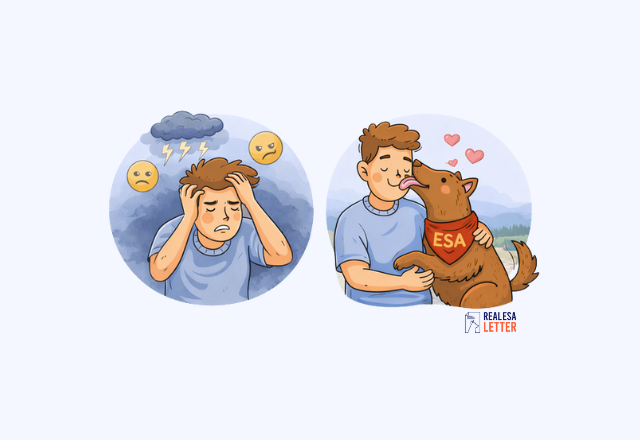
Emotional Support Animals, commonly called ESAs, provide comfort, routine, and grounding that may complement traditional bipolar disorder treatment plans.

To understand how ESAs may help relieve symptom-related stress, recognizing bipolar disorder’s structure and presentation is essential.

Let’s dive in!

Bipolar Disorder: An Overview

Bipolar disorder is a lifelong condition marked by episodic changes in mood, energy, and activity beyond normal emotional variation. These episodes typically include depressive, manic, or hypomanic states lasting days, weeks, or months, separated by stable periods.

In the United States, approximately 2.8 percent of adults experience bipolar disorder annually, with most cases classified severe. The condition affects men and women equally and commonly appears during late adolescence or early adulthood.

Biologically, bipolar disorder involves dysregulation of neurotransmitters including dopamine, serotonin, and norepinephrine, impacting emotional regulation and impulse control. Brain imaging studies reveal functional differences in the prefrontal cortex, amygdala, and hippocampus affecting mood and decision-making.

These neurobiological factors explain why bipolar disorder requires long-term, multidimensional management rather than short-term emotional interventions. Accurate diagnosis depends on distinguishing bipolar disorder from other mental health conditions with overlapping mood-related symptoms.

Major depressive disorder lacks manic episodes, while borderline personality disorder involves rapid mood shifts rather than sustained episodes. Bipolar disorder follows a distinct episodic pattern with defined mood states and periods of relative baseline functioning.

The Three Primary Types of Bipolar Disorder

Bipolar disorder exists on a spectrum, with subtypes defined by mood episode severity, duration, and overall behavioral impact. Although these subtypes share biological mechanisms, each presents unique clinical risks and treatment considerations.

The primary diagnoses include Bipolar I disorder, Bipolar II disorder, and cyclothymic disorder, each differing in symptom patterns.

Bipolar I Disorder

Bipolar I disorder is diagnosed after at least one manic episode lasting seven days or requiring hospitalization. Most individuals with Bipolar I also experience depressive episodes, although depression is not required for diagnosis.

Manic episodes often involve extreme energy, minimal sleep, impulsive behavior, racing thoughts, and impaired judgment.

In severe cases, mania may include hallucinations or delusions, significantly increasing safety and hospitalization risks. Bipolar I disorder affects approximately one percent of the population and carries higher hospitalization rates than other subtypes.

Research indicates that twenty-five to fifty percent of individuals with Bipolar I attempt suicide during their lifetime.

Bipolar II Disorder

Bipolar II disorder involves recurring depressive episodes alternating with hypomanic episodes rather than full manic episodes. Hypomania includes elevated mood, increased activity, and confidence without the severe impairment associated with mania.

Because hypomania can feel productive or positive, many individuals fail to recognize symptoms as clinically significant. People with Bipolar II often spend more time depressed, contributing to prolonged emotional distress and functional challenges.

Bipolar II disorder affects roughly 0.4 percent of the population and carries a suicide risk comparable to Bipolar I.

Cyclothymic Disorder

Cyclothymic disorder involves chronic mood fluctuations lasting at least two years in adults without full diagnostic episodes. Symptoms include alternating hypomanic and depressive features that remain persistent rather than occurring in discrete episodes.

Individuals rarely experience symptom-free periods longer than two months, creating long-term emotional instability. Cyclothymia affects approximately 0.4 to one percent of the population worldwide.

Fifteen to fifty percent of individuals with cyclothymic disorder eventually develop Bipolar I or Bipolar II conditions.

20 Critical Bipolar Disorder Symptoms by Episode Type

Bipolar disorder symptoms vary significantly depending on the type of mood episode a person is experiencing. Rather than occurring all at once, symptoms tend to cluster into distinct phases such as manic, hypomanic, or depressive episodes, each with its own behavioral, emotional, and cognitive patterns. 

Recognizing these episode-specific symptoms is critical for early intervention, accurate diagnosis, and determining appropriate support strategies, including when additional emotional supports like routines, monitoring, or assistance from an Emotional Support Animal may be most beneficial.

Manic Episode Symptoms (Bipolar I)

  1. Abnormally Elevated or Irritable Mood

During mania, individuals experience euphoria that seems disconnected from their circumstances, or intense irritability where minor frustrations trigger disproportionate anger.

This mood state persists most of the day, nearly every day, for at least one week. The elevated mood often includes grandiosity, where individuals believe they possess special powers, talents, or importance far beyond reality.

  1. Dramatically Decreased Need for Sleep

Manic individuals may sleep only 2-3 hours nightly yet feel completely rested and energized. Unlike insomnia, where people struggle to fall asleep and feel tired, mania eliminates the perception of needing sleep altogether.

Some individuals may go days without sleeping, continuing high-energy activities throughout the night. This sleep disruption often serves as an early warning sign of an emerging manic episode.

  1. Pressured Speech and Racing Thoughts

Speech becomes rapid, loud, and difficult to interrupt, with individuals jumping between topics before completing thoughts. Internally, thoughts race so quickly that it becomes challenging to articulate them all, creating a sensation of mental overcrowding. This cognitive acceleration differs from normal excitement or enthusiasm in its intensity and persistence.

  1. Increased Goal-Directed Activity

Manic individuals initiate multiple projects simultaneously, reorganizing their entire home at 3 AM, starting several business ventures at once, or exercising excessively for hours.

This activity is driven rather than purposeful, often lacking practical planning or consideration of consequences. The person may take on far more commitments than they can reasonably manage.

  1. Impulsive High-Risk Behaviors

Mania frequently involves engaging in activities with potentially serious consequences: spending sprees that deplete savings, risky sexual encounters, reckless driving, or substance abuse.

These behaviors feel compelling in the moment, with diminished awareness of potential harm. Financial devastation from manic spending represents one of the most common and lasting consequences.

  1. Inflated Self-Esteem or Grandiosity

Individuals may believe they have special relationships with celebrities or religious figures, possess extraordinary abilities, or are destined for greatness despite evidence to the contrary. This goes beyond healthy confidence to delusional thinking that can lead to embarrassing or dangerous situations.

  1. Distractibility

Attention shifts constantly to irrelevant external stimuli, making it nearly impossible to complete tasks or maintain conversations. The person might start cooking, then notice a stain and begin cleaning the entire kitchen, then see a magazine and start reading, abandoning each activity within minutes.

Hypomanic Episode Symptoms (Bipolar II)

  1. Elevated Mood and Increased Energy (Hypomania)

Hypomania involves noticeable mood elevation and increased energy lasting at least four days, but without the severe impairment of mania. Individuals feel unusually upbeat, confident, and energized. Unlike mania, hypomania does not include psychotic features and does not necessitate hospitalization.

  1. Increased Productivity and Creativity

During hypomanic episodes, many individuals experience genuine increases in productivity, completing projects efficiently and generating creative ideas. This positive aspect can make hypomania appealing, leading some to discontinue treatment to recapture these feelings. However, the unsustainable pace typically leads to eventual exhaustion or progression to full mania.

  1. Mild Risk-Taking Behaviors

Hypomania may involve impulsive decisions like unplanned purchases, unfamiliar social engagements, or accepting excessive responsibilities. However, these behaviors typically lack the severe financial, legal, or safety consequences associated with manic risk-taking.

Depressive Episode Symptoms

  1. Persistent Sadness or Emptiness

Depressive episodes in bipolar disorder involve profound, unshakeable sadness or a sense of emotional numbness that persists most of the day, nearly every day, for at least two weeks. This goes beyond normal sadness, creating a pervasive sense of hopelessness and despair that colors every aspect of life.

  1. Anhedonia (Loss of Interest or Pleasure)

Activities that once brought joy—hobbies, socializing, sex—become meaningless and effortful. Food loses its taste, jokes aren't funny, and even beloved relationships feel burdensome.

This symptom represents one of the most distressing aspects of bipolar depression, as individuals feel disconnected from everything that makes life worthwhile.

  1. Significant Changes in Appetite and Weight

Depression may cause substantial weight loss without dieting or weight gain from increased eating and decreased activity. Some individuals lose their appetite entirely, forgetting to eat for days, while others turn to food for comfort, particularly high-carbohydrate options that temporarily boost serotonin levels.

  1. Sleep Disturbances

Bipolar depression frequently involves either hypersomnia (sleeping 10-14+ hours daily yet still feeling exhausted) or insomnia (inability to fall or stay asleep). Unlike the reduced sleep need in mania that feels energizing, depression-related sleep problems leave individuals feeling perpetually exhausted regardless of hours slept.

  1. Psychomotor Changes

Observable slowing of physical movements and speech (psychomotor retardation) or conversely, agitation manifesting as hand-wringing, pacing, or inability to sit still. These changes are noticeable to others, not merely subjective feelings of restlessness or sluggishness.

  1. Fatigue and Loss of Energy

Overwhelming exhaustion makes even basic self-care tasks, such as showering, dressing, and preparing meals, feel impossibly demanding. This fatigue is not relieved by rest and differs from normal tiredness in its intensity and persistence.

  1. Feelings of Worthlessness or Excessive Guilt

Depression brings pervasive thoughts of being a burden, having failed loved ones, or deserving punishment. Individuals may ruminate excessively on minor past mistakes, interpreting them as evidence of fundamental unworthiness. This guilt often extends to delusional proportions, where people blame themselves for situations completely outside their control.

  1. Difficulty Concentrating and Making Decisions

Cognitive functioning becomes significantly impaired, with individuals unable to focus on reading, follow conversations, or make even simple decisions. This "brain fog" can affect work performance and daily functioning as severely as physical symptoms.

  1. Recurrent Thoughts of Death or Suicide

Depressive episodes in bipolar disorder carry substantial suicide risk, with thoughts ranging from passive wishes to be dead to active suicidal planning. Approximately 20-60% of individuals with untreated bipolar disorder attempt suicide at least once. This symptom requires immediate professional intervention.

Mixed Episode Features

  1. Simultaneous Mania and Depression Symptoms

Some individuals experience mixed features, where symptoms of depression and mania or hypomania occur simultaneously. This might involve racing thoughts combined with profound sadness, high energy coupled with suicidal thinking, or irritability mixed with feelings of worthlessness. Mixed episodes are particularly dangerous, as the energy of mania combined with the despair of depression significantly increases suicide risk.

How Bipolar Disorder Affects Daily Functioning

The impact of bipolar disorder extends far beyond mood symptoms, infiltrating every domain of daily life. During manic or hypomanic episodes, impulsive decision-making can lead to job loss, damaged relationships, financial ruin, and legal problems. Individuals may quit jobs impulsively, make inappropriate comments to supervisors, or engage in behaviors that violate workplace policies.

Relationship stability suffers tremendously, as mood episodes strain even the most supportive partnerships. During mania, individuals may become argumentative, make unilateral decisions affecting the family, or engage in infidelity. 

Depressive episodes create withdrawal and communication breakdown, leaving partners feeling helpless and frustrated. Research indicates that individuals with bipolar disorder experience divorce rates 2-3 times higher than the general population.

Cognitive impairment persists even between mood episodes for many individuals, affecting memory, attention, executive functioning, and processing speed. These subtle but significant deficits can impact academic performance, job advancement, and daily task management.

Students may struggle to complete coursework, while professionals find their productivity and decision-making capabilities diminished. The financial consequences of bipolar disorder can be devastating, with manic spending sprees depleting savings, retirement accounts, and college funds within days.

Beyond direct spending, mania may lead to risky investments, gambling, or business ventures that result in substantial debt.  One study found that 28% of individuals with bipolar disorder had filed for bankruptcy.

Physical health deteriorates due to several factors: medication side effects, poor self-care during depressive episodes, risky behaviors during mania, and the stress of chronic illness. Individuals with bipolar disorder face higher rates of cardiovascular disease, diabetes, obesity, and premature mortality.

The chronic stress of managing a cyclic illness accelerates aging at the cellular level. Social isolation develops gradually as individuals withdraw during depressive episodes and may alienate friends during manic phases.

The unpredictability of mood episodes makes it challenging to maintain consistent social connections, leading many to abandon social engagement altogether to avoid embarrassment or rejection.

The Science Behind ESAs and Bipolar Disorder Management

Emotional support animals (ESAs) provide therapeutic benefits for individuals with bipolar disorder through multiple neurobiological and psychological mechanisms supported by research in animal-assisted therapy and the human-animal bond.

Neurochemical Regulation

Interacting with animals triggers oxytocin release, a neuropeptide associated with bonding, stress reduction, and emotional regulation. Research demonstrates that petting a dog for just 15 minutes significantly increases oxytocin levels while simultaneously decreasing cortisol, the primary stress hormone.

For individuals with bipolar disorder, whose neurochemical systems are already dysregulated, these regular oxytocin boosts support emotional stability.

Animal interaction also promotes serotonin and dopamine production, neurotransmitters critically involved in mood regulation and the same systems targeted by mood stabilizers and antidepressants.

The gentle, positive reinforcement of caring for an animal creates natural opportunities for these neurochemical enhancements without pharmaceutical intervention.

Circadian Rhythm Stabilization

One of the most evidence-based interventions for bipolar disorder involves maintaining consistent circadian rhythms, particularly regular sleep-wake cycles. Animals naturally provide structure through their routine care needs: morning feeding, regular walks, and consistent bedtimes.

Dogs, especially, require scheduled outdoor time that ensures their owners experience morning light exposure, which is critical for circadian regulation.

Studies in chronobiology demonstrate that light exposure timing significantly affects mood episode frequency in bipolar disorder. An ESA naturally facilitates this therapeutic light exposure through daily care routines, providing a non-pharmaceutical stabilization strategy that complements medication management.

Stress Buffering and Emotional Regulation

The presence of companion animals has been shown to buffer physiological stress responses. In laboratory studies, individuals performing stressful tasks show lower blood pressure and heart rate increases when their pet is present compared to when alone or with human support. 

For individuals with bipolar disorder, who are particularly sensitive to stress as a trigger for mood episodes, this stress buffering offers significant protection. Animals also provide a nonjudgmental emotional presence during both depressive and manic phases. 

During depression, when human interaction may feel overwhelming, an animal offers companionship without demands for reciprocal emotional labor. During hypomania or mania, animals can serve as grounding presences, their calm demeanor providing a model for emotional regulation.

Social Connection and Reduced Isolation

Animals serve as social catalysts, facilitating human interactions that might otherwise not occur. Dog owners, for instance, report significantly more casual social interactions with strangers during walks. 

For individuals with bipolar disorder who often experience social isolation due to stigma or symptom-related withdrawal, these low-stakes social encounters maintain social skills and reduce loneliness without the pressure of maintaining complex relationships.

The unconditional acceptance animals provide also counteracts the worthlessness and self-criticism common in depressive episodes. Animals respond to their owners with consistent affection regardless of productivity, appearance, or mood, providing a stabilizing source of positive regard.

Behavioral Activation

Caring for an animal necessitates behavioral activation, getting out of bed, moving through space, and engaging in purposeful activity which represents a core therapeutic intervention for depression. 

When depressive episodes make even basic self-care feel impossible, an animal's needs create external motivation that bypasses the cognitive barriers depression erects. Many individuals report that while they cannot motivate themselves to eat or shower, they will always feed their pet or let their dog outside.

This behavioral activation also provides accomplishment and purpose during depressive phases when individuals feel useless or burdensome. Successfully caring for another living being offers tangible evidence of capability and worth.

Practical Ways ESAs Support Bipolar Disorder Symptoms

Emotional Support Animals can provide consistent companionship, structure, and emotional grounding during challenging bipolar depressive episodes. These supportive interactions may reduce isolation, encourage daily routines, and promote emotional regulation alongside clinical treatment.

During Depressive Episodes

Combating Social Isolation

Depression creates powerful withdrawal impulses, yet isolation worsens depressive symptoms. Dogs require outdoor time, generating natural opportunities for leaving home and brief social interactions. 

Even cat owners must venture out for supplies, creating minimal but meaningful engagement with the external world. The animal's presence during these outings can also reduce social anxiety, as interactions often focus on the animal rather than requiring personal disclosure.

Providing Structure and Routine

Animals demand consistent care regardless of how one feels. This external structure prevents the complete schedule collapse that often accompanies severe depression. 

Feeding times, walks, and basic care create anchors throughout the day, making time feel less amorphous and overwhelming. The predictability of animal care needs also provides a sense of control when internal emotional states feel chaotic.

Reducing Suicidal Ideation

Multiple studies indicate that pet ownership correlates with reduced suicide attempts, likely because individuals feel responsible for their animal's well-being and cannot abandon them. During suicidal crises, concern for what would happen to the animal after death can provide a critical pause, creating space for the suicidal urge to pass or for intervention to occur.

Offering Physical Comfort

Animals provide tactile comfort through their physical presence, the weight of a cat in one's lap, or a dog resting against one's leg. This physical contact stimulates pressure points that can reduce anxiety and create a sense of being grounded in the present moment. Touch also releases oxytocin, supporting emotional regulation during depressive episodes.

Encouraging Minimal Self-Care

While depression may eliminate motivation for personal hygiene or nutrition, caring for an animal requires leaving bed, moving through space, and engaging in purposeful activity. These actions, however small, prevent the complete behavioral shutdown that deepens and prolongs depressive episodes.

During Manic or Hypomanic Episodes

Grounding and Calming Presence

Animals' calm, consistent demeanor provides a model for emotional regulation during the agitation and irritability of mania. Petting an animal activates the parasympathetic nervous system, promoting physiological calming that can reduce the driven quality of manic activity. 

Dogs, in particular, often sense agitation and may physically lean against or place themselves near owners, providing grounding through their presence.

Detecting Early Warning Signs

Animals often detect physiological and behavioral changes before humans consciously recognize them. Dogs may become more attentive or anxious when their owner's sleep patterns change, activity levels increase, or speech becomes more rapid. This early detection can prompt individuals to implement crisis prevention strategies before a full manic episode develops.

Providing Reality Testing

During hypomanic phases, when judgment becomes impaired and grandiose thinking emerges, an animal's consistent needs provide reality anchors. The dog still needs walking, the cat still requires feeding; these unchanging demands ground individuals in practical reality and can interrupt grandiose planning or impulsive decision-making.

Reducing Risky Behaviors

The responsibility of pet ownership can serve as a brake on impulsive actions. Before making a spontaneous cross-country drive or booking an expensive trip, individuals must consider arrangements for their animal. This pause can create space for reconsidering impulsive decisions.

During Mixed Episodes

Providing Safety and Comfort Simultaneously

Mixed episodes, with their combination of depressive despair and manic energy, create particularly dangerous circumstances with elevated suicide risk. Animals offer both the comfort needed for depressive symptoms and the grounding needed for manic symptoms simultaneously. Their presence can reduce the acute distress that makes mixed episodes so unbearable.

Nonverbal Emotional Support

During mixed episodes, when internal emotional chaos makes communication difficult, animals offer presence without requiring verbal interaction. Individuals can receive comfort without needing to explain the seemingly contradictory feelings they're experiencing.

During Stable Periods

Maintaining Wellness Routines

Between episodes, animals support the maintenance of wellness routines that prevent relapse: regular sleep schedules, daily exercise, social engagement, and stress management. These consistent routines reduce the frequency and severity of mood episodes.

Providing Purpose and Meaning

The chronic nature of bipolar disorder can create existential distress and questions about life purpose. Animals provide clear, manageable purpose through their care needs, creating meaning in daily life that transcends mood fluctuations.

Early Warning System

Individuals often train themselves to monitor their animal's responses as part of their bipolar self-management. Changes in the animal's interactions may signal emerging mood symptoms before they become fully apparent, enabling early intervention.

Getting an ESA for Bipolar Disorder: The Legal Process

Obtaining an Emotional Support Animal for bipolar disorder involves specific legal steps governed by federal housing regulations. Understanding this process helps individuals secure lawful protections while avoiding common mistakes or misleading online ESA services.

Before exploring eligibility requirements, it is important to understand what legal rights Emotional Support Animals provide.

Understanding ESA Legal Protections

Emotional support animals receive legal protections under the Fair Housing Act (FHA) but not under the Americans with Disabilities Act (ADA), creating an important distinction from service animals. ESAs are permitted in housing regardless of pet policies but do not have public access rights to accompany their owners into restaurants, stores, or other public spaces.

The Fair Housing Act requires housing providers to make reasonable accommodations for individuals with disabilities, including allowing ESAs even in properties with no-pet policies or breed restrictions. 

Landlords cannot charge pet deposits or monthly pet fees for ESAs, though they can still charge for damage the animal causes. Housing providers may only deny an ESA if the animal poses a direct threat to health or safety, causes substantial physical damage, or creates an undue financial burden to the housing provider.

Airlines previously allowed ESAs in aircraft cabins under the Air Carrier Access Act, but the Department of Transportation revised these regulations in December 2020. Airlines now only recognize trained psychiatric service dogs, not ESAs, for in-cabin travel. ESAs can still fly but must follow standard pet travel policies, including fees and carrier requirements.

Obtaining a Valid ESA Letter

If you are wondering how can I get an emotional support animal letter, the process begins with a licensed mental health professional.

Eligible professionals who can write an ESA letter include licensed clinical psychologists, psychiatrists, licensed clinical social workers, licensed professional counselors, and psychiatric nurse practitioners.

The mental health professional must conduct a proper clinical evaluation to determine whether an ESA would benefit your specific bipolar disorder symptoms. This evaluation typically includes discussing your diagnosis, treatment history, current symptoms, and how an animal's presence would alleviate specific symptoms or functional impairments.

A valid ESA letter must include professional letterhead, license type and number, and a recent issuance date. It must state that you have a qualifying mental health disability under the Fair Housing Act.

The letter must explain the ESA necessity for housing use and include the provider’s signature. The letter should be on professional letterhead and dated within the past year.

Reputable online services, such as realesaletter.com, connect individuals with licensed mental health professionals in their state for ESA evaluations conducted via telehealth.

These platforms should verify professional credentials, conduct actual clinical assessments rather than simply selling letters, and provide letters that meet all legal requirements.

Red Flags to Avoid

Numerous fraudulent websites sell "instant" ESA letters without any mental health evaluation. These documents have no legal validity and may result in housing denial or legal consequences. 

Warning signs include: instant letter generation without professional consultation, guarantees of approval before evaluation, extremely low prices, lack of professional licensing information, registration of your animal in a "database," and provision of vests, ID cards, or certificates.

No legitimate ESA registry exists; any website offering to register your ESA is misleading consumers. Landlords are not required to accept these registrations, and they hold no legal weight. Similarly, ESA vests and ID cards have no legal significance and may actually damage credibility when presenting an ESA letter to housing providers.

Working With Your Current Mental Health Provider

If you already have an established relationship with a therapist, psychiatrist, or other mental health professional treating your bipolar disorder, requesting an ESA letter from them is often the most straightforward approach. These professionals already understand your diagnosis, symptoms, and treatment needs, positioning them to assess whether an ESA would provide therapeutic benefit.

When discussing an ESA with your provider, explain specifically how you believe an animal would address your symptoms, whether providing routine during depressive episodes, offering grounding during hypomania, supporting medication compliance through structured care routines, or reducing isolation.

Mental health professionals are more likely to provide ESA letters when they understand the specific therapeutic rationale rather than perceiving the request as simply wanting to keep a pet.

Presenting Your ESA Letter to Housing Providers

When requesting an ESA accommodation, provide your ESA letter to the landlord or property management company in writing, keeping copies of all correspondence. You are not required to disclose your specific diagnosis, and housing providers cannot ask about the nature or severity of your disability. They may only confirm that you have a disability-related need for the accommodation.

Landlords can request verification that the letter comes from a legitimate healthcare provider, and some may contact the professional directly to confirm authenticity.

This represents a reasonable verification measure, not discrimination. However, they cannot require extensive medical records or demand details about your condition.

Integrating an ESA Into Your Bipolar Treatment Plan

An emotional support animal should complement, not replace, evidence-based bipolar disorder treatments. Comprehensive bipolar treatment typically includes mood stabilizers or atypical antipsychotics alongside structured psychotherapy approaches sessions.

Additional components include lifestyle modifications, consistent routines, and self-monitoring systems supporting long-term symptom management efforts.

An ESA enhances these treatments by supporting medication compliance, facilitating therapeutic lifestyle changes, and providing continuous support between therapy sessions.

Choosing the Right ESA

Not all animals suit every individual's needs, lifestyle, or symptom profile. Dogs offer the most interactive support, requiring regular walks that promote exercise and circadian rhythm regulation, but demand significant time, energy, and financial resources. 

Cats provide companionship with less intensive care requirements, suiting individuals whose functioning is more compromised. Smaller animals like rabbits, birds, or guinea pigs can serve as ESAs while requiring minimal space and care.

Consider your stable-period functioning capacity when selecting an animal. 

  • Can you realistically handle walks multiple times daily during depressive episodes? 
  • Do you have financial resources for veterinary care? 
  • Will the animal's needs align with your capabilities during both well and symptomatic periods? 

An animal whose needs exceed your capacity will create stress rather than alleviating it.

Preparing for an ESA

Before bringing an animal home, establish support systems for periods when acute symptoms prevent adequate care. Identify friends or family who can assist with feeding, walking, or emergency care during mood episodes. Research local pet care services including dog walkers, pet sitters, and boarding facilities. Build a financial cushion for veterinary expenses.

Create a care plan that accounts for mood episode possibilities: Where will you store two weeks of food and supplies so depressive episodes don't create supply crises? Who has backup keys to access your home if you're hospitalized? What's your emergency plan if you're unable to care for your animal?

Training and Socialization

Well-trained animals provide more effective support and create fewer complications with housing providers. Basic obedience training helps dogs respond reliably to commands, reducing housing providers' concerns about property damage or neighbor disturbance. 

Socialization ensures the animal remains calm in various environments, which is particularly important during moves or housing transitions. For individuals whose manic symptoms include irritability or agitation, training the animal to respond to calm commands provides a grounding tool. Teaching "settle" or "place" commands creates opportunities to practice emotional regulation alongside the animal.

Monitoring Your Relationship With Your ESA

The human-animal bond should remain healthy and mutually beneficial. Warning signs that the relationship has become problematic include complete isolation except for the animal, severe distress when separated from the animal (beyond healthy attachment), or neglecting self-care while maintaining animal care.

These patterns may indicate that the ESA is enabling avoidance rather than supporting recovery. Regular discussions with your mental health provider about your ESA relationship help ensure the animal is supporting your treatment goals.

If an animal creates anxiety, enables avoidance of manageable challenges, or replaces human relationships, treatment effectiveness may decline. In these cases, adjusting the treatment plan helps ensure the ESA supports recovery rather than reinforcing unhelpful coping patterns.

Preparing for Potential Loss

The eventual loss of an ESA can significantly impact bipolar disorder stability, as the grief compounds vulnerability to mood episodes. Discussing this possibility with your treatment team in advance allows for crisis planning. Maintaining human social connections alongside the animal relationship provides additional support sources if loss occurs.

In summary, Bipolar disorder creates complex challenges affecting mood regulation, daily functioning, relationships, and overall long-term quality of life. Symptoms across manic, hypomanic, depressive, and mixed episodes require comprehensive treatment addressing biological, psychological, and social needs.

Effective management depends on recognizing patterns early and maintaining consistent, multidisciplinary, evidence-based care strategies long-term. Emotional support animals serve as valuable complementary supports within structured, evidence-based bipolar disorder treatment plans.

Through routine, stress buffering, emotional grounding, and circadian stabilization, ESAs help address multiple symptom domains. These benefits extend beyond crisis moments, supporting daily stability and long-term wellness maintenance for individuals.

Understanding the legal process ensures individuals obtain ESA accommodations legitimately while protecting housing rights and compliance. Working with licensed mental health professionals helps confirm therapeutic appropriateness and secure valid legal documentation. When integrated with medication, therapy, and lifestyle management, ESAs can enhance stability, functioning, and quality of life.

Frequently Asked Questions

What is the difference between an ESA and a psychiatric service dog for bipolar disorder?

FAQ Icon

Psychiatric service dogs perform specific trained tasks like medication reminders, interrupting self-harm, or detecting mood episode onset, and have public access rights. ESAs provide therapeutic benefits through companionship without specialized training and are only protected in housing under the Fair Housing Act.

How long does it take to get an ESA letter for bipolar disorder?

FAQ Icon

Through legitimate online services like realesaletter.com, you can typically complete a telehealth evaluation with a licensed mental health professional within 24-48 hours.

If approved, the ESA letter is usually provided within 1-3 business days. In-person evaluations with your existing provider may take longer depending on appointment availability.

Can landlords reject my ESA letter for bipolar disorder?

FAQ Icon

Landlords can only deny an ESA if: the letter is fraudulent or from an unlicensed provider, the animal poses a direct threat to health/safety, the animal would cause substantial property damage, or the accommodation creates undue financial burden. They cannot deny based on breed, size, or blanket no-pet policies when you have a valid letter.

Do I need to disclose my bipolar disorder diagnosis to my landlord?

FAQ Icon

No. Your ESA letter should confirm you have a qualifying disability and need an ESA as a reasonable accommodation, but you're not required to disclose your specific diagnosis.

Housing providers can only verify that the letter comes from a legitimate licensed professional—they cannot ask about diagnosis details or symptom severity.

Can I take my ESA on a plane if I have bipolar disorder?

FAQ Icon

Since December 2020, ESAs are no longer recognized for free cabin access on flights. Only trained psychiatric service dogs qualify for in-cabin accommodation. Your ESA must follow standard pet policies, which typically include size restrictions, carrier requirements, and fees. Check specific airline policies before booking.

Dr. Avery Langston

WRITTEN BY

Dr. Avery Langston

Dr. Avery Langston is a licensed clinical therapist with more than 12 years of professional experience in emotional support animal (ESA) assessments, mental health counseling, and evidence-based therapeutic interventions. With a strong foundation in clinical psychology and a passion for mental-health education, Avery has guided thousands of individuals through the ESA qualification process while promoting emotional healing and stability. As a senior content contributor for RealESALetter.com, Avery focuses on writing accurate, accessible, and legally informed articles on ESA rights, housing protections, and mental wellness. Her mission is to help readers understand their ESA benefits clearly and confidently, backed by real clinical expertise.

Get Approved Quickly by Real Doctors.

Fully Legitimate and Safe.

legally compliant Apply Now

Share this Article

Closed Icon

Login

Enter your email and password to access your account

Please enter a valid email address

Please enter your password

Show password toggle icon

Don’t have an account? Sign Up

Forgot Your Password?

Enter your registered email to receive your password

Please enter a valid email address

Return to login page or signup to create a new account

OTP popup graphic

Check Your Email to Verify Your Account

We’ve sent a 4-digit verification code to .

Enter it below to confirm your email and continue your ESA process.

Didn’t get the code? Resend Code

Entered the wrong email? Go Back

Mail / email graphic icon

Your password has been sent to