Sign In / Create Account
Depression Alternative Treatments: How an ESA Helps Manage Depression Without Medication
You've been staring at the same four walls since morning. The laundry has been sitting there for three days.
The thought of making a phone call, even to order food, feels physically exhausting. Getting out of bed feels like climbing a mountain, and no matter how many times you tell yourself "tomorrow will be better," tomorrow looks exactly like today.
If that resonates with you, you're not alone. According to the World Health Organization, over 280 million people worldwide live with depression. It's one of the leading causes of disability globally, and it doesn't discriminate by age, income, or lifestyle.
The standard clinical approach combines talk therapy (particularly Cognitive Behavioral Therapy) with antidepressant medication. For many people, this combination works.
But for a significant portion, those who struggle with medication side effects, those who've tried multiple prescriptions with limited results, or those simply looking for additional day-to-day support, medication alone doesn't feel like the full answer.
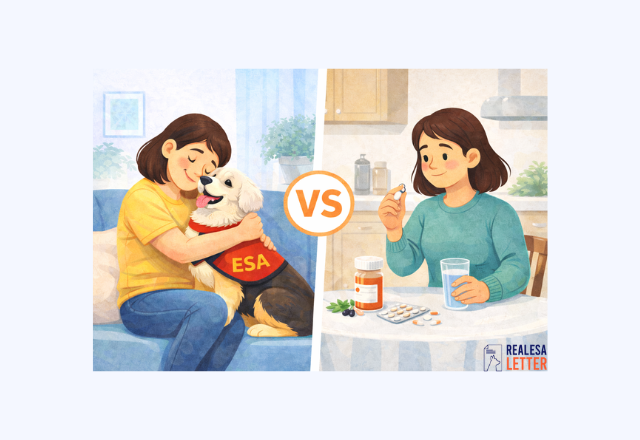
That's where depression alternative treatments like Emotional Support Animals (ESAs) come in. Not as a gimmick. Not as a replacement for professional care.
But as a science-backed, deeply human tool that targets the very lifestyle patterns that depression erodes: routine, movement, connection, and purpose. If you're also managing anxiety alongside depression, it's worth exploring anxiety alternative treatments that follow a similar philosophy.
Let’s break down exactly how an emotional support animal for depression can reduce symptoms naturally, what the science says, how it compares to antidepressants, and how to qualify.

Understanding Depression: What's Actually Going Wrong
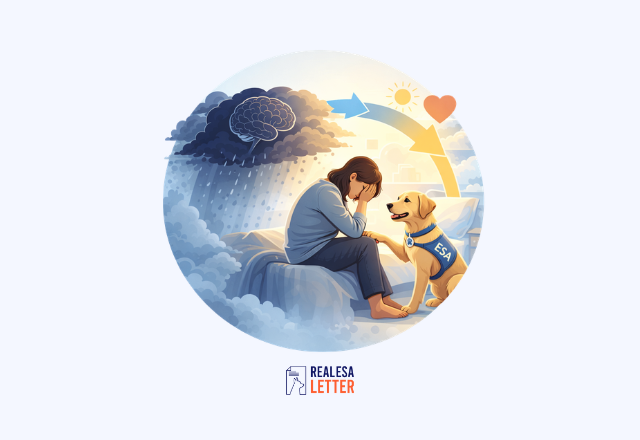
Before you can understand how an ESA helps, it's worth understanding what clinical depression actually does to the brain and body, because this context makes the ESA's value much clearer.
Depression is not simply sadness. It is a clinical condition that disrupts:
- Neurotransmitter regulation — serotonin, dopamine, and norepinephrine levels become dysregulated, affecting mood, motivation, and pleasure.
- Cortisol levels — chronic depression elevates the stress hormone cortisol, which in turn suppresses immune function and worsens anxiety.
- Sleep architecture — depression disrupts circadian rhythms, making quality sleep nearly impossible.
- Social behavior — isolation becomes both a symptom and a worsening factor.
- Physical activity — depression saps motivation to move, which in turn reduces endorphin and serotonin production.
- Sense of purpose — anhedonia (inability to feel pleasure) strips meaning from daily activities.
- Physical touch deprivation — Research published in JAMA (2024) links reduced tactile contact to significantly elevated depression risk. Human beings are neurologically wired for touch; its absence measurably dysregulates the nervous system.
- Nutritional deficits — A growing body of research in nutritional psychiatry shows that anti-inflammatory diets — rich in omega-3s, leafy greens, and fermented foods — are associated with significantly lower rates of depression. Processed, pro-inflammatory diets have the opposite effect.
- Loss of social and community belonging — A systematic review in the British Journal of Psychiatry found that perceived social support is one of the strongest protective factors against depression. Modern isolation, remote work, urban anonymity, and fractured communities have made this deficit more acute than ever.
Research consistently identifies a cluster of missing lifestyle factors that both cause and deepen depression: physical touch, emotional support, routine, regular exercise, social belonging, and nutritious eating. What's notable is that an ESA directly addresses most of these deficits, not through chemistry, but through daily lived experience.
The 6 Lifestyle Factors Depression Steals: And How an ESA Restores Them
Researchers across neuroscience, psychology, and behavioral medicine have converged on a consistent finding: depression doesn't just affect mood. It systematically dismantles the lifestyle behaviors that keep us mentally healthy.
Here are the six most consistently identified factors and exactly how an ESA addresses each one.
What Depression Takes Away | How an ESA Gives It Back |
Physical touch | Daily petting, cuddling, and tactile contact with an animal activates the parasympathetic nervous system and reduces cortisol within minutes |
Routine and structure | Feeding schedules, walk times, and play routines impose an external daily rhythm that depression's formlessness cannot easily erode |
Regular physical activity | Dog ownership, in particular, creates non-negotiable daily movement — even a 30-minute walk consistently outperforms many pharmaceutical interventions for mild-to-moderate depression |
Social and community belonging | ESAs serve as social catalysts — dog owners report more spontaneous conversations with strangers, more connections with neighbors, and reduced loneliness scores |
Sense of purpose and responsibility | "I have to feed my dog" is one of the most reliable antidepressant statements in existence — it creates immediate, non-negotiable meaning on the hardest days |
Emotional support and connection | An ESA provides unconditional, non-judgmental presence 24/7 — no unsolicited advice, no impatience, no bad days |
Depression Alternative Treatments: Where Does an ESA Fit?
The landscape of depression alternative treatments is broad. Here's how ESAs compare with some of the most common options:
Treatment | How It Works | Side Effects | Long-Term Outlook |
Antidepressants (SSRIs/SNRIs) | Regulate neurotransmitters (serotonin, norepinephrine) | Fatigue, weight changes, emotional blunting, sexual dysfunction, dependency risk | Can lose effectiveness; some experience withdrawal |
Cognitive Behavioral Therapy (CBT) | Rewires thought patterns around mood and behavior | None physical; requires time and emotional commitment | Strong long-term outcomes, especially combined with other treatments |
Exercise Therapy | Triggers endorphin and serotonin release | Requires motivation (difficult with depression) | Highly effective when sustained |
Mindfulness/Meditation | Reduces cortisol; trains present-moment awareness | None; requires consistent daily practice | Strong evidence base, especially for relapse prevention |
Emotional Support Animal | Combines companionship, routine, physical activity, and oxytocin release | Financial cost, time commitment, emotional energy required | Promotes healthy long-term habits; risk of over-reliance if animal is lost |
Light Therapy | Regulates circadian rhythm and serotonin, especially for seasonal depression | Rarely, may cause eye strain or headache | Effective for seasonal affective disorder (SAD) |
Nutritional Psychiatry | Anti-inflammatory diet supports brain function | None; requires significant behavior change | Growing evidence base; best as a complement |
What makes ESAs uniquely valuable is that they don't target just one mechanism; they work across multiple domains simultaneously, nudging the person toward the behaviors that science has shown reduce depression.
For a full picture of what animals can do for mental health, the documented benefits of emotional support animals go well beyond depression alone.
The Science: How an ESA Actually Affects Your Brain and Body
This isn't feel-good speculation. There is a growing body of peer-reviewed research on human-animal interaction and its effects on mental health.
- Oxytocin Release
When you interact with an animal, petting, eye contact, or play, your brain releases oxytocin, often called the "bonding" or "love hormone." Oxytocin counteracts the effects of cortisol, reduces anxiety, and creates a direct sense of emotional warmth and safety. This effect is measurable within minutes of interaction.
- Cortisol Reduction
Multiple studies have demonstrated that even a brief 10-minute interaction with a pet measurably lowers cortisol levels. For someone in a chronic state of stress and low mood, this biochemical shift is meaningful and cumulative over time.
- Increased Physical Activity
For dog owners specifically, daily walks are non-negotiable. The animal's needs create external accountability that depression's inertia cannot override. Research published in JAMA Psychiatry found that even 2.5 hours of brisk walking per week is associated with a substantially lower risk of depression. An ESA can be the gateway to that movement.
- Mood-Boosting Neurotransmitters
Physical play with an animal, chasing a cat toy, or a game of fetch at the park, triggers the release of dopamine and serotonin, the same neurotransmitters that antidepressants target pharmacologically. The difference is that ESAs create the conditions for the brain to produce these chemicals naturally.
- Improved Sleep Routine
Depression disrupts sleep, and disrupted sleep worsens depression. Animals, especially dogs and cats, have built-in biological clocks that impose structure on a household. Morning feeding, walk schedules, and evening routines help regulate the human's circadian rhythm, which has a direct impact on mood and sleep quality.
Building a healthy routine with your ESA from day one makes this benefit significantly more powerful.
- Reduced Loneliness and Social Isolation
Loneliness is both a cause and a consequence of depression. Studies show that ESA owners experience significantly lower levels of loneliness. Animals also serve as social catalysts; dog owners, for example, report more frequent conversations with strangers during walks, which re-engages suppressed social instincts.
- Sense of Purpose and Responsibility
One of depression's most corrosive effects is the erosion of purpose. When nothing feels meaningful, inaction becomes a feedback loop. An ESA creates an immediate, non-negotiable purpose: another living creature depends on you.
That responsibility, rather than feeling like a burden, often becomes the gentle pressure that gets people moving, dressed, and functional, even on the hardest days.
ESA vs. Antidepressants: An Honest Comparison
It's important to approach this comparison without either demonizing medication or overselling ESAs. Both have legitimate places in depression treatment.
Where antidepressants have the edge:
- They can address severe, biologically-rooted depression quickly
- They don't require the person to have the capacity to care for another living being
- They can be critical in crises or when therapy and lifestyle interventions alone are insufficient
Where ESAs have the edge:
- No chemical side effects (no fatigue, weight gain, emotional blunting, or dependency)
- They promote behavioral change rather than managing symptoms in isolation
- The benefits compound over time and a healthier lifestyle creates a more resilient baseline mood
- They provide moment-to-moment emotional comfort that a pill cannot replicate
- They are available 24/7, never have a bad day, and offer unconditional presence
The most effective approach for many people: ESAs are not an either/or proposition with medication or therapy.
Many individuals who take antidepressants report that their ESA provides the daily emotional scaffolding that makes the medication more effective, and some, working with their psychiatrist, have found that improved lifestyle habits from ESA ownership have allowed them to gradually reduce medication over time. Always consult your mental health professional before making changes to any medication regimen.
8 Specific Ways an ESA Helps Manage Depression Without Medication
An emotional support animal can influence daily patterns that depression often disrupts, such as routine, movement, connection, and nervous system regulation. While not a replacement for therapy or medication, ESAs create consistent behavioral and physiological shifts that support mood stability.
Depression frequently thrives in isolation, inactivity, and unstructured time. An ESA introduces predictable responsibility and companionship that gently counters those patterns. These changes may seem small, but their cumulative impact can be significant.
Below are the research-supported ways an ESA can help manage depressive symptoms naturally.
- Creates an Inviolable Daily Routine
Depression thrives in formlessness. When every day looks the same, shapeless, purposeless, motivation evaporates. An ESA imposes structure: feeding times, walk times, and play times. These anchor points organize the day and give it shape, making it easier to add other healthy habits around them.
- Forces Gentle Physical Activity
You don't have to want to go for a walk. Your dog does, and eventually, you go. That gentle coercion is powerful. Even light physical activity consistently outperforms many interventions for
mild to moderate depression in peer-reviewed literature.
- Provides Non-Judgmental Emotional Presence
Humans with depression often feel like a burden to their loved ones or fear being judged for their struggles. An ESA never judges. It never offers unsolicited advice, tells you to "think positive," or grows frustrated with your bad days. It is simply there, warm, constant, and accepting.
- Breaks the Isolation Cycle
Whether it's a neighbor commenting on your dog at the park or a friend asking to come meet your new cat, ESAs create natural social openings. These micro-interactions chip away at the isolation that feeds depression without requiring large, overwhelming social commitments.
- Gives Meaning to Getting Up
"I have to feed my dog" is one of the simplest, most reliable motivators in existence. On days when nothing else matters, that single obligation gets people out of bed, into the kitchen, and started on their morning, which often cascades into more activity.
- Regulates the Nervous System Through Touch
Physical touch is deeply regulating for the human nervous system. Stroking a pet activates the parasympathetic nervous system (the "rest and digest" mode), directly opposing the sympathetic activation (the "fight or flight" response) that anxiety and depression often amplify. This physiological effect is real, measurable, and available anytime.
- Keeps Mindfulness Accessible
Animals exist entirely in the present moment. Observing your cat watch birds, playing with your dog, or even just listening to a pet's breathing can pull a depressed, ruminating mind back into the present, a core mechanism behind mindfulness-based cognitive therapy for depression.
- Reduces Nighttime Anxiety
Many people with depression report that evenings and nights are the hardest. The presence of an animal in the room, the warmth, the breathing, the company, can reduce the sense of dread and loneliness that makes nighttime so difficult, improving both sleep onset and sleep quality.
- Motivates Healthier Eating Habits
Depression and poor nutrition form a vicious cycle. Low mood kills appetite and motivation to cook, while a diet high in processed, pro-inflammatory foods measurably worsens depressive symptoms. An ESA disrupts this cycle through behavioral momentum.
The act of caring for an animal, maintaining a feeding schedule, buying food, and budgeting for their needs creates a daily structure that often spills over into self-care. Many ESA owners report that the routine of preparing their pet's meals makes them more likely to prepare their own.
Research in nutritional psychiatry has found that adherence to an anti-inflammatory, Mediterranean-style diet is associated with a 33% lower risk of depression compared to a typical Western diet (Jacka et al., BMC Medicine, 2017). An ESA won't cook your dinner, but it can be the habit anchor that makes cooking feel possible on your hardest days.
Which Animals Work Best for Depression?
The best ESA for depression is always the one you can genuinely connect with and reliably care for. That said, different animals offer different types of support:
Dogs are the most researched and widely used ESAs for depression. Their social nature, need for daily walks, and responsiveness to human emotion make them especially effective at driving behavioral change. A dedicated guide to the best emotional support dogs covers breed temperaments and traits in detail if you're considering a canine companion.
Cats are lower-maintenance than dogs and well-suited for individuals who live alone or have limited energy. A cat's purring has documented calming effects on the human nervous system, and their quiet, affectionate presence is deeply comforting for many. An emotional support cat is particularly effective for depression rooted in anxiety and overwhelm.
Rabbits are gentle, quiet, and highly responsive to handling. Their soft fur and calm demeanor make them excellent for people who need tactile comfort without the energy demands of a dog. There's a full breakdown of rabbits as ESAs for anyone exploring small-animal options.
Birds (particularly parrots and cockatiels) provide constant companionship, interactive play, and in some species, vocal communication that reduces the sense of silence and emptiness that characterizes depressive episodes.
Guinea Pigs and Small Rodents are accessible, affordable ESAs for people in smaller spaces. Their social nature and responsiveness to handling provide reliable comfort without a large time or financial commitment.
The most important criterion: choose an animal whose needs you can genuinely meet on your hardest days, not just your best days.
How to Know If an ESA Is Right for You
An ESA is not for everyone, and approaching this decision thoughtfully is important. Ask yourself:
- Can I meet their daily needs consistently? Feeding, cleaning, exercise, and veterinary care cannot be skipped on hard days.
- Is my living situation stable? Frequent travel, unstable housing, or roommate situations can complicate ESA ownership.
- Do I have the financial capacity? The cost of an ESA includes monthly food, routine vet costs, and an emergency fund for unexpected medical needs.
- Do I have a support system for the animal when I'm unable to care for them? A trusted friend, family member, or pet sitter is essential.
- Would the responsibility feel grounding or overwhelming for me? For some people with severe depression, the responsibility of care can feel like too much. If that's you, it's worth working with a therapist first to build capacity before introducing an ESA.
Fostering an animal before committing to adoption is an excellent way to test the fit without permanent obligation.
How to Officially Qualify for an ESA Letter for Depression
To legally designate your animal as an Emotional Support Animal and access the protections afforded under the Fair Housing Act, you need a valid ESA letter from a licensed mental health professional (LMHP). Here's the process:
Step 1: Determine If You Qualify You need a DSM-5-recognized mental health condition, such as major depressive disorder, persistent depressive disorder (dysthymia), or another qualifying diagnosis, and evidence that an ESA would provide therapeutic benefit. A detailed breakdown of how to qualify for an emotional support animal walks through the clinical criteria in plain language.
Step 2: Find a Licensed Mental Health Professional This can be a therapist, psychologist, psychiatrist, or licensed clinical social worker. Many people wonder, who can write an ESA letter the short answer is any LMHP licensed in your state who has evaluated you and can document your need.
Step 3: Have Your Consultation Be specific about your symptoms, how they affect your daily functioning, and how you believe an animal companion would help. The more clearly you articulate this, the more substantive the letter your LMHP can write.
Step 4: Receive Your ESA Letter A legitimate ESA letter must be written on the LMHP's official letterhead, include their license number and state, and specify that you have a mental health condition qualifying you for an ESA under the FHA. It should be signed and dated. Knowing what distinguishes a real vs. fake ESA letter protects you from scam services that sell worthless certificates without a genuine clinical evaluation.
Step 5: Submit to Your Landlord Under the FHA, your landlord must make reasonable accommodations for your ESA, even in no-pet buildings. They cannot charge a pet deposit for an ESA. A complete guide on how to get an emotional support animal covers the full process from evaluation to housing submission.
If you're wondering how can I get an emotional support animal letter, you can obtain one through RealESALetter.com, where licensed mental health professionals evaluate your eligibility and provide a legally compliant ESA letter, often within 24–48 hours.
Integrating an ESA Into a Broader Depression Treatment Plan
An ESA is most effective when integrated into a comprehensive approach to managing depression. Think of it as one layer of a well-designed support system, not a standalone cure.
Pair your ESA with:
- Psychotherapy (CBT, ACT, or interpersonal therapy) to address the cognitive and relational patterns that perpetuate depression
- Regular physical activity (your ESA can be the catalyst for this)
- Consistent sleep schedule (your ESA's routine will help anchor this)
- Nutritious eating (energy to care for your pet creates motivation to care for yourself)
- Social engagement (use your ESA as a bridge to more human connection)
- Medication if prescribed (ESAs and antidepressants are not mutually exclusive; many people benefit from both)
Think of depression treatment as building a scaffold. Medication might hold the structure up initially, but it's the daily habits, the ones your ESA helps you build, that eventually become load-bearing walls.
In the bottom line, depression is not a character flaw, a lack of willpower, or something you can simply think your way out of. It is a medical condition, one that responds to a range of interventions, from therapy and medication to lifestyle changes and daily emotional support.
An Emotional Support Animal addresses depression at the behavioral and relational level. It rebuilds the routines, movement, touch, connection, and purpose that depression strips away gradually, organically, and without a single chemical side effect.
For many people, that steady, unconditional presence is the missing piece in their treatment puzzle. If you're exploring depression alternative treatments or looking to complement your existing care plan, an ESA deserves serious consideration.
Frequently Asked Questions
Can an emotional support animal help with depression without medication?

Yes. Emotional support animals (ESAs) can help manage depression by providing companionship, daily routine, physical activity, and oxytocin release, all of which are clinically linked to reduced depressive symptoms.
An ESA does not replace professional mental health treatment, but serves as a powerful, medication-free complement to therapy. To use an ESA legally in housing, you need a valid ESA letter from a licensed mental health professional (LMHP).
What is the best emotional support animal for depression?
Dogs are the most commonly recommended ESA for depression due to their social nature and the behavioral demands they place on their owners (daily walks, structured feeding). Cats, rabbits, and birds are excellent alternatives depending on your lifestyle and energy levels. A guide to the best emotional support dogs can help you narrow down the right breed.
Can an ESA replace antidepressants?
An ESA should not be used to replace medication that a doctor has prescribed without medical supervision. However, for individuals with mild to moderate depression, or for those who have weaned off medication under medical guidance, an ESA can be a meaningful part of a medication-free management strategy. Always consult your psychiatrist before making changes to medication.
Can I qualify for an ESA if I'm already in therapy?
Absolutely. Being in active treatment with a therapist makes the ESA letter process more straightforward. Your existing therapist may be able to write the letter directly. If not, you can consult an LMHP through RealESALetter.com.
What are the most effective natural alternatives to antidepressants for depression?
The most evidence-backed natural approaches for managing depression include:
- Regular aerobic exercise — as little as 2.5 hours of brisk walking per week is associated with meaningfully lower depression risk (JAMA Psychiatry, 2023)
- Mindfulness-Based Cognitive Therapy (MBCT) — especially effective for preventing depressive relapse
- Anti-inflammatory nutrition — a Mediterranean-style diet is associated with significantly lower depression rates
- Emotional Support Animals (ESAs) — address multiple root causes simultaneously: routine, touch, movement, connection, and purpose
- Light therapy — particularly effective for Seasonal Affective Disorder (SAD)
These approaches are most powerful in combination and alongside professional therapy. Always consult your doctor or psychiatrist before reducing or discontinuing any prescribed medication.
How quickly can an ESA start helping with depression?
The biochemical effects of ESA interaction oxytocin release and cortisol reduction can begin within minutes of petting or making eye contact with an animal. These are immediate, measurable physiological shifts.
The deeper behavioral benefits improved routine, increased physical activity, reduced loneliness, and restored sense of purpose typically become noticeable within two to four weeks of consistent daily interaction.
Research supports this timeline: a 2021 peer-reviewed study found that ESA owners showed significantly reduced symptoms of anxiety, depression, and loneliness after one year, with many reporting positive changes within the first month.
The keyword is consistent. An ESA helps most when integrated into a reliable daily routine not treated as an occasional comfort.
Dr. Avery Langston is a licensed clinical therapist with more than 12 years of professional experience in emotional support animal (ESA) assessments, mental health counseling, and evidence-based therapeutic interventions. With a strong foundation in clinical psychology and a passion for mental-health education, Avery has guided thousands of individuals through the ESA qualification process while promoting emotional healing and stability. As a senior content contributor for RealESALetter.com, Avery focuses on writing accurate, accessible, and legally informed articles on ESA rights, housing protections, and mental wellness. Her mission is to help readers understand their ESA benefits clearly and confidently, backed by real clinical expertise.
Dr. Whitfield is a licensed psychologist with 14 years of clinical practice specialising in trauma, anxiety disorders, and psychiatric service animal evaluations. He conducts PSD assessments for RealESALetter across all 50 states.