


Emotional Support Animals as an Anxiety Alternative Treatment: A Practical Comparison

13 min read
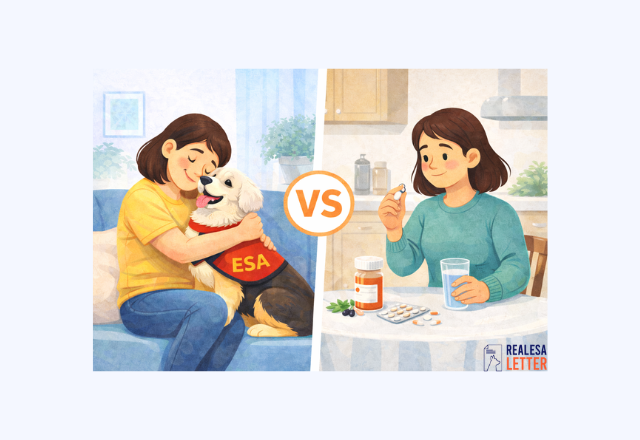
If you've ever felt your chest tighten, your thoughts spiral, or your heart race without warning, you understand anxiety's grip.
Living with an anxiety disorder means navigating constant worry, physical tension, and emotional overwhelm that can quietly interfere with your work, relationships, and daily life. And you're far from alone, nearly 44% of U.S. adults experience anxiety symptoms, and almost 12% are living with mild to severe anxiety without even knowing it.
When searching for relief, most people face a deeply personal question: What treatment approach is actually right for me?
Traditional options typically include therapy and medication, but more people are now turning to a different kind of support. Mental health professionals are increasingly recognizing ESAs as a legitimate anxiety alternative treatment, one that works differently from any pill or prescription.
Emotional support animals offer something medication simply cannot: unconditional presence, real-time physical comfort, and a natural, side-effect-free way to regulate your nervous system every single day.
This guide breaks down anxiety medication and emotional support animals to help you understand which option may fit you best.
What Are the Anxiety Treatment Options?
Anxiety is one of the most treatable mental health conditions, yet no single approach works for everyone. Treatment options range from clinical interventions to everyday lifestyle changes, and the most effective plans typically combine more than one.
Cognitive Behavioral Therapy (CBT) remains the gold standard in psychotherapy, helping people identify and reshape the thought patterns that fuel anxiety. For those who prefer non-pharmaceutical routes, mindfulness-based practices, regular physical exercise, and breathwork have all shown meaningful results in reducing anxiety symptoms.
Social support, whether through community, relationships, or structured group therapy, plays an equally critical role, since isolation is one of anxiety's most powerful amplifiers. Dietary changes, sleep hygiene, and stress management techniques like journaling or meditation are also increasingly recommended as foundational tools alongside clinical treatment.
Understanding the full range of available options is the first step toward building a treatment plan that actually fits your life, and the sections below take a closer look at two of the most discussed approaches in detail.
How Anxiety Medication Works?
Pharmaceutical treatments target anxiety by altering brain chemistry. Understanding how these medications function helps you make informed decisions about whether they're right for you.
The following are the types of anxiety medications:
Selective Serotonin Reuptake Inhibitors (SSRIs)
SSRIs like Prozac, Zoloft, and Lexapro are the most commonly prescribed anxiety medications. They work by increasing serotonin availability in the brain—a neurotransmitter associated with mood regulation and feelings of well-being.
These medications typically take 4-6 weeks to reach full effectiveness and are designed for long-term use.
Serotonin-Norepinephrine Reuptake Inhibitors (SNRIs)
SNRIs such as Effexor and Cymbalta boost both serotonin and norepinephrine levels. They're often prescribed when SSRIs prove ineffective or for anxiety accompanied by chronic pain.
Benzodiazepines
Medications like Xanax, Ativan, and Klonopin work differently—they enhance gamma-aminobutyric acid (GABA), a neurotransmitter that calms neural activity. These provide rapid relief but carry significant dependency risks.
Benzodiazepines are typically prescribed for short-term use or acute anxiety episodes rather than ongoing management.
Buspirone
This medication works gradually to reduce anxiety without the sedation or dependency risks of benzodiazepines. It's often used for generalized anxiety disorder.
Benefits of Medication for Anxiety
Medication offers several advantages for anxiety management:
- Rapid symptom relief (especially benzodiazepines for acute anxiety)
- Consistent neurochemical support that doesn't depend on external factors
- Proven effectiveness backed by extensive clinical research
- Can enable participation in therapy by reducing symptoms enough to engage
- Predictable dosing that's easy to manage
Potential Side Effects and Risks
However, anxiety medications come with potential drawbacks:
Common Side Effects:
- Nausea and digestive issues
- Headaches and dizziness
- Drowsiness or insomnia
- Weight gain
- Sexual dysfunction
- Dry mouth
- Increased sweating
Serious Concerns:
- Dependency risk: Particularly with benzodiazepines, where physical dependence can develop within weeks
- Withdrawal symptoms: Stopping medication abruptly can cause rebound anxiety, irritability, and physical discomfort
- Tolerance: Some medications become less effective over time, requiring dosage increases
- Emotional blunting: Some people report feeling emotionally "flat" or disconnected
- Not addressing root causes: Medication manages symptoms but doesn't teach coping skills
ESA as a Natural Alternative Treatment for Anxiety
When people think about treating anxiety, they often picture prescriptions, therapy appointments, or breathing exercises. But one of the most natural, accessible, and underrated forms of anxiety relief comes with four legs, a heartbeat, and no side effect profile, an emotional support animal.
Unlike clinical interventions that require scheduled sessions or daily pill routines, an ESA works continuously and organically. The relief isn't manufactured, it's biological.
When you stroke a dog or feel a cat settle into your lap, your body responds instantly: cortisol levels drop, oxytocin rises, heart rate slows, and the nervous system shifts from "fight or flight" into a calmer, more regulated state. This isn't anecdotal, it's measurable, and it happens without a single pill or prescription.
Regulates the Nervous System Naturally
Anxiety is fundamentally a nervous system response, the body stuck in a state of perceived threat. ESAs naturally interrupt that cycle through physical touch, rhythmic interaction, and calm presence.
Petting an animal activates the parasympathetic nervous system, the body's built-in "rest and digest" response, bringing the heart rate down and loosening the physical tension that anxiety creates. For people whose anxiety lives in the body, tight chest, shallow breathing, muscle tension, this is not a small thing.
Provides Round-the-Clock Emotional Grounding
Anxiety doesn't keep office hours. It spikes at 2 AM, flares before important meetings, and surfaces in the middle of ordinary moments without warning. An ESA is the only anxiety support that is available every hour of every day, no appointment needed, no waiting for medication to kick in. That constant, reliable presence creates a baseline sense of safety that gradually shifts how the anxious mind relates to the world around it.
Builds the Routine Anxiety Disrupts
One of anxiety's most damaging effects is how it erodes structure, sleep becomes irregular, meals get skipped, and days lose their shape. An ESA quietly rebuilds that structure through its own needs.
Feeding schedules, morning walks, and consistent bedtime routines become daily anchors that regulate the nervous system and reduce the unstructured time in which anxious thoughts tend to spiral. Over time, this natural rhythm becomes one of the most effective tools for keeping anxiety manageable.
Reduces Avoidance and Social Withdrawal
Anxiety often drives people inward, canceling plans, avoiding crowds, and withdrawing from relationships. ESAs gently counteract this pattern without forcing confrontation. A dog that needs a walk creates a low-pressure reason to step outside.
Interactions with strangers tend to focus on the animal, reducing the social pressure that typically triggers avoidance. Over time, these small, repeated exposures rebuild confidence and reduce the avoidance cycle that makes anxiety worse in the long run.
Offers What No Medication Can
Perhaps the most powerful thing an ESA provides as a natural anxiety treatment is something entirely outside the reach of pharmaceuticals — unconditional, nonjudgmental presence. There is no adjustment period, no side effects to manage, and no risk of dependency.
An ESA simply shows up, every day, responding to you with the same warmth regardless of how your anxiety has shaped your mood, your energy, or your behavior. For many people, that consistency becomes the emotional foundation everything else is built on.
ESA vs Medication for Anxiety: Key Difference
Understanding how these approaches differ helps clarify which might work best for your situation.
Mechanism of Action
Factor | Medication | Emotional Support Animal |
How It Works | Alters brain chemistry through pharmaceutical compounds | Triggers natural neurochemical responses through companionship |
Speed of Effect | SSRIs: 4-6 weeks; Benzodiazepines: Minutes | Immediate comfort; cumulative benefits over time |
Consistency | Steady medication levels when taken regularly | Varies based on interaction and presence |
Active Ingredient | Chemical compounds | Presence, touch, routine, companionship |
Benefits Comparison
Benefit | Medication | ESA |
Reduces anxiety symptoms | Yes | Yes |
Provides immediate crisis relief | Benzodiazepines only | When animal is present |
Encourages healthy routines | No | Yes |
Promotes physical activity | No | Yes (especially dogs) |
Reduces loneliness | No | Yes |
Teaches coping skills | No | Indirectly through routine |
Works when you're away from home | Yes | Limited (dogs can accompany in some situations) |
Risks and Drawbacks
Concern | Medication | ESA |
Physical side effects | Common | None from animal |
Dependency risk | Yes (especially benzodiazepines) | Emotional reliance possible |
Withdrawal symptoms | Yes | No |
Ongoing costs | Prescription costs | Animal care, vet bills, food |
Time commitment | Minimal | Significant daily care |
Effectiveness varies | Yes, may need adjustments | Yes, depends on bond and animal |
Legal Protections
Protection | Medication | ESA |
Housing rights | Not applicable | Protected under Fair Housing Act |
No pet fees/deposits | Not applicable | Landlords cannot charge |
Workplace accommodation | Not applicable | Not guaranteed |
Public access | Not applicable | Not protected (unlike service animals) |
Air travel | Not applicable | No longer protected (as of 2021) |
Understanding Anxiety: More Than Just Worry
Before comparing treatments, it's essential to understand what you're treating. Anxiety disorders affect approximately 40 million American adults annually, making them the most common mental health condition in the United States.
Anxiety goes beyond occasional nervousness. It involves persistent, excessive fear or worry that doesn't match the actual threat level. Your body's stress response stays activated even when no real danger exists, flooding your system with cortisol and adrenaline.
Common Anxiety Disorders That Respond to Treatment
Both medication and ESAs can help manage various anxiety-related conditions:
- Generalized Anxiety Disorder (GAD): Persistent worry about everyday matters that's difficult to control
- Social Anxiety Disorder: Intense fear of social situations and being judged
- Panic Disorder: Recurrent unexpected panic attacks with physical symptoms
- Post-Traumatic Stress Disorder (PTSD): Anxiety following traumatic experiences
- Obsessive-Compulsive Disorder (OCD): Intrusive thoughts driving repetitive behaviors
- Specific Phobias: Intense fear of particular objects or situations
Many people also experience anxiety alongside depression, ADHD, or bipolar disorder, making treatment decisions more complex.
For individuals using an ESA for depression, this integrative model can be especially effective, as depression often impacts motivation, routine, sleep, and social engagement simultaneously.
Why Combining ESAs With Other Anxiety Treatments Works Best
Many mental health professionals recommend integrating multiple approaches rather than choosing one exclusively. Here's why combining ESAs with other treatments often produces the best outcomes.
ESAs + Therapy
Cognitive Behavioral Therapy (CBT) teaches coping skills and addresses thought patterns driving anxiety. An ESA complements this by:
- Providing real-time opportunities to practice grounding techniques
- Offering comfort between therapy sessions
- Motivating engagement with therapeutic homework
- Reducing isolation that can undermine therapy progress
ESAs + Medication
For those who benefit from medication, adding an ESA can:
- Address aspects medication doesn't cover (routine, exercise, social connection)
- Potentially allow lower medication doses over time (under doctor supervision)
- Provide support during medication adjustments or changes
- Offer comfort if medication side effects occur
ESAs + Lifestyle Changes
ESAs naturally encourage anxiety-reducing lifestyle modifications:
- Regular physical activity through walks and play
- Consistent sleep schedules (animals thrive on routine)
- Reduced screen time and increased present-moment awareness
- Social interaction and community connection
Choosing the Right Anxiety Treatment: Medication, ESA, or Combination
Consider Medication If:
- Your anxiety is severe and significantly impairs daily functioning
- You need rapid symptom relief
- You've tried non-pharmaceutical approaches without sufficient improvement
- You're open to working with a psychiatrist to find the right medication
- You can commit to consistent medication schedules
Consider an ESA If:
- You want a natural, side-effect-free approach
- You'd benefit from more structure and routine
- Physical activity would help with your anxiety
- Loneliness or isolation worsens your symptoms
- You're ready for pet ownership responsibilities
- You want housing protections for an existing pet
Consider Both If:
- Your anxiety is moderate to severe
- You want comprehensive support from multiple angles
- Medication helps, but doesn't fully address your needs
- You'd benefit from both neurochemical support and lifestyle changes
Questions to Discuss with Your Provider:
- Based on my symptoms, what treatment approach do you recommend?
- What are the potential benefits and risks of medication for my situation?
- Would an ESA complement my current treatment plan?
- Are there specific types of animals you'd recommend?
- How would we measure whether treatment is working?
In conclusion, the choice between medication and an emotional support animal for anxiety is not necessarily either-or. Both approaches offer legitimate benefits, and many individuals experience the greatest improvement through a combined strategy.
Medication provides reliable neurochemical support that does not depend on external factors or daily behavioral consistency. For severe anxiety, medication can be life-changing, enabling therapy participation and daily functioning otherwise difficult to achieve. Emotional support animals offer a unique benefit by providing unconditional acceptance, routine, and natural physiological calming responses.
These effects occur without pharmaceutical side effects, making ESAs a valuable complementary support option for many individuals. The most effective treatment approach considers symptom severity, lifestyle factors, treatment history, and personal preferences. Working with informed mental health professionals helps ensure decisions are safe, individualized, and clinically appropriate.
If you are considering an ESA, begin by consulting a licensed professional through realesaletter.com, a trusted online evaluation platform. It is considered one of the best places to get an ESA letter online, ensuring proper assessment, legal validity, and housing compliance.
Frequently Asked Questions
Can an emotional support animal replace anxiety medication?

For some people, yes—an ESA provides sufficient support to manage anxiety without medication. For others, an ESA works best alongside medication or therapy.
The right approach depends on your symptom severity, individual response, and lifestyle. Always consult a mental health professional before stopping prescribed medication.
What's the difference between a therapy dog for anxiety and an ESA?
A therapy dog for anxiety works in clinical settings (hospitals, therapy offices, schools) to help multiple people and is handled by a trained professional.
An ESA lives with you, provides personal support, and requires an ESA letter for housing protections. Therapy dogs don't provide housing rights; ESAs don't have public access rights.
Do emotional support animals actually work for anxiety?
Yes, research supports ESA effectiveness. A University of Toledo study found statistically significant decreases in anxiety, depression, and loneliness among ESA owners. The biological mechanisms—reduced cortisol, increased oxytocin—are well-documented. However, individual results vary based on the person-animal bond and overall treatment approach.
Can I have both an ESA and take anxiety medication?
Absolutely. Many people benefit from combined approaches. An ESA addresses aspects medication doesn't—routine, exercise, companionship, grounding—while medication provides consistent neurochemical support. Discuss integrated treatment with your mental health provider.
What animals can be emotional support animals for anxiety?
Any domesticated animal can be an ESA if it provides documented emotional benefit. Common choices include dogs, cats, rabbits, guinea pigs, birds, and fish. The best choice depends on your lifestyle, living situation, and what type of companionship helps your anxiety most. Explore all types of ESAs.
Are service dogs for anxiety different from ESAs?
Yes. Service dogs for anxiety must be trained to perform specific disability-related tasks (like interrupting panic attacks). They have public access rights under the ADA. ESAs provide comfort through presence alone, don't require task training, and are only protected for housing.

WRITTEN BY
Dr. Avery Langston
Dr. Avery Langston is a licensed clinical therapist with more than 12 years of professional experience in emotional support animal (ESA) assessments, mental health counseling, and evidence-based therapeutic interventions. With a strong foundation in clinical psychology and a passion for mental-health education, Avery has guided thousands of individuals through the ESA qualification process while promoting emotional healing and stability. As a senior content contributor for RealESALetter.com, Avery focuses on writing accurate, accessible, and legally informed articles on ESA rights, housing protections, and mental wellness. Her mission is to help readers understand their ESA benefits clearly and confidently, backed by real clinical expertise.

Share this Article