Sign In / Create Account
What Should You Know About an FSU ESA Letter Before Move-In Day?
Before moving into Florida State University housing, you must register your Emotional Support Animal (ESA) through the Office of Accessibility Services (OAS). The process includes submitting an accommodation application, providing a valid ESA letter from a licensed healthcare provider, and completing an intake appointment.

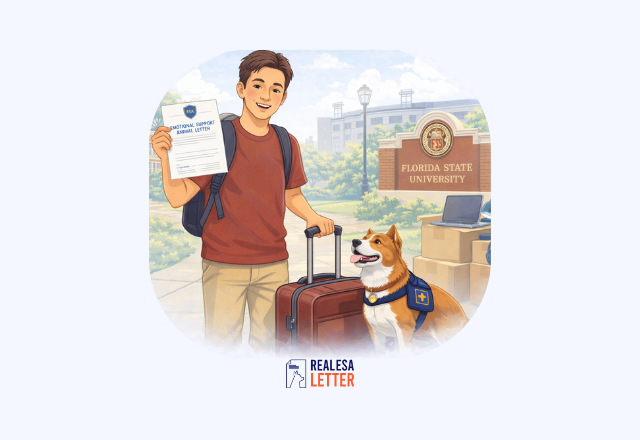
Florida State University allows emotional support animals in campus housing under the Fair Housing Act. However, you must complete several important steps before move-in day.
This guide explains everything FSU students need to know about obtaining an ESA letter.
Key Takeaways
Start 4 to 6 weeks before move-in. Requests approved after halls open get pushed to the next semester.
Target dates: July 15 for Fall, December 1 for Spring. Freshmen should begin in April or May.
Your provider must be licensed in Florida. An out-of-state therapist's letter won't work.
Three offices, in order: get the letter, register with OAS, complete the Housing agreement.
The letter needs letterhead, a license number, contact details, a date within two years, and how the animal helps.
ESAs are limited to residence halls, not classrooms or dining halls.
No pet fees, but you're liable for damage.
Roommate consent isn't required, though Housing may reassign rooms over severe allergies.
You cannot leave your ESA during breaks. Halls close, and doing so repeatedly can cost you the accommodation.
Registry sites and certificates won't be accepted. Only letters from licensed professionals.
How Long Does FSU ESA Approval Take?
ESA requests approved AFTER residence halls open will be processed to begin the following semester. Starting your application in August for Fall move-in is too late.
Fall Semester Timeline:
- Ideal submission: Early to mid-June
- Latest recommended: July 15th
- FSU move-in dates: Mid-to-late August
- If approved after move-in: ESA arrives Spring semester only
Spring Semester Timeline:
- Ideal submission: Early November
- Latest recommended: December 1st
- FSU move-in dates: Early January
- If approved after move-in: ESA arrives following the fall semester
Complete Processing Timeline:
- ESA letter from provider: 1-3 days (with RealESALetter)
- OAS application review: 10 business days minimum
- Housing coordination: 5-7 business days
- Vaccination records processing: 3-5 business days
Start 4-6 weeks before move-in to avoid semester delays.
Bringing your emotional support animal to Florida State University involves working with multiple offices in a specific order. The approval process requires coordination between you, a Florida-licensed mental health provider, FSU's Office of Accessibility Services (OAS), and University Housing.
Here are the steps to ensure you complete everything correctly and on time.
Step 1: Get a Legitimate ESA Letter
Your first step is obtaining proper documentation from a licensed mental health professional, as required under Florida ESA law. This professional may be a psychiatrist, psychologist, therapist, or licensed counselor, but they must be actively licensed to practice in Florida.
What Your Florida ESA Letter Must Include
Your Florida ESA letter must meet specific requirements to be valid. The documentation must appear on official letterhead from the healthcare provider. It should include the provider's license number and contact information.
The letter must be signed and dated within the last two years. Your provider should explain your diagnosed mental health condition. They must describe how the animal helps reduce your symptoms.
FSU recommends working with a provider who knows your medical history. An established relationship shows the recommendation is genuine. One-time online evaluations may not meet FSU's standards.
Where to Find Mental Health Providers
FSU's University Health Services provides a list of off-campus mental health providers. These professionals understand ESA letter requirements for housing accommodations. You can also work with your existing therapist or counselor.
Many students use telehealth services to connect with licensed professionals. These virtual appointments are valid if the provider is licensed in Florida. Make sure the professional has personal knowledge of your condition.
FSU-Approved Provider List
FSU University Health Services maintains a list of Florida-licensed mental health professionals familiar with ESA documentation requirements for housing accommodations. You can find this list on the UHS website under "Emotional Support Animal Providers."
Local Tallahassee providers include:
- Dr. Derek G. Turesky (Boca Raton, offers statewide telehealth)
- Dr. Jessica L. Tommasi, LMHC (Tampa, telehealth available)
- Licensed providers through RealESALetter (100% online, Florida-licensed)
If you already work with a therapist outside Tallahassee, confirm they are licensed in Florida before requesting your ESA letter.
Step 2: Register with FSU's Office of Accessibility Services
Once you have your ESA letter, you must register with the Office of Accessibility Services. This office reviews all accommodation requests, including emotional support animals. The registration process typically takes 10 business days.
Complete the OAS Application
Visit the OAS website to complete an application for support services. You will submit your ESA letter along with this application. The documentation must clearly show your disability and need for the animal.
After submitting your application, OAS will review your documentation. If anything is missing or unclear, they will contact you. Documentation requirements are strict and cannot be waived.
Attend Your Intake Meeting
OAS will schedule an intake appointment with a disability specialist. During this meeting, you'll discuss your ESA request and other accommodations. The specialist will explain the process and answer your questions.
If your documentation meets all requirements, OAS will approve your accommodation. You will receive Letters of Accommodation confirming the approval. Keep these letters for your records.
What if my application is incomplete? OAS will contact you if documentation is missing. Response time increases significantly if you must resubmit. This is why starting early (June for Fall, November for Spring) is critical. |
Step 3: Coordinate with University Housing
After OAS approves your ESA, they notify University Housing automatically. However, you should also contact Housing directly. This ensures they have all the necessary information before move-in day.
Complete the Housing Agreement
University Housing requires you to sign an Emotional Support Animal Agreement. This agreement outlines your responsibilities as an ESA owner. You must read and agree to all terms before bringing your animal.
Meet with a Residential Life liaison before your animal arrives. They will review expectations and housing policies with you. This meeting helps prevent misunderstandings later.
Provide Vaccination Records
Your animal must have current vaccination records before moving in. Dogs typically need rabies, distemper, and parvovirus vaccines. Cats require rabies and feline distemper vaccines.
Obtain these records from your veterinarian on official letterhead. The vaccines must be up to date according to state requirements. Housing may request updated records during the year.
Discuss with Roommates
All roommates will be informed about your emotional support animal, but their consent is not legally required under the Fair Housing Act. However, FSU considers roommate concerns when making housing assignments.
What FSU Housing Will Do:
- Notify your assigned roommate(s) before move-in
- Provide information about the type of animal (dog, cat, etc.)
- Ask about allergies or health concerns
- Not disclose your specific disability or medical details
If Your Roommate Has Concerns:
Severe allergies or phobias: Housing may reassign one of you to a different room to accommodate both students' needs. This reassignment process can take 1-2 weeks and may delay move-in.
Financial disputes: You cannot be charged pet fees, but you remain liable for any damage your ESA causes to the room.
Proactive Communication Tips:
- Reach out to your roommate once FSU provides contact information (usually 4-6 weeks before move-in)
- Discuss your ESA's routine, care schedule, and behavior
- Set clear boundaries about feeding, cleaning, and shared spaces
- Exchange emergency contact information in case your ESA needs care
Clear communication prevents conflicts in shared living spaces and ensures a positive experience for everyone.
What If Roommate Conflicts Arise After Move-In?
Even with advanced communication, conflicts can develop after your ESA moves in.
Common Roommate Issues:
- Noise complaints - Your ESA barks, meows excessively, or disrupts sleep
- Cleanliness concerns - Roommate feels the animal creates mess or odors
- Space conflicts - Roommate feels the ESA takes up too much room
- Allergy symptoms - Roommate develops allergic reactions after exposure
- Fear or discomfort - Roommate is uncomfortable around animals
FSU's Resolution Process:
Step 1: Document the issue
- Keep records of specific incidents with dates/times
- Take photos if relevant (damage, cleanliness issues)
- Save any communication with your roommate
Step 2: Contact your Resident Assistant (RA) first
- RAs are trained in roommate mediation
- They can facilitate a conversation between you and your roommate
- Many issues are resolved through better communication
Step 3: Escalate to University Housing if needed
- Contact the Residential Life liaison assigned to your hall
- Housing may offer mediation services
- In severe cases, one of you may be reassigned
Step 4: OAS involvement for accommodation concerns
- If your roommate requests the removal of your ESA, contact OAS immediately
- OAS will review whether your accommodation can be maintained
- You have rights under the Fair Housing Act that protect your ESA
Your Responsibilities to Prevent Conflicts:
- Clean up immediately after your ESA (hair, accidents, waste)
- Keep noise levels reasonable (especially during quiet hours)
- Store pet supplies neatly in your designated space
- Never leave your ESA alone overnight or during extended breaks
- Address behavior problems promptly (excessive barking, aggression)
Remember: FSU can remove your ESA if it creates substantial disruption or health/safety hazards for other residents.
Where Can You Take an ESA at FSU?
At FSU, emotional support animals are permitted only in residence halls. Your ESA cannot accompany you to classrooms, dining halls, or other campus buildings. The animal must stay in your assigned room or apartment.
FSU follows the Fair Housing Act, which protects your right to live with an ESA. Landlords cannot charge pet fees for approved emotional support animals. You remain financially responsible for any damage your animal causes.
When Should FSU Students Start the ESA Process?
Start the ESA approval process as early as possible. FSU strongly emphasizes completing everything before move-in day. Requests approved after residence halls open typically wait until next semester.
General Timeline: 4-6 Weeks Minimum
- Week 1-2: Obtain ESA letter from Florida-licensed provider
- Week 2-3: Submit OAS application and wait for review (10 business days)
- Week 3-4: Attend intake meeting and receive approval
- Week 4-5: Complete Housing agreement and submit vaccination records
- Week 5-6: Final confirmation and roommate coordination
For Incoming Freshmen:
First-year FSU students face unique ESA challenges and should start even earlier.
Here is the freshman-specific timeline:
April-May (Before High School Graduation):
- Schedule a consultation with a Florida-licensed mental health provider
- If you have an out-of-state therapist, find a Florida-licensed provider for the ESA letter
- Research FSU's specific ESA requirements on the OAS website
- Discuss ESA plans with your family
June (Right After Graduation):
- Obtain your Florida ESA letter from a licensed provider
- Complete the OAS Application for Support Services online
- Submit your ESA letter and required documentation
- Request summer contact information from OAS for follow-ups
July:
- Attend your OAS intake meeting (can be done via Zoom if you're out of state)
- Once approved by OAS, complete University Housing's ESA Agreement
- Schedule vet appointments for required vaccinations
- Submit vaccination records to Housing
Early August (Before Orientation):
- Confirm final approval from both OAS and Housing
- Receive roommate contact information and reach out about your ESA
- Make travel arrangements to bring your ESA to Tallahassee
- Purchase supplies for your dorm room
Why Freshmen Need Extra Time:
Common Freshman Mistakes:
- Waiting until summer orientation to learn about ESA process (too late for Fall)
- Assuming their out-of-state therapist can provide the letter (must be Florida-licensed)
- Not realizing OAS and Housing are two separate approval processes
- Planning to bring their ESA during family move-in weekend without prior approval
Success Strategy for Freshmen:
Start your ESA process in April/May while still in high school. This gives you the full 4-6 weeks needed plus buffer time for any issues with documentation or provider licensing.
Transfer Students:
The same timeline applies. Begin your ESA process the semester before you plan to transfer to FSU, not after you're accepted. Contact OAS as soon as you receive your FSU admission letter.
What Are Your Responsibilities After FSU Approves Your ESA?
FSU expects you to care for your animal responsibly. You must provide for all the animal's daily needs. This includes food, water, exercise, and veterinary care.
Keep your ESA under control at all times. The animal should not be disruptive to neighbors or roommates. You cannot leave your ESA alone overnight or during breaks.
Clean up after your animal immediately, both indoors and outdoors. You are responsible for any damage the animal causes. This includes scratches, stains, or other property damage.
When Can FSU Deny or Remove Your ESA?
FSU can deny or remove an ESA under certain circumstances. The animal must not pose health or safety threats. Aggressive behavior toward people or other animals is not acceptable.
Animals that are not properly cared for may be removed. This includes animals that are not clean or house-trained. Repeated policy violations can result in losing your accommodation.
The animal cannot cause substantial property damage beyond normal wear. Excessive noise or odors that disturb others are grounds for removal. FSU prioritizes the comfort of all residents.
What If FSU Denies Your ESA Request?
If OAS denies your initial ESA request, you have options.
Common Reasons for Denial:
- Inadequate Documentation
- ESA letter not on official letterhead
- Provider's license number missing or invalid
- Letter doesn't explain how ESA alleviates symptoms
- Documentation not dated within past 2 years
- Provider Credibility Issues
- Provider not licensed in Florida
- Provider lacks personal knowledge of your condition
- Online-only evaluation without proper assessment
- Letter from an internet "ESA registry" website
- Animal-Related Concerns
- Animal poses direct health/safety threat to others
- Specific animal type prohibited by university policy
- Animal too large for dorm room accommodations
- Previous incidents of aggression or damage
- Procedural Issues
- Application submitted after deadline
- Incomplete application materials
- Student not enrolled in campus housing
- Missing required vaccination records
FSU Appeal Process:
Step 1: Review the denial letter (arrives within 10 business days)
OAS will explain specific reasons your request was denied and what documentation was insufficient.
Step 2: Address the deficiencies
- If provider issue: Obtain new letter from FSU-approved provider
- If documentation issue: Ask your provider to revise the letter with missing elements
- If animal issue: Consider whether a different type of animal would be appropriate
Step 3: Submit supplemental documentation
- Email [email protected] with "ESA Appeal - [Your Name]" in subject line
- Include your original application ID number
- Attach revised or additional documentation
- Explain what changes you've made
Step 4: Request a follow-up meeting
Schedule another appointment with your OAS disability specialist to discuss the updated request. Be prepared to explain:
- Your mental health condition and how it impacts daily life
- Specific ways your ESA alleviates symptoms
- Why this particular animal is necessary for your treatment
Step 5: Consider timing alternatives
If your appeal won't be resolved before move-in:
- Request approval to begin next semester
- Live in a dorm without your ESA temporarily
- Explore off-campus housing options in Tallahassee (Fair Housing Act still applies)
Timeline for Appeals:
- Appeal submission: Within 30 days of denial
- OAS review of appeal: 10-15 business days
- Final decision: 2-3 weeks from appeal submission
If Your Appeal Is Denied:
- You may live in off-campus housing where FHA protections still apply
- Consider reapplying the following semester with stronger documentation
- Contact OAS to discuss alternative accommodations for your disability
Prevention is Better Than Appeal:
Work with reputable providers like RealESALetter who understand FSU's requirements and create compliant ESA letters that meet OAS standards the first time.
Which Animals Are Not Allowed as ESAs at FSU?
While most common pets can be ESAs, some animals are prohibited. Reptiles that pose health risks are generally not allowed. Exotic animals requiring special permits typically cannot live in dorms.
Check with OAS if you have questions about a specific animal. Dogs and cats are the most commonly approved emotional support animals. Other domesticated animals may be considered on a case-by-case basis.
How Much Does an ESA Cost at FSU?
You will not pay pet fees or deposits for an approved ESA. However, you must budget for your animal's care. Veterinary visits, food, and supplies add up quickly.
Consider the cost of boarding during university breaks. FSU housing closes during certain holidays. You need arrangements for your animal during these times.
Emergency veterinary care can be expensive. Have a plan for unexpected medical needs. Pet insurance may help cover some costs.
What Mistakes Should You Avoid When Keeping an ESA at FSU?
- Don't wait until the last minute to start the process. Many students underestimate how long approvals take. Starting early prevents stress and disappointment.
- Never bring your animal to campus before receiving final approval. This violates university policy and can result in disciplinary action. Housing must confirm everything first.
- Avoid online ESA scam websites, registries, or certification services. These are not legitimate and will not be accepted by FSU. Only letters from licensed mental health professionals are valid.
- Don't assume your ESA can go everywhere with you. ESAs are limited to your residence hall room. They cannot enter academic buildings or dining facilities.
- FSU residence halls close during winter break, spring break, and summer. You cannot leave your ESA alone in the dorm during these times.
What doesn't work:
- Asking your RA to check on your ESA
- Leaving your ESA with another student who's staying
- Assuming you can leave extra food/water for a week
What works:
- Take your ESA home with you during all breaks
- Arrange pet-sitting with a Tallahassee friend or family member
- Budget for boarding facilities (Pet Paradise, Tallahassee PetConnect)
- Have a reliable backup plan in case of emergencies
- FSU can remove your ESA accommodation if you repeatedly leave the animal alone during breaks.
- Plan before bringing your ESA to campus.
What Are the Mental Health Benefits of ESAs for College Students
For students with qualifying conditions, ESAs provide real emotional support. The presence of a familiar animal can reduce anxiety, and many students report feeling less lonely with their ESA. As explained in this college ESA letter guide, animals also encourage routine and responsibility in daily life.
Caring for your ESA provides structure during stressful times, which can improve overall mental health and academic performance. The companionship helps many students adjust to college life, making a dorm feel more like home and supporting long-term success at FSU.
Additional Resources for FSU ESA Students
FSU provides multiple resources to support students through the ESA approval process. Here are the key contacts and services you'll need.
Office of Accessibility Services (OAS)
Your primary contact for ESA approval and disability accommodations.
Location: 108 Student Services Building, 874 Traditions Way, Tallahassee, FL 32306
Phone: (850) 644-9566
VRS for Deaf/Hard of Hearing: (850) 270-5370
Fax: (850) 645-1852
Email: oas@fsu.edu
Office Hours: Monday-Friday, 8:00 AM - 5:00 PM
Website: dsst.fsu.edu/oas
OAS handles all ESA accommodation requests, reviews documentation, and issues Letters of Accommodation. Schedule your intake meeting as soon as you submit your application.
University Housing
Manages ESA agreements, vaccination records, and roommate coordination.
Website: housing.fsu.edu
Main Office Location: 2431 Alumni Drive, Tallahassee, FL 32306
Email: housing@fsu.edu
Phone: (850) 644-2860
Contact Housing after OAS approves your ESA to complete the Emotional Support Animal Agreement and submit vaccination records.
FSU University Health Services
Provides list of Florida-licensed mental health providers familiar with ESA documentation.
Location: Health & Wellness Center, 960 Learning Way, Tallahassee, FL 32306
Phone: (850) 644-6230
Website: uhs.fsu.edu
UHS maintains an updated list of emotional support animal providers, including local Tallahassee therapists and statewide telehealth options. These professionals understand FSU's specific ESA letter requirements.
Tallahassee Veterinary Services
Your ESA needs current vaccinations and health records before move-in.
Regular Veterinary Care:
- North Florida Animal Hospital: (850) 894-6020, 1630 N Monroe St
- Cross Creek Animal Clinic: (850) 893-2140, 3331 Shamrock St S
- Westwood Animal Hospital: (850) 575-8989, 1200 W Tharpe St
Emergency Veterinary Care (24/7):
Animal Emergency Clinic of Tallahassee: (850) 222-0123, 2324 Centerville Rd (Open nights, weekends, and holidays)
Schedule your ESA's vet appointments early. Vaccination records must be submitted to University Housing before your animal can move in.
Pet Boarding & Sitting Services in Tallahassee
Required for breaks when residence halls close.
- Pet Paradise: (850) 270-1414, 3250 Capital Medical Blvd
- Tallahassee PetConnect: (850) 894-4761, 1863 Capital Cir NE
- The Animal Hospital & Pet Resort at Southwood: (850) 942-7387, 3875 Capital Medical Blvd
- Rover.com: Online marketplace for local pet sitters
Book holiday boarding (Thanksgiving, Winter Break, Spring Break) at least 4-6 weeks in advance. Popular dates fill up quickly.
Mental Health Resources at FSU
FSU Counseling & Psychological Services (CAPS):
- Location: University Health Services building
- Phone: (850) 644-8255
- Services: Free counseling for FSU students (not for ESA letters, but for ongoing mental health support)
Off-Campus Florida ESA Letter Services
If you need a Florida-licensed provider quickly: RealESALetter.com: Online ESA letter service with Florida-licensed professionals, 48-hour delivery
Always verify the provider is licensed in Florida and provides documentation on official letterhead with license numbers.
Important FSU Policies & Forms
Download these from the FSU websites:
- OAS Application for Support Services: dsst.fsu.edu/oas/students/applying-for-services
- Emotional Support Animal Agreement (University Housing)
- FSU Student Code of Conduct (includes animal policies)
- Residence Hall Contract Terms
Read all policies carefully before bringing your ESA to campus.
In final thoughts, obtaining an ESA letter before move-in day requires planning and patience. The process protects both students and the university community. Following these steps ensures you can bring your animal to campus.
Remember that timing is critical for a smooth approval process. Start gathering documentation as soon as you decide to bring an ESA. Contact OAS and Housing early with any questions.
Your emotional support animal can make a real difference in your college experience. With proper preparation, you'll be ready to move in with your companion. FSU wants to support your success both academically and personally.
Frequently Asked Questions by FSU Students
Does FSU allow emotional support animals in dorms?

Yes, FSU allows emotional support animals in residence halls based on the Fair Housing Act. However, ESAs are only permitted in your assigned bedroom/apartment, not in classrooms, dining halls, or other campus buildings. You must obtain approval from the Office of Accessibility Services and University Housing before bringing your ESA to campus.
When can FSU students move into dorms?
FSU's move-in dates vary by semester and student status. Typically:
- Fall semester: Move-in usually occurs in mid-to-late August (exact dates vary by year and residence hall)
- Spring semester: Move-in typically happens in early January
- Early arrivals: Some students (athletes, RAs, special programs) may move in earlier
For exact move-in dates, students should check their housing contract and the University Housing website, as dates change annually. This is why starting your ESA process 4-6 weeks before your scheduled move-in date is critical.
Can I bring my existing pet as my ESA to FSU?
Yes, your existing pet can become your emotional support animal if you have a qualifying mental health condition. The ESA letter does not require you to obtain a new animal—it simply recognizes that your current pet provides therapeutic benefit for your disability.
However, your pet must meet FSU's requirements:
- Current vaccination records (rabies, distemper for dogs; rabies and feline distemper for cats)
- Spay/neuter documentation (required by University Housing)
- Proof the animal is house-trained and well-behaved
- No history of aggression or property damage
Whether you're bringing an existing pet or adopting a new one, you must complete the full OAS and Housing approval process before your animal can live on campus. The ESA letter from your Florida-licensed mental health provider will recommend the type of animal (dog, cat, etc.) but doesn't specify which specific animal you'll use.
Does my out-of-state therapist's ESA letter work at FSU?
No. FSU requires ESA letters from mental health professionals who are actively licensed in Florida. An ESA letter from a therapist licensed only in another state (such as Georgia, Alabama, or your home state) will NOT be accepted by the Office of Accessibility Services.
Why Florida licensing matters:
- Florida law requires providers to be licensed where they practice
- OAS verifies provider credentials through Florida licensing databases
- Out-of-state licenses cannot be verified by FSU
Your options if you have an out-of-state therapist:
- Ask if your current therapist is also licensed in Florida (some hold multiple state licenses)
- Request a referral to a Florida-licensed colleague they trust
- Use a telehealth service like RealESALetter that connects you with Florida-licensed professionals
- Find a provider from FSU's approved list on the University Health Services website
Don't wait until the last minute to discover your letter isn't valid. Verify your provider's Florida license at flhealthsource.gov before requesting your ESA letter.
Which Animals Are Not Allowed as ESAs at FSU?
While most common pets can be ESAs, some animals are prohibited. Reptiles that pose health risks are generally not allowed. Exotic animals requiring special permits typically cannot live in dorms.
Check with OAS if you have questions about a specific animal. Dogs and cats are the most commonly approved emotional support animals. Other domesticated animals may be considered on a case-by-case basis.
How Much Does an ESA Cost at FSU?
You will not pay pet fees or deposits for an approved ESA. However, you must budget for your animal's care. Veterinary visits, food, and supplies add up quickly.
Consider the cost of boarding during university breaks. FSU housing closes during certain holidays. You need arrangements for your animal during these times.
Emergency veterinary care can be expensive. Have a plan for unexpected medical needs. Pet insurance may help cover some costs.
Harper Jefcoat is a content writer with 10+ years of experience covering ESA laws, mental wellness, and emotional support animal benefits. As a blog author for RealESALetter, he educates readers on ESA regulations and promotes ethical documentation practices.
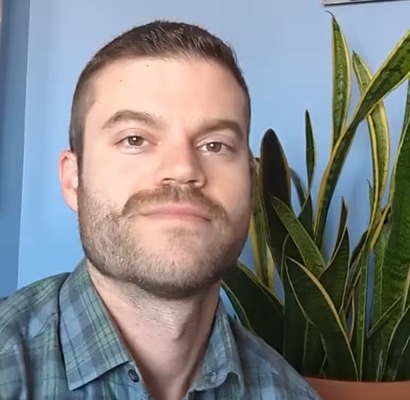
Darren Rafel is a licensed clinical social worker with active LCSW licenses across 13 states, including California, New Jersey, Texas, Florida, and Arkansas. He conducts ESA evaluations with direct clinical experience using pet therapy as part of mental health treatment.

Don't worry. Your pet stays with you.
Housing law is on your side
- 1A few questions. That's your paperwork
- 2A licensed therapist reviews your case
- 3Official ESA letter, ready to send
Not accepted? Full refund, guaranteed