Sign In / Create Account
Can a Family Doctor Write ESA Letters?
Yes, but only if your family doctor meets specific conditions. Most do not meet these conditions, which is why so many patients get turned down even when they qualify.

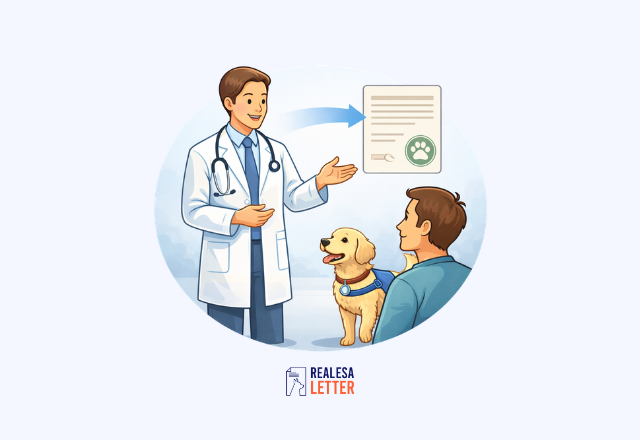
This guide covers what makes a family doctor's ESA letter valid, and what to do if yours says no.
When a family doctor can't help, RealESALetter.com connects you directly with a licensed clinician who can provide you with an ESA letter.
Key Takeaways
Three Conditions Must Be Met: An active state medical license. An established treatment relationship. Active management of the mental health condition.
Most Family Doctors Decline Over Liability: ESA letters fall outside a typical physician's scope of practice. Clinic policies often prohibit writing them.
Six Other Providers Qualify Too: Therapists, psychologists, and psychiatrists can write the letter. LCSWs, LPCs, and LMFTs can as well.
A Specialist Is Usually Faster: A mental health specialist evaluates the condition in one session. The letter is built to survive current scrutiny.
What Has to Be True for a Family Doctor's ESA Letter to Count
Three conditions decide whether the letter holds up. Each one addresses a different way it can fall apart.
An Active State Medical License
The license needs to be current and unrestricted, not expired, suspended, or under review. It must be issued in the state where the family doctor, or primary care physician (PCP), is practicing.
An Established Treatment Relationship
The doctor needs an existing history with the patient, not a first-time visit arranged to get the letter. Housing providers increasingly ask how long that relationship has existed, and a documented history backs it up.
Active Management of the Mental Health Condition
This is the part most people miss. A single mention of stress at a checkup does not count. The doctor needs to be prescribing medication, documenting the condition in the chart, or otherwise treating it as an ongoing part of care.
Whatever provider writes it, the documentation needs to be specific and verifiable.
Every RealESALetter.com letter includes the clinician's state license number, issue date, and direct contact information, so landlords can verify it independently.
If your own doctor can't write one, you can get an ESA letter online instead.
Why Many Family Doctors Decline to Write ESA Letters
Many family doctors decline ESA letter requests because the request falls outside their scope of practice and creates liability exposure the clinic isn't set up to manage.
The most common reasons:
Scope of Practice
General practitioners aren't trained to formally evaluate mental health disabilities, and many don't feel qualified to put that assessment in writing.
Clinic Liability Policy
A growing number of practices and hospital networks have internal rules barring staff from signing ESA documentation at all.
Landlord Scrutiny
Letters from a non-specialist are more likely to be questioned, which can mean delays for the tenant even when the letter is technically valid.
You can see the full list of who can write an ESA letter for every credential that qualifies.
Which Other Providers Qualify If Your Doctor Won't Write One
If your family doctor won't write it, six other licensed provider types can:
- Therapists
- Clinical psychologists
- Psychiatrists
- Licensed clinical social workers (LCSW)
- Licensed professional counselors (LPC)
- Licensed marriage and family therapists (LMFT)
Any of these providers can write the letter as long as they're licensed in your state and have evaluated your condition directly.
Your therapist can write an ESA letter too, and for many people it's the fastest option, since therapists already handle this kind of documentation regularly.
If Your Family Doctor Says No, Here's the Next Step
The next step is a licensed mental health specialist who evaluates ESA requests directly, rather than another general practitioner.
Skip the Back-and-Forth.
Go straight to a licensed mental health professional who handles ESA evaluations as part of their regular practice, instead of asking a general practitioner to make an exception.
Get Evaluated Directly.
The specialist assesses your condition in one dedicated session, rather than requiring the months-long relationship a family doctor's letter would need to establish.
Receive a Letter Built to Hold up.
It documents your specific condition and the animal's necessity in detail, matching the individualized review housing providers now apply.
Bottom Line
A family doctor can write your ESA letter, but only if all three conditions mentioned above are met. Many will not, and that usually comes down to liability rules, not your condition. Some clinics simply do not allow it, no matter how supportive your doctor feels. If your doctor says no, that is not the end of the road. It just means someone else needs to write the letter instead. A licensed therapist or counselor can often step in and finish the process in a single session.
See if you qualify to get matched with a licensed clinician and skip the guesswork entirely.
Frequently Asked Questions
Can urgent care doctors give ESA letters?

No. Urgent care doctors typically cannot provide ESA letters because they lack established patient relationships and don't provide ongoing mental health treatment. ESA letters require comprehensive mental health evaluations and documented therapeutic relationships, which urgent care settings aren't designed to provide.
Do I need a therapist or can my regular doctor write an ESA letter?
Your regular family doctor can write an ESA letter if they've been treating your mental health condition and feel qualified to assess your need for an ESA.
Can my family doctor write an ESA letter for housing?
Yes, if your family doctor has been treating your mental health condition and determines an ESA would provide therapeutic benefit. The letter must meet Fair Housing Act requirements, including proper license information and confirmation of disability-related need. Your doctor must have personal knowledge of your condition through established treatment.
Does it matter what state my doctor is licensed in if we meet by telehealth?
Yes. The doctor must be licensed in the state where you live, not just where they're physically located, regardless of whether the visit happens in person or by telehealth.
Can a doctor write the letter after just one appointment?
Usually not on its own. A single visit rarely establishes the ongoing treatment relationship a valid letter needs to document.
Do landlords treat a family doctor's letter differently than a therapist's?
Sometimes. Letters from mental health specialists are questioned less often simply because the provider's role makes the connection to the condition more obvious on its face.
Can a nurse practitioner or physician assistant write one?
In many states, yes, if they're licensed to diagnose and treat the condition independently, but rules vary, so it's worth confirming with the specific licensing board.
What if my family doctor writes the letter but doesn't document how the condition affects me?
That letter is more likely to be challenged. Housing providers can now request additional documentation when a letter states a diagnosis without connecting it to a specific, disability-related need for the animal.
Dr. Avery Langston is a health and wellness writer with 12+ years of experience covering ESA rights, housing laws, and mental health. As a senior contributor for RealESALetter, she helps readers understand ESA regulations and legal protections.

Precious L. is a Licensed Mental Health Counselor (LMHC) and qualified supervisor whose work centers on trauma-informed care, family systems, relationship health, and emotional adjustment.

Don't worry. Your pet stays with you.
Housing law is on your side
- 1A few questions. That's your paperwork
- 2A licensed therapist reviews your case
- 3Official ESA letter, ready to send
Not accepted? Full refund, guaranteed