

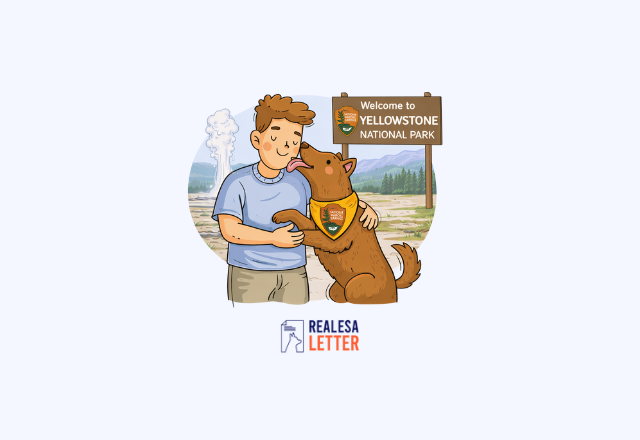
Yes, dogs are allowed in Yellowstone National Park, but only in very limited areas. Strict regulations exist to protect wildlife, fragile geothermal features, and your pet’s safety.
Understanding these rules before your visit helps prevent dangerous encounters and costly fines, which can range from $50 to $500. Yellowstone permits leashed dogs only in developed areas such as parking lots, campgrounds, and within 100 feet of roads and paved surfaces.
Dogs are prohibited on hiking trails, boardwalks, backcountry areas, and near thermal features due to the presence of wildlife like grizzly bears, wolves, and bison, as well as unstable geothermal terrain.
Let’s break it down by explaining exactly where dogs are allowed in Yellowstone, which areas are off-limits, and how to plan your visit accordingly.
What Is Yellowstone's Pet Policy 2026 Framework
The National Park Service established Yellowstone's pet regulations under Title 36 of the Code of Federal Regulations to balance visitor access with ecosystem preservation. Unlike some national parks that allow pets on trails, Yellowstone maintains stricter boundaries due to its unique wildlife density and thermal activity.
Core regulations include:
- Dogs must remain on leashes no longer than six feet at all times
- Pets cannot be more than 100 feet from roads, parking areas, or campgrounds
- All boardwalks, trails, and backcountry areas are off-limits
- Owners must clean up after their pets immediately
- Dogs cannot be left unattended, including in vehicles, during warm weather
- Service animals assisting individuals with disabilities receive broader access
These restrictions apply to all domestic pets, including cats, birds, and other animals, though dogs represent the vast majority of pets brought to the park.
Where Can Dogs Go in Yellowstone
While Yellowstone's pet restrictions seem limiting, several areas remain accessible for visitors traveling with dogs. Strategic planning allows you to explore the park while keeping your canine companion comfortable and compliant with regulations.
Pet-Friendly Locations
Campgrounds: All developed campgrounds except Canyon Campground accommodate pets. Dogs can stay at Madison, Mammoth, Fishing Bridge RV Park, Bridge Bay, Grant Village, Lewis Lake, Norris, Indian Creek, Pebble Creek, Slough Creek, and Tower Fall campgrounds. Your dog must remain on a leash and cannot be left unattended.
Parking areas and pullouts: Dogs can walk on leashes in any parking lot or roadside pullout throughout the park. Popular spots like Old Faithful's parking area, Grand Prismatic overlook parking, and Mammoth Hot Springs parking zones allow brief pet breaks.
Roadways and shoulders: You can walk your dog on paved roads and within 100 feet of road edges, though this poses safety concerns given Yellowstone's traffic volumes during peak season (approximately 900,000 vehicles monthly from June-August).
Developed areas: Dogs have access to developed zones around visitor centers, lodges, and stores, provided they remain leashed and don't enter buildings.
Prohibited Areas: Where Your Dog Cannot Go
Understanding where dogs are forbidden helps prevent violations and protects your pet from dangerous situations. Yellowstone's restricted areas encompass the majority of the park's 3,472 square miles.
Completely off-limits zones include:
- All hiking trails, including short nature walks and accessible paths
- Boardwalks and platforms at thermal features (Old Faithful, Grand Prismatic, Norris Geyser Basin)
- Backcountry and wilderness areas beyond developed zones
- Rivers, lakes, and other water bodies
- Wildlife viewing areas and habitats
- Buildings, visitor centers, museums, and ranger stations (except service animals)
The prohibition on thermal area boardwalks exists because hot springs reach temperatures exceeding 199°F (93°C), and dogs walking on boards could suffer severe burns from radiant heat or accidental contact. Additionally, pets disturb delicate microbial mats and mineral formations that take centuries to develop.
Trail restrictions protect dogs from wildlife encounters—grizzly bears perceive dogs as threats or prey, and confrontations have resulted in serious injuries and deaths. Bison, elk, and moose also pose lethal risks to dogs that approach too closely.
Why Yellowstone Restricts Dog Access
Yellowstone's pet policies stem from documented ecological impacts and safety incidents rather than arbitrary rules. Scientific research and incident reports demonstrate why these limitations exist.
Wildlife Safety Concerns
Dogs trigger instinctive predator responses in wild animals. When bears encounter dogs, they may attack either the dog or the owner attempting to protect their pet. Between 1980 and 2015, Yellowstone documented 44 bear attacks on humans, with several involving dogs that provoked the encounter.
Wild canids like wolves and coyotes view domestic dogs as territorial competitors. Gray wolves, reintroduced to Yellowstone in 1995, now number approximately 95 individuals across eight packs. These apex predators may attack dogs they perceive as threats.
Ungulates, including bison, elk, and moose, respond defensively to dogs, which resemble natural predators. Bison injure more visitors than any other Yellowstone animal, averaging 5-6 injuries annually, and dogs increase this risk exponentially by provoking charges.
Ecosystem Protection
Dogs introduce foreign scents, bacteria, and parasites into sensitive habitats. Their presence disrupts wildlife behavior patterns, causing animals to abandon feeding areas, dens, or nesting sites. Ground-nesting birds like killdeer and ducks face particular vulnerability when dogs roam off designated areas.
The park's hydrothermal features contain unique thermophilic microorganisms that exist nowhere else on Earth. Pet contamination threatens these irreplaceable biological communities that scientists study to understand early life forms and extremophile adaptations.
Visitor Experience Quality
Unleashed or poorly controlled dogs diminish experiences for other visitors who travel to Yellowstone specifically for wildlife observation and nature immersion. Barking dogs disrupt the natural soundscape that the National Park Service works to preserve as part of the wilderness experience.
Service Animal Rules in Yellowstone National Park
The Americans with Disabilities Act (ADA) requires Yellowstone to accommodate service animals differently than pets. Understanding this distinction prevents confusion about what you observe other visitors doing with their dogs.
Service animals receive broader access including:
- All trails where the general public can go
- Boardwalks and viewing platforms
- Buildings and visitor facilities
- Backcountry areas accessible to their handlers
However, service animals must remain under control via leash, harness, or voice command at all times. Park rangers may ask only two questions: (1) Is the animal required because of a disability? and (2) What work or task has the animal been trained to perform?
Emotional support animals (ESAs) do not qualify as service animals under ADA definitions for public accommodations. ESAs receive the same treatment as pets in Yellowstone, meaning they face all standard pet restrictions regardless of documentation or vests.
This represents a critical distinction—while ESAs provide therapeutic benefits and receive housing accommodations under the Fair Housing Act, they lack the specific task training that grants service animals public access rights.
For individuals who need legitimate emotional support animal documentation for housing purposes, obtaining a valid ESA letter is essential. Organizations like
RealESALetter provide information about the proper evaluation process through licensed mental health professionals and help clarify the legal differences between emotional support animals and service animals.
Documentation and ESA Considerations in Yellowstone
Visitors sometimes inquire about using emotional support animal letters to gain their dogs broader access in Yellowstone. This misunderstanding requires clarification.
While legitimate ESA documentation from licensed mental health professionals grants housing rights under the Fair Housing Act and previously provided air travel accommodations, ESAs do not receive public access rights in federal parks.
The National Park Service follows ADA guidelines, which recognize only dogs and miniature horses trained to perform specific tasks for individuals with disabilities. If you have a legitimate disability and require a service animal, ensure your dog is appropriately trained and can demonstrate task performance if questioned by park rangers.
Service animals must exhibit excellent behavioral control even around wildlife, crowds, and unpredictable situations. For individuals who benefit from ESA support but don't require a trained service animal, consider whether bringing your pet to Yellowstone serves their well-being.
The restrictions mean your dog will spend most time in parking lots or campgrounds rather than experiencing the park alongside you. Many pet owners find that the stress on their animals outweighs the benefits, choosing instead to arrange care at home or boarding facilities.
Practical Tips for Visiting Yellowstone With Your Dog
If you're committed to bringing your dog despite limitations, strategic planning makes the experience workable for everyone involved.
Temperature management: Yellowstone's elevation (7,733 feet at Canyon Village) means temperatures fluctuate dramatically. Summer highs reach 80°F while nights drop to 40°F.
Never leave dogs in vehicles—even with windows cracked, interior temperatures can reach lethal levels within 20 minutes. On hot days, parking lot asphalt temperatures exceed 140°F, burning paw pads within seconds.
Hydration and supplies: Carry collapsible water bowls and extra water. Yellowstone's high altitude increases dehydration risk for both humans and dogs. Pack waste bags and dispose of them in designated receptacles—never leave dog waste on the ground, even in natural areas.
Wildlife awareness: Keep dogs close and under tight leash control at all times. Scan surroundings constantly for wildlife, especially during dawn and dusk when animals are most active. If you encounter large animals, create distance immediately—minimum 100 yards from bears and wolves, 25 yards from bison and elk.
Identification: Ensure your dog wears updated ID tags with your cell phone number. Consider microchipping before your trip. If your dog escapes in Yellowstone's vast wilderness, recovery becomes extremely difficult.
Understanding proper dog training techniques before your trip can help ensure your dog stays close and responds reliably to commands in this challenging environment.
Kenneling services: The towns surrounding Yellowstone offer boarding facilities where your dog receives professional care while you explore restricted areas. West Yellowstone, Gardiner, and Cooke City all have kennel services within 5-10 miles of park entrances.
Pet-sitting arrangements: Some visitors alternate park days—one person explores with the dog in permitted areas while others hike trails, then they switch. This compromise allows everyone to experience different aspects of Yellowstone.
Nearby pet-friendly alternatives: Grand Teton National Park, located 50 miles south, offers slightly more pet-friendly policies with some trails allowing leashed dogs. Surrounding National Forests (Custer-Gallatin, Shoshone, Caribou-Targhee) provide extensive trail systems where dogs can hike freely.
Comparing Yellowstone to Other National Parks
Yellowstone's pet policies align with most iconic national parks that prioritize wildlife protection and ecosystem preservation. Understanding this context helps set appropriate expectations.
Similar restrictions exist at:
- Yosemite National Park (California) - dogs limited to paved areas and specific campgrounds
- Rocky Mountain National Park (Colorado) - pets restricted to roadsides and campgrounds
- Grand Canyon National Park (Arizona) - dogs allowed on rim trails but prohibited below the rim
- Zion National Park (Utah) - only the Pa'rus Trail permits pets
More pet-friendly alternatives include:
- Acadia National Park (Maine) - allows dogs on most trails and carriage roads
- Shenandoah National Park (Virginia) - permits dogs on 500+ miles of trails
- Great Sand Dunes National Park (Colorado) - dogs allowed on dunes and most trails
- White Sands National Park (New Mexico) - pets welcome throughout most of the park
The variation reflects each park's unique ecological sensitivities, wildlife populations, and management priorities.
The Best Dog-Friendly Trails Near Yellowstone
While dogs aren’t allowed on trails inside Yellowstone National Park, there are plenty of incredible hikes just outside the park boundaries where your pup is welcome. Here are some of the best dog-friendly adventures near Yellowstone.
- Watch Old Faithful Erupt With Your Dog
Starting Location: Old Faithful
Distance: Short walk from parking
Difficulty: Easy
Leash: Required
Although most of Yellowstone’s boardwalks are off-limits to pets, dogs are allowed in designated areas near Old Faithful. You won’t be able to stroll around the geyser basin itself, but there’s a pet-friendly viewing spot roughly 200 feet away where you can still watch the famous eruption.
With water shooting up to 180+ feet in the air, you’ll still enjoy the spectacle—just without the crowds packed along the boardwalk.
- Pine Creek Falls (or Pine Creek Lake) – North Entrance
Starting Location: Pine Creek Campground
Distance: 2 miles (Falls) / 9+ miles (Lake)
Difficulty: Easy to Strenuous
Leash: Recommended
Located in Paradise Valley just north of Yellowstone, Pine Creek Falls offers a scenic and relatively quick hike with your dog. The trail gradually climbs through a wooded canyon before reaching a steeper section where the waterfall spills dramatically over rock cliffs.
The falls sit near private property, so keeping your dog leashed is encouraged.
If you’re up for more of a challenge, continue toward Pine Creek Lake. The longer route climbs near treeline past ponds and cascading streams before reaching a cliff-ringed alpine lake popular with anglers.
- Passage Creek Falls – North Entrance
Starting Location: Passage Creek Falls Trailhead
Distance: 5.1 miles round-trip
Difficulty: Moderate
Leash: Required
Near Chico Hot Springs, this waterfall hike delivers a rewarding payoff. The trail follows a creek and crosses multiple bridges, but signage can be confusing—stay right after the third bridge to continue toward the falls.
The descent near the waterfall includes narrow switchbacks, so maintain control of your dog. The impressive cascade at the end makes the effort worthwhile.
- Suce Creek Loop – North Entrance
Starting Location: Suce Creek Trailhead
Distance: 5–6 miles
Difficulty: Strenuous (1,000 ft gain)
Leash: Voice control acceptable
For sweeping views of Paradise Valley and the Absaroka Range, Suce Creek is a great option. The steady climb rewards hikers with open vistas, seasonal wildflowers, and frequent creek crossings—something your dog will likely appreciate on warmer days.
- Buffalo Bill Dam – East Entrance
Starting Location: Buffalo Bill Dam
Distance: Short walk from parking
Difficulty: Easy
Leash: Required
Just outside Yellowstone’s East Entrance, this 325-foot concrete arch dam offers dramatic canyon views. Built in 1910, it was once the tallest dam in the world.
From the overlook, you can peer into a steep canyon carved by the Shoshone River. If the spillway is active, you’ll see water pouring directly from the dam face. There’s also a scenic river walk nearby for a longer outing.
Note: Dogs are not allowed inside the visitor center but may have access to water bowls outside.
- Pahaska & Grinnell Trails – East Entrance
Starting Location: Pahaska Trailhead
Distance: Flexible
Difficulty: Easy to Strenuous
Leash: Required
This trailhead serves as a gateway to vast wilderness just beyond Yellowstone’s eastern boundary. From here, you can explore valleys lined with streams, climb toward Crow Peak, or extend your route deeper into the Shoshone National Forest.
Expect wildflowers, canyon views, and peaceful backcountry terrain.
- Huckleberry Lookout – South Entrance
Starting Location: Sheffield Creek Trailhead
Distance: 10 miles round-trip
Difficulty: Strenuous (2,200 ft gain)
Leash: Voice control acceptable
Just south of Yellowstone, this challenging hike leads to a historic 1930s fire lookout perched atop Huckleberry Mountain.
Along the way, you’ll catch glimpses of both Yellowstone and Grand Teton National Parks. At the summit, sweeping mountain views and the preserved lookout tower make this trek especially memorable.
- Lake of the Woods – South Entrance
Starting Location: Cascade Creek Trailhead
Distance: ~3 miles round-trip
Difficulty: Easy
Leash: Voice control acceptable
Accessible via a rough dirt road (4x4 recommended), this quiet forest trail leads toward Tillery Lake and Lake of the Woods. The route winds through meadows and wooded terrain, offering a peaceful alternative to busier trailheads.
Note: Crossing into Yellowstone itself will restrict dog access, so remain outside park boundaries.
- Coffin Lakes Trail – West Entrance
Starting Location: Watkins Creek Trailhead
Distance: 11.3 miles round-trip
Difficulty: Moderate to Strenuous
Leash: Recommended
Near Hebgen Lake, this longer trail provides backcountry solitude and excellent trout fishing. Wildflowers blanket the area in early summer, and the alpine lakes offer a scenic resting point for you and your dog.
- Earthquake Lake / Refuge Point Loop – West Entrance
Starting Location: Pullout between Hebgen and Earthquake Lakes
Distance: 2.3 miles
Difficulty: Easy
Leash: Voice control acceptable
This mellow walk combines history and scenery. Earthquake Lake formed after a massive 1959 earthquake blocked the Madison River, creating a natural dam and flooding part of the valley.
Penalties for Violations and Enforcement at Yellowstone
Yellowstone rangers actively enforce pet regulations through citations carrying financial penalties and potential expulsion from the park.
Violation consequences include:
- $50-$100 fines for minor infractions (dog off-leash in permitted areas)
- $100-$300 fines for accessing restricted areas (trails, boardwalks)
- $500+ fines for repeated violations or endangering wildlife
- Mandatory court appearances for serious violations
- Potential bans from all National Park Service properties
Rangers patrol high-traffic areas regularly and respond to visitor reports of rule violations. During peak season, law enforcement rangers specifically monitor popular spots like Old Faithful and Mammoth Hot Springs, where violations occur most frequently.
Beyond legal penalties, violations endanger your pet. Dogs that escape into backcountry areas face deadly wildlife encounters, poisonous plant ingestion, thermal burns, and exposure to elements. The park's vast wilderness makes searches and rescues extremely difficult—lost dogs rarely survive more than a few days.
Winter Considerations for Pet Owners
Yellowstone operates differently during winter months (November-April), presenting unique considerations for pet owners. While basic restrictions remain unchanged, seasonal factors create additional challenges.
Most park roads close to vehicles after the first significant snowfall, typically in early November. Only the north entrance (Gardiner, Montana) to the northeast entrance (Cooke City, Montana) road remains open year-round, significantly limiting where vehicles can transport pets.
Winter visitors access the park primarily via guided snowcoach tours or snowmobiles from West Yellowstone and Mammoth Hot Springs. These tour operators generally prohibit pets due to space constraints and safety concerns.
The extreme cold—temperatures regularly drop below 0°F with wind chills reaching -30°F—poses serious hypothermia risks to dogs spending extended time outdoors.
If you're staying at Mammoth Hot Springs Hotel (the only winter-accessible lodge allowing pets in the surrounding outdoor areas), your dog can join you in the developed area but still cannot access trails or thermal features. The nearby town of Gardiner offers more practical pet accommodations during winter months.
Consider whether your dog breed is suitable for extreme winter conditions before planning a winter visit.
Health and Safety Protocols
Beyond regulatory compliance, several health considerations affect dogs visiting Yellowstone's unique environment.
Altitude adjustment: Yellowstone's elevation ranges from 5,282 feet at the north entrance to 8,859 feet at Eagle Peak. Dogs from lower elevations may experience altitude-related stress, manifesting as excessive panting, lethargy, or disorientation. Allow 24-48 hours for gradual acclimatization.
Toxic hazards: Yellowstone's thermal areas contain acidic waters and toxic gases. Even permitted areas near these features can expose dogs to harmful fumes. Signs of thermal poisoning include vomiting, excessive drooling, difficulty breathing, and skin burns. Seek immediate veterinary care if exposure occurs.
Parasites and diseases: Yellowstone's wildlife carries various parasites and diseases transmissible to domestic dogs. Ensure your pet's vaccinations are current, particularly rabies, distemper, and parvovirus.
Consider additional preventatives for giardia (common in park water sources), tick-borne illnesses, and intestinal parasites. You may also want to familiarize yourself with common conditions like yeast infections in dogs, cherry eye, and hypothyroidism symptoms that can be triggered by altitude and stress.
Veterinary access: The nearest emergency veterinary clinics are located in gateway communities: West Yellowstone (8 miles from the west entrance), Gardiner (5 miles from the north entrance), and Jackson, Wyoming (60 miles from the south entrance). No veterinary services exist within park boundaries. Bring a pet first-aid kit and know the route to the nearest clinic before emergencies occur.
Making the Decision: Should You Bring Your Dog?
After reviewing Yellowstone's extensive restrictions, many pet owners reconsider whether bringing their dog serves anyone's best interests. Honest assessment helps you make the right choice for your specific situation.
Bringing your dog makes sense if:
- You're primarily visiting for photography from roadside pullouts
- Your trip focuses on camping with short exploratory drives
- You have multiple people who can alternate pet supervision
- Your dog handles vehicle time well and adapts to new environments easily
- You're comfortable with significant limitations on your own activities
Leaving your dog at home is preferable if:
- You want to hike Yellowstone's trails and see backcountry areas
- You're traveling solo or with others who all want to explore equally
- Your dog experiences anxiety in unfamiliar places or around crowds
- You're visiting during peak season (June-August) when temperatures and traffic stress pets
- Your itinerary includes extensive walking through thermal areas and wildlife viewing spots
Many Yellowstone visitors report that bringing dogs created more stress than enjoyment, with pets spending most time confined to vehicles or small camping areas while owners felt guilty about restricted exploration. Conversely, RV travelers who view Yellowstone as a basecamp for relaxed camping while taking short scenic drives often find the arrangement works well.
For ideas on keeping your dog entertained during downtime at camp, explore indoor dog games that work in confined spaces.
If you're considering getting an emotional support animal for mental health support, review our guide on best emotional support dogs to understand breed characteristics that work well in various living situations.
Know Before You Go: Visiting Yellowstone With a Dog
Yellowstone National Park has strict pet regulations, and understanding them before your trip will help keep your dog safe and prevent fines.
Pet Rules Inside Yellowstone
Dogs must be under physical control at all times. This means they must be:
- Inside a vehicle
- Secured in a crate
- On a leash no longer than six feet
Pets cannot be left tied to objects or left unattended outside. If your dog remains in a vehicle temporarily, conditions must be safe, including proper ventilation, shade, and access to water. Whenever possible, someone should stay with the animal to monitor its well-being, especially during warmer months.
Pet owners are responsible for cleaning up waste immediately. Always carry disposal bags and pack them out properly to protect wildlife and preserve park cleanliness.
Planning Tip
Consider alternating days inside and outside the park. Because dogs are heavily restricted within Yellowstone boundaries, scheduling dog-friendly activities outside the park on certain days gives you far more flexibility.
Wildlife Awareness
Yellowstone is home to some of North America’s most iconic wildlife species. While dogs are restricted from trails and backcountry areas inside the park, it’s still important to understand wildlife safety rules.
Common Wildlife in Yellowstone
You may encounter:
- Wolves
- Elk
- Bison
- Grizzly bears and black bears
- Bighorn sheep
- Foxes
- Deer
- Moose
- Pronghorn
- Bald eagles and osprey near rivers and lakes
Required Wildlife Distances
To protect both visitors and animals, the National Park Service requires minimum viewing distances:
- Wolves and bears: At least 100 yards
- Bison and elk: At least 25 yards
- All other wildlife: At least 25 yards
Dogs and wildlife should never interact. Even from inside a vehicle, it’s critical to keep pets secure. Wildlife encounters can escalate quickly, especially with bison or bears.
Keeping your dog properly restrained reduces risk for both your pet and the park’s animals.
Dog Boarding Near Yellowstone National Park
If you plan to explore areas where pets are not permitted, local boarding facilities near each park entrance may be helpful. Always contact facilities in advance to confirm availability, vaccination requirements, and current policies.
West Entrance
Doggy Den – Luxury Doggy Daycare and Supplies
527 Firehole Ave, West Yellowstone, MT 59758
(406) 640-0068
North Entrance
Yellowstone Pet Boarding
1 Caledonia Rd., Livingston, MT 59047
(406) 578-3279
East Entrance
Cody Country Bed and Biscuit
134 Cooper Ln E, Cody, WY 82414
(307) 587-1073
South Entrance
DogJax by Wiggles N Woofs
3590 S Park Dr, Jackson, WY 83001
(307) 733-3547
Note: Always research recent reviews and confirm services directly, as policies and availability can change.
Veterinary Clinics Near Yellowstone
Traveling with pets means preparing for emergencies. Below are veterinary clinics located near each entrance of the park.
West Entrance
West Yellowstone Veterinary Clinic
35 Gibbon Ave, West Yellowstone, MT 59758
(406) 682-7151
North Entrance
Yellowstone Veterinary Services
5702 US-89, Livingston, MT 59047
(406) 222-3700
East Entrance
Lifetime Small Animal Hospital
2627 Big Horn Ave, Cody, WY 82414
(307) 587-4324
(Boarding services available)
South Entrance
VCA Spring Creek Animal Hospital
1035 W Broadway, Jackson, WY 83001
(307) 733-1606
Final Reminder: Yellowstone is a wildlife-first environment with strict animal regulations. Planning ahead ensures you can enjoy the park safely while keeping your dog protected and comfortable.
In conclusion, bringing your dog to Yellowstone National Park requires careful planning due to strict pet regulations that limit dogs to parking lots, campgrounds, and areas within 100 feet of roads. These rules protect pets, wildlife, and fragile thermal features.
Before visiting, consider whether your dog will spend most of the trip confined while you explore restricted areas. Alternatives like boarding in nearby towns, sharing activities with travel companions, or visiting more pet-friendly National Forests may offer a better experience. If you bring your dog, focus on hydration, temperature control, and wildlife awareness to keep everyone safe.
Frequently Asked Questions
What happens if my dog encounters a bear or bison in Yellowstone?

Wildlife encounters with dogs typically end badly for the pet and potentially the owner. Bears view dogs as threats or prey and may attack. If your dog runs back to you, it brings the bear directly to you.
Bison, despite their docile appearance, are unpredictable and extremely dangerous, capable of goring or trampling dogs and owners.
If wildlife approaches while you have your dog, move away calmly, keep your dog close and quiet, and never run. Prevention through maintaining proper distances and constant vigilance is essential.
Are there any trails in Yellowstone where I can hike with my dog?
No, Yellowstone prohibits dogs on all trails without exception. This includes short nature walks, paved accessible paths, and backcountry trails. The only exception is for service animals accompanying individuals with disabilities.
If hiking with your dog is important, consider visiting nearby National Forests (Custer-Gallatin, Shoshone, Caribou-Targhee), where dogs can access extensive trail systems on leashes.
Can I leave my dog in an RV with the air conditioning running while I explore Yellowstone?
While technically not prohibited, leaving dogs unattended in RVs poses risks. Power outages, air conditioning failures, or generator problems can create life-threatening situations quickly.
Yellowstone's campground electrical systems sometimes fail, and you may not return before dangerous temperature buildup occurs. Additionally, dogs barking in unattended RVs disturb other campers.
If you must leave your dog, ensure backup temperature monitoring and check on them every 2-3 hours maximum.
How do rangers enforce Yellowstone's pet regulations?
Park rangers patrol high-traffic areas and respond to visitor reports of violations. They issue citations ranging from $50-$500 depending on violation severity.
Rangers have authority to require immediate compliance, meaning you must remove your dog from prohibited areas instantly when directed.
Repeated violations can result in expulsion from the park and bans from future visits. Most enforcement occurs at popular sites like Old Faithful, Mammoth Hot Springs, and major trailheads where violations are most visible.
What should I do if I see someone violating pet rules in Yellowstone?
If you observe clear pet regulation violations—such as dogs on trails, boardwalks, or harassing wildlife—you can report the issue to park rangers. Contact the park’s dispatch at (307) 344-2132 or notify the nearest ranger station.
Provide specific location details, descriptions, and vehicle information if available. However, avoid confronting violators directly, as this can create conflicts. Rangers handle enforcement professionally and can educate visitors who may genuinely misunderstand the rules.
Can you drive through Yellowstone with a dog in your car?
Yes, dogs are allowed in vehicles while driving through Yellowstone. Pets must remain physically controlled, either leashed (no longer than six feet) or secured inside the car, and cannot access trails, boardwalks, or thermal areas.
Do any hotels in Yellowstone allow dogs?
Yes, some lodges inside Yellowstone and many hotels in nearby towns offer pet-friendly rooms for an additional fee. Restrictions may include size limits and rules about leaving dogs unattended, so confirm details before booking.

WRITTEN BY
Dr. Avery Langston
Dr. Avery Langston is a licensed clinical therapist with more than 12 years of professional experience in emotional support animal (ESA) assessments, mental health counseling, and evidence-based therapeutic interventions. With a strong foundation in clinical psychology and a passion for mental-health education, Avery has guided thousands of individuals through the ESA qualification process while promoting emotional healing and stability. As a senior content contributor for RealESALetter.com, Avery focuses on writing accurate, accessible, and legally informed articles on ESA rights, housing protections, and mental wellness. Her mission is to help readers understand their ESA benefits clearly and confidently, backed by real clinical expertise.
Share this Article