

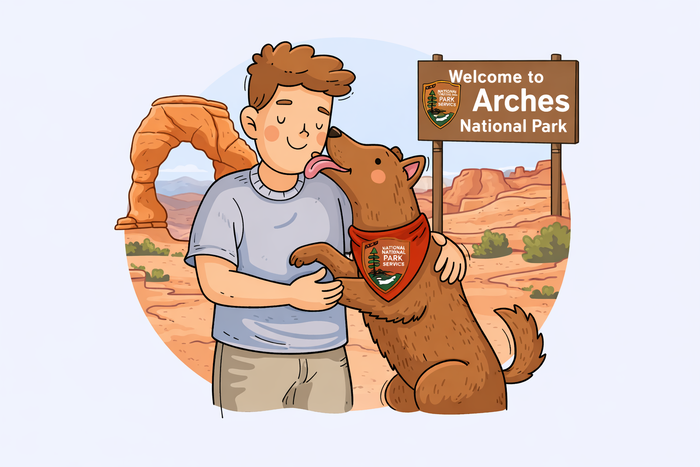
Yes, dogs are permitted in Arches National Park, but access is heavily restricted. Pets are limited to paved areas, campgrounds, and roads, and are not allowed on most hiking trails or in the park’s iconic arch formations. These limitations mean many dog owners need alternative plans to fully explore the park.
Arches National Park in Utah attracts millions of visitors each year with its dramatic red rock landscape and more than 2,000 natural sandstone arches. Understanding the park’s pet regulations before you arrive helps ensure a smoother visit and prevents disappointment when planning activities with your dog.
Let’s break down exactly where dogs are allowed in Arches National Park, which areas are off-limits, and what alternatives are available nearby.
Understanding Arches National Park's Dog Restrictions
The National Park Service maintains strict regulations regarding pets throughout all national parks, and Arches is no exception. These rules are designed to protect wildlife, preserve fragile ecosystems, and ensure the safety of all visitors—including your dog.
Where Dogs Are Permitted
Dogs are allowed in extremely limited areas within Arches National Park. You can bring your pet along paved roads and parking lots, which means they can ride in your vehicle as you drive through the scenic 18-mile road that winds through the park.
Dogs are also welcome in developed campgrounds at Devils Garden Campground, allowing you to include them in your overnight camping experience. Additionally, pets may accompany you within 100 feet of paved roads and must remain inside vehicles when not being walked in these designated areas.
However, the summer months present additional challenges even in these permitted zones. Park surfaces can reach dangerous temperatures of 120°F during peak summer months, making even permitted areas hazardous for dogs.
Asphalt temperatures often exceed 140°F, which can cause severe paw pad burns within seconds of contact. This means that during the hottest months, even the areas where dogs are technically allowed may be unsafe for them.
Where Dogs Are Prohibited
The reality is that dogs cannot access any of the experiences that make Arches National Park famous. The National Park Service prohibits dogs from all hiking trails, including the park's most celebrated routes like Delicate Arch, Devil's Garden, and Park Avenue trails. They're also banned from backcountry and wilderness areas, which encompass the vast majority of the park's 76,000 acres.
Dogs cannot join you at park viewpoints and overlooks except those immediately adjacent to parking areas where you remain within the permitted zone. They're not allowed inside visitor centers or ranger stations, and they cannot walk on any unpaved surfaces throughout the park.
These restrictions effectively mean that while your dog can be present at Arches National Park, they cannot participate in any of the activities that draw people to visit—the hiking, the arch viewing, or the backcountry exploration.
Why Are Dogs Restricted in National Parks?
Understanding the reasoning behind these restrictions can help visitors appreciate their importance rather than viewing them as mere inconveniences.
Wildlife Protection
Arches National Park hosts a diverse array of wildlife that has adapted to the harsh desert environment over millennia. The park is home to desert bighorn sheep, mule deer, kit foxes, and over 273 bird species, many of which are sensitive to disruption. Even well-behaved dogs on leashes can significantly impact wildlife behavior through their scent alone.
Dogs can disrupt wildlife behavior and feeding patterns, often causing animals to abandon important habitats or alter their natural routines. The stress introduced to native animal populations by the presence of domestic dogs can affect reproduction rates and survival, particularly in species already challenged by the harsh desert environment.
There's also the risk of disease transmission between domestic dogs and wild animals, which could have devastating effects on isolated wildlife populations. Additionally, the presence of dogs can trigger predatory instincts in local fauna, potentially creating dangerous encounters.
Ecosystem Preservation
The desert ecosystem at Arches National Park is far more fragile than it appears. One of the most critical components is biological soil crust, a living community of cyanobacteria, lichens, and mosses that takes decades to form.
These crusts perform essential functions: they prevent soil erosion in an environment with minimal vegetation to hold soil in place, support nutrient cycling that allows plants to establish themselves in nutrient-poor desert soil, facilitate water retention in an extremely arid climate, and enable plant establishment that eventually supports the entire food web.
A single footstep—whether from a human or dog—can destroy biological soil crust that took 50 years to develop. Dog activity, particularly when animals venture off established paths to explore or relieve themselves, can cause irreversible damage to the desert landscape that will persist for human lifetimes.
Visitor Safety and Experience
The restrictions also protect dogs themselves from the numerous hazards present in the desert environment. Extreme temperatures can cause heatstroke in dogs within minutes, particularly in breeds with thick coats or flat faces.
Sharp rocks and thorny vegetation like prickly pear cactus pose constant injury risks, and the trail surfaces can quickly tear paw pads. The park is also home to rattlesnakes, scorpions, and other venomous creatures that pose serious threats to curious dogs.
Dog-Friendly Alternatives Near Arches National Park
Fortunately, the Moab area surrounding Arches National Park offers numerous dog-friendly alternatives that provide comparable scenery and outdoor experiences without the restrictions.
Bureau of Land Management (BLM) Lands
The extensive Bureau of Land Management lands surrounding Arches National Park offer some of the best dog-friendly hiking in the region. These public lands provide spectacular scenery that rivals the national park itself, with far fewer crowds and restrictions.
Corona Arch Trail stands out as the premier dog-friendly alternative to Arches National Park. This 3-mile round trip moderate hike leads to a spectacular 140-foot arch that many visitors find equally impressive as the park's famous Delicate Arch.
The trail requires some scrambling and includes sections with cables for assistance, but dogs on leash can navigate it successfully. The massive arch at the end creates a dramatic frame for photographs, and on most days, you'll encounter far fewer people than on equivalent trails in the national park.
Mill Creek Canyon offers a completely different experience with multiple trails ranging from 1 to 5 miles in length. The canyon provides welcome shade, a year-round creek where dogs can cool off, and ancient petroglyphs along the canyon walls.
The easy to moderate difficulty makes these trails accessible for most dogs, and uniquely, some areas permit off-leash activity in designated zones, giving your dog freedom to explore while remaining under voice control.
Fisher Towers Trail presents one of the most dramatic landscapes in the Moab area, with a 4.4-mile round trip that winds among towering red rock spires. The moderate trail offers spectacular views of the Colorado River and the surrounding canyon country.
Dogs are welcome on leash, and the trail's varied terrain provides interesting exploration opportunities without the technical challenges that would make it dangerous for pets.
Dead Horse Point State Park
Located just 30 minutes from Arches National Park, Dead Horse Point State Park provides an excellent middle ground between national park scenery and pet-friendly policies.
The park features 21 miles of hiking and biking trails where leashed dogs are welcome to join you. The views rival anything in the national parks, with panoramic vistas of Canyonlands National Park and the Colorado River winding 2,000 feet below the rim.
The park offers easier access than competing national parks, with well-maintained trails and clear signage. The visitor center features pet-friendly outdoor areas where you can enjoy the views with your dog by your side. The day-use fee is modest, and the park rarely experiences the crowding issues that plague Arches during peak season.
Moab Area Trails
The Moab region features dozens of additional dog-welcoming trails managed by various agencies. Grandstaff Canyon, sometimes called by its historical name Negro Bill Canyon, offers a 4-mile round trip to Morning Glory Natural Bridge, the sixth-longest natural rock span in the United States. The trail follows a perennial stream, providing water access for dogs and lush vegetation unusual in the desert environment.
Hunter Canyon provides a 4-mile round trip through a scenic canyon with towering walls and seasonal water features. The relatively flat terrain makes it accessible for most fitness levels and ages.
Courthouse Wash features various access points along Highway 191, allowing flexible distances and difficulty levels. The wash provides easy walking along sandy bottoms with the option to extend your hike as far as your energy and your dog's stamina allow.
Planning Your Visit with Dogs
Successful trips to the Arches area with dogs require advance planning and realistic expectations about what you'll be able to experience together.
Accommodation Options
Moab offers numerous pet-friendly lodging options, though policies and fees vary considerably. Aarchway Inn welcomes dogs with a $20 per night fee per pet and provides easy access to downtown Moab restaurants and shops.
Red Cliffs Lodge, located along the Colorado River northeast of Moab, charges $35 per night per pet but offers a resort experience with stunning views and riverside access. Moab Valley RV Resort & Campground provides pet-friendly sites for those traveling with RVs or camping trailers.
Various vacation rentals throughout the area offer pet-friendly options through platforms like Airbnb and VRBO. These often provide more space and outdoor areas compared to hotels, which can be beneficial when traveling with dogs. Always read pet policies carefully, as many have restrictions on the number, size, or breed of dogs, and some charge additional cleaning fees.
If you're considering getting a dog for future travel, research best apartment dogs that adapt well to various living situations and travel scenarios.
For camping enthusiasts, Devils Garden Campground at Arches National Park allows dogs in campsites, though they still cannot join you on any trails.
BLM dispersed camping areas scattered throughout the region are completely dog-friendly and often free, though they lack amenities like water and restrooms. Dead Horse Point State Park campground combines the benefits of developed camping with more lenient pet policies than the national park.
Seasonal Considerations
The season you choose for your visit dramatically impacts your experience with dogs in the Arches area.
Spring, from March through May, offers ideal temperatures for dogs, typically ranging from 60 to 80°F. The wildflower blooms create spectacular displays across the desert landscape, though the increased bee activity means you should monitor dogs with allergies carefully. Crowds remain moderate compared to fall, giving you more solitude on popular trails. This is arguably the best season for visiting with pets.
Summer, from June through August, presents serious challenges for dogs. Extreme heat with temperatures regularly reaching 90 to 100°F and higher makes midday outdoor activity dangerous for pets. If you must visit during summer, plan all outdoor activities before 8 AM and carry collapsible water bowls with at least a gallon of extra water per dog.
Protective paw boots become essential equipment rather than optional accessories, as ground temperatures can literally cook paw pads. Many experienced pet owners avoid the Moab area entirely during the summer months. Some hypoallergenic dogs with lower-shedding coats may handle desert heat differently than thick-coated breeds.
Fall, from September through November, provides excellent weather conditions with temperatures ranging from 65 to 85°F and beautiful foliage along creek areas.
However, this is peak tourist season, meaning you'll encounter significant crowds at popular locations. The tradeoff between perfect weather and increased crowding makes planning and early starts essential for the best experience.
Winter, from December through February, brings cold temperatures ranging from 20 to 50°F and possible snow and ice on trails. The dramatically reduced crowds mean you'll often have trails entirely to yourself.
Dogs may need protective gear like coats or boots depending on their cold tolerance, but many breeds thrive in cooler conditions. Winter offers a completely different perspective on the red rock landscape, with snow-dusted formations creating striking contrasts.
Essential Supplies Checklist
Proper preparation ensures your dog's safety and comfort throughout your visit. For hydration, bring collapsible bowls that pack easily and carry extra water—at minimum one gallon per dog for a day's activities, more in summer.
For protection, invest in quality dog boots designed to withstand hot surfaces and rocky terrain, and consider cooling vests for summer visits to help regulate body temperature. Some owners find CBD oil for dogs helpful for travel anxiety, though consult your veterinarian before any new supplements.
Safety equipment should include updated ID tags with your cell phone number, a 6-foot maximum leash as required by most regulations, and a pet-specific first aid kit with items like gauze, tweezers for cactus spine removal, and any medications your dog requires. For waste management, pack biodegradable bags and a secure pack-out system, as you'll need to carry waste out from many trails.
Comfort items like a portable shade structure can create rest spots on exposed trails, and cooling mats provide relief during breaks. For emergency preparedness, program local veterinary contact information into your phone before you arrive, and carry copies of pet insurance cards and vaccination records.
Leaving Your Dog During Park Visits
If you want to experience Arches National Park's iconic trails, you'll need a plan for your dog during those hours.
Pet Boarding Services in Moab
Moab Veterinary Clinic, located at 4575 S Spanish Valley Drive, offers boarding and daycare services in addition to medical care. You can reach them at (435) 259-8710, and they're open Monday through Friday from 8 AM to 5:30 PM. They provide professional care in a medical setting, which offers peace of mind if your dog has any health concerns.
Karen's Canine Campground, reachable at (435) 259-7922, specializes in cage-free boarding with individual attention for each dog. Reservations are required, particularly during peak season, and they often book weeks in advance. The personalized care approach works well for dogs that struggle in traditional kennel environments.
Vehicle Safety
Never leave dogs in vehicles at Arches National Park or anywhere in the Moab area during warm months. Interior car temperatures can reach 160°F within minutes, even with windows cracked and even when outside temperatures seem moderate. This causes heatstroke that can be fatal within 15 minutes, organ failure affecting the kidneys and liver, and brain damage that may not be immediately apparent.
Utah ESA law specifically allows emergency personnel and even private citizens to break vehicle windows to rescue overheated pets, and you could face criminal charges for animal cruelty if your dog suffers injury from vehicle heat exposure. Rangers actively patrol parking areas and take this issue seriously. The only safe option is leaving your dog in climate-controlled boarding or with a trusted person.
Service Animal Exemptions
Under the Americans with Disabilities Act (ADA), service animals have different access rights than pets throughout Arches National Park.
Service animals are allowed on all trails including Delicate Arch and other backcountry routes, in all public areas without restriction, and in visitor centers and facilities where pets are prohibited. However, these rights come with specific requirements.
The animal must be individually trained to perform specific tasks directly related to a person's disability. The handler must maintain control at all times through voice commands, signals, or other effective means. Animals must be harnessed or leashed unless doing so interferes with their trained tasks.
It's critical to understand that emotional support animals, therapy animals, comfort animals, and pets with emotional support animal letters are not considered service animals under ADA regulations and do not receive these access exemptions.
For individuals with legitimate service animals, the park provides full access, though handlers should still consider whether the challenging terrain, extreme temperatures, and sharp rocks make bringing their service animal advisable for the animal's well-being.
If you have a qualifying disability and need an emotional support animal for housing or air travel, legitimate documentation from licensed healthcare providers like those available through RealESALetter.com can ensure your ESA rights are protected in appropriate settings.
However, these designations do not grant access to national park trails where only trained service animals performing specific disability-related tasks are permitted.
Maximizing Your Arches Experience with Dogs
Many visitors successfully enjoy both Arches National Park and quality time with their dogs by employing strategic planning approaches.
The rotating schedule method works well for groups of two or more adults. One person can hike popular trails like Delicate Arch while another explores dog-friendly BLM areas with the pets, then swap roles later in the day. This ensures everyone gets to experience the national park while the dog receives attention and exercise in appropriate locations.
The early morning park visit approach involves completing one major park hike during the coolest hours, typically between 5 and 8 AM, then spending afternoons on dog-friendly trails where pets can join.
This works particularly well during summer when afternoon temperatures become dangerous for both humans and dogs, and you'll also beat the crowds at popular park trails.
Some visitors designate separate days for different activities, spending one full day exploring Arches National Park without dogs while they stay at boarding facilities, then dedicating other days entirely to dog-friendly adventures on BLM lands and state parks. This eliminates the stress of coordinating logistics during each day and allows deeper exploration of both types of areas.
Photography Opportunities
While dogs cannot access iconic trails, creative photographers can still capture stunning images of their pets against the red rock backdrop. Viewpoints along scenic drives allow dogs on leash in parking areas, creating opportunities for photos with formations visible in the background.
BLM land arch formations like Corona Arch provide dramatic settings nearly identical to national park scenery. Colorado River overlooks and countless Moab red rock locations offer infinite possibilities for memorable pet photography.
Regional Dog-Friendly Destinations
If you're exploring the broader Colorado Plateau region, understanding pet policies at other nearby parks helps with trip planning.
Canyonlands National Park, located adjacent to Arches, maintains similar restrictions with dogs allowed on roads, parking areas, and campgrounds only but not permitted on trails or in the backcountry. The park's Island in the Sky, Needles, and Maze districts all enforce these same regulations.
Capitol Reef National Park, located about 2.5 hours from Moab, offers slightly more lenient policies than Arches. Dogs are allowed on specific trails near campgrounds, particularly in the Fruita area, where several short paths permit leashed pets. While still restrictive, Capitol Reef provides more opportunities to include dogs on actual hiking trails.
The nearby Manti-La Sal National Forest offers extensive trail systems with minimal restrictions, cooler temperatures at higher elevations that provide relief during summer, and shaded forest environments that contrast beautifully with the desert landscapes. The La Sal Mountains visible from Arches provide these dog-friendly alternatives less than an hour's drive from Moab.
Emergency Resources
Being prepared for emergencies ensures you can respond quickly if your dog faces health issues during your visit.
Moab Veterinary Clinic serves as the primary veterinary facility in the area, located at 4575 S Spanish Valley Drive in Moab. They maintain an emergency line and operate as a full-service animal hospital capable of handling most situations. Programming their number (435) 259-8710 into your phone before you arrive could save precious minutes in an emergency.
For after-hours emergencies, the nearest 24-hour facilities are Adobe Veterinary Center in Cortez, Colorado, located 85 miles from Moab, and Grand Valley Veterinary Hospital in Grand Junction, Colorado, 110 miles away. The significant distances underscore the importance of preventing emergencies through proper preparation and caution.
For suspected poisoning, contact ASPCA Animal Poison Control at (888) 426-4435 or Pet Poison Helpline at (855) 764-7661. These services charge consultation fees but provide immediate guidance from veterinary toxicologists while you're traveling to emergency care.
Common Desert Hazards
Rattlesnakes represent one of the most serious threats to dogs in the Moab area. These venomous snakes often hide in rocky areas, under bushes, and along trail edges where curious dogs might investigate.
Keep dogs on-trail and watch carefully in rocky areas. Rattlesnake avoidance training, available through local trainers before your trip, can teach dogs to recognize and avoid snakes.
Heat exhaustion signs require immediate recognition and action. Watch for excessive panting that doesn't stop during rest periods, drooling more than usual, weakness or collapse, bright red gums instead of normal pink, and vomiting.
If you observe these symptoms, move your dog to shade immediately, apply cool water (not ice-cold) to their body, particularly on the belly and paw pads, and seek veterinary care as quickly as possible even if symptoms seem to improve. Before boarding your dog at any facility, ensure vaccinations including the bordetella vaccine are current.
Responsible Pet Ownership on Public Lands
Following Leave No Trace principles ensures these special places remain pristine for future visitors and resident wildlife.
Pack out all waste by bagging and carrying out your dog's waste even on BLM lands where regulations may not explicitly require it. Leaving waste on trails, even in natural areas, spreads parasites and diseases, attracts wildlife that should avoid human contact, and creates unpleasant experiences for other trail users.
Follow all posted leash regulations, which typically require a 6-foot maximum leash length, as these restrictions exist to protect wildlife, other visitors, and your own dog.
Maintain at least 25 yards distance from wildlife, more for species like bighorn sheep that are particularly sensitive to disturbance. Never allow your dog to chase or even approach wild animals.
Practice trail etiquette by yielding to other hikers, horses, and mountain bikers, and keep your dog close and under control during these encounters. Prevent dogs from entering or contaminating natural water sources, as other wildlife depends on these for survival and foreign bacteria can harm native species.
Training Recommendations
Before visiting, ensure your dog possesses basic obedience skills that will keep them safe and make your trip more enjoyable. They should respond reliably to recall commands even with distractions like wildlife scent or other hikers present.
They need to walk calmly on-leash around distractions without pulling, lunging, or reacting aggressively. Your dog should remain relatively quiet around other people and animals rather than barking excessively, and they must be able to handle extended periods in vehicles if you need to leave them briefly in appropriate conditions while you visit facilities or viewpoints.
Alternative Southeast Utah Destinations
The broader Southeast Utah region offers numerous additional destinations worth considering for trips with dogs.
Glen Canyon National Recreation Area provides more flexible pet policies on certain beaches and at specific locations. Lee's Ferry area offers dog-friendly river access where your pet can swim in the Colorado River. Horseshoe Bend near Page, Arizona, allows leashed dogs on the trail to this iconic viewpoint, though summer heat remains a serious concern.
Bears Ears National Monument features extensive hiking opportunities with fewer restrictions than national parks. The area's rich cultural sites and ancient petroglyphs create fascinating destinations, and the remote areas provide solitude difficult to find in more popular parks. The monument's diverse landscapes range from cedar forests to red rock canyons.
San Rafael Swell encompasses a vast BLM wilderness area with minimal development and dog-friendly policies throughout. The unique geological formations rival those in the national parks, and the relative obscurity means you'll rarely encounter crowds even during peak season.
In conclusion, dogs are permitted in Arches National Park but face heavy restrictions—they're only allowed on paved roads, parking areas, and campgrounds, not on hiking trails or near the iconic arches.
These limitations exist to protect fragile desert ecosystems, wildlife, and the dogs themselves from extreme heat and hazards. Fortunately, nearby alternatives like BLM lands (Corona Arch Trail, Mill Creek Canyon), Dead Horse Point State Park, and Moab-area trails offer spectacular scenery with dog-friendly policies.
Visitors should plan strategically by using pet boarding services for park hikes, bringing protective gear like paw boots and extra water, and timing visits for spring or fall when temperatures are safer.
Service animals have full access under ADA regulations, while emotional support animals do not receive trail exemptions. Successful trips require combining national park visits with dog-friendly adventures on surrounding public lands.
Frequently Asked Questions
Can I carry my small dog on trails in Arches National Park?

No, National Park Service regulations prohibit dogs on trails regardless of how they're transported. This includes carrying dogs in backpacks, strollers, or arms.
The restrictions apply to all dogs regardless of size or temperament. The rationale relates to wildlife protection and ecosystem preservation rather than concerns about dogs walking on trails specifically, so the transportation method doesn't create an exemption.
Are emotional support animals allowed on Arches trails?
No, only specifically trained service animals that perform tasks for individuals with disabilities are permitted on trails.
Emotional support animals (ESAs), therapy animals, and comfort animals are classified as pets under National Park Service regulations and must follow standard pet restrictions, meaning they cannot access trails or backcountry areas. This distinction exists in federal law, which provides access rights only for service animals trained to perform specific work or tasks.
What happens if I'm caught with my dog on a trail?
Violations can result in citations with fines ranging from $50 to $500 depending on severity and whether this represents a first offense or repeated violation.
Rangers actively patrol trails and take these regulations seriously to protect wildlife and ecosystems. Repeat offenders may face more substantial penalties including potential bans from national parks. The citation becomes part of your record and can affect future interactions with federal agencies.
Are there any trails in Arches where dogs are permitted?
No, there are no hiking trails within Arches National Park boundaries where dogs are allowed. All trails, including short interpretive walks and strenuous backcountry routes, prohibit pets.
Your only options with dogs are paved roads, parking lots, and campground areas. This differs from some other national parks that permit dogs on specific trails, but Arches maintains a comprehensive prohibition.
Do hotels in Moab welcome dogs?
Yes, numerous Moab accommodations accept pets, though most charge nightly fees ranging from $20 to $50 per pet. Popular pet-friendly options include Aarchway Inn, Red Cliffs Lodge, and various vacation rentals throughout the area.
Always confirm pet policies, weight limits, and additional fees when booking, as these can vary significantly. Some properties restrict certain breeds or limit the number of pets per room.
What time of year is best for visiting Arches with a dog?
Spring from March through May and fall from September through November offer ideal temperatures for dogs, with daytime highs between 60 and 85°F.
Summer is dangerous due to extreme heat that can cause heatstroke and paw pad burns, while winter can be cold but manageable with proper gear.
Early morning hours before 8 AM during any season provide the coolest conditions for activities in permitted areas, and these times also help you avoid crowds at popular locations.

WRITTEN BY
Dr. Avery Langston
Dr. Avery Langston is a licensed clinical therapist with more than 12 years of professional experience in emotional support animal (ESA) assessments, mental health counseling, and evidence-based therapeutic interventions. With a strong foundation in clinical psychology and a passion for mental-health education, Avery has guided thousands of individuals through the ESA qualification process while promoting emotional healing and stability. As a senior content contributor for RealESALetter.com, Avery focuses on writing accurate, accessible, and legally informed articles on ESA rights, housing protections, and mental wellness. Her mission is to help readers understand their ESA benefits clearly and confidently, backed by real clinical expertise.

Share this Article