Sign In / Create Account
Texas HB 4164: $1,000 Fine for Fake Service Animals
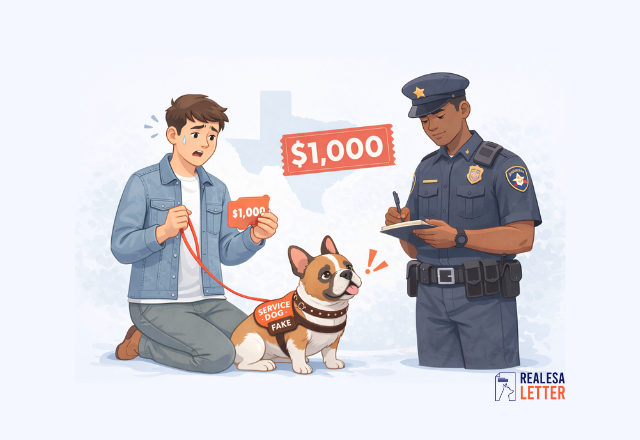
Texas has cracked down on service animal fraud with a new law that could cost violators $1,000. House Bill 4164 took effect on September 1, 2023, significantly increasing penalties for people who misrepresent pets as service animals.
Before this law, the maximum fine was just $300, which failed to discourage fraudulent claims. Now, offenders can face fines up to $1,000 and may be required to complete 30 hours of community service. These stricter Texas ESA penalties aim to protect individuals with disabilities who rely on properly trained service animals.
For emotional support animal owners in Texas, understanding HB 4164 is essential. While the law targets service animal fraud, ESA owners can face penalties if they falsely present an emotional support animal as a trained service animal to gain public access. Knowing the legal difference between ESAs and service animals helps you avoid serious legal consequences.
Let’s take a closer look at how Texas HB 4164 works and what it means for ESA owners and the public.

What is Texas HB 4164?
House Bill 4164 strengthens penalties for misrepresenting pets as service animals in Texas. The law specifically targets people who falsely claim their untrained animals are service animals. Representative Philip Cortez authored this legislation to protect people with disabilities who depend on trained service animals.
Before HB 4164, penalties for service animal fraud were relatively minor. The maximum fine was only $300, which did little to deter fraudulent claims. Now, the law increases penalties significantly to address the growing problem of fake service animals.
New Penalties Under HB 4164
Texas HB 4164 makes misrepresenting an animal as a service animal a Class B misdemeanor. The penalties are much more severe than before:
- Fine up to $1,000 (increased from $300)
- Up to 30 hours of mandatory community service
- Community service must benefit organizations serving people with disabilities
These penalties apply when someone intentionally or knowingly represents an animal as a service animal. The animal must lack the special training required to assist someone with a disability. Courts may require offenders to complete community service within one year.
Proper documentation avoids this exposure entirely by stating what the animal actually is. RealESALetter.com letters identify the animal as an emotional support animal, never as a service animal, which is the misrepresentation HB 4164 punishes.
Why Texas Passed HB 4164
The number of people falsely claiming their pets are service animals has increased sharply. This trend creates serious problems for people with disabilities who rely on legitimate service animals. Untrained pets in public spaces can distract or attack trained service animals.
Many businesses have started denying access to legitimate service animals after negative encounters with impostors. Service animal users increasingly avoid public spaces because they fear confrontations with untrained pets. These issues diminish independence and quality of life for people with disabilities.
House Bill 4164 aims to restore credibility to trained service animals. The law clarifies the definition of service animals and strengthens enforcement against fraud. Supporters hope stronger penalties will reduce fake service animal claims significantly.
Understanding Service Animals vs. ESAs under HB 4164
Texas law defines service animals and emotional support animals differently. These distinctions matter for understanding HB 4164 penalties.
Service Animals in Texas
Under Texas Human Resources Code Section 121.002, service animals are specially trained canines. They must help a person with a disability perform specific tasks. The animal must be equipped or trained to assist with disability-related needs.
Service animals have broad public access rights under both federal and Texas ESA law. They can accompany their handlers to restaurants, stores, hospitals, and most public places. Businesses must admit service animals even if they have no-pet policies.
Emotional Support Animals in Texas
Emotional support animals provide comfort and companionship to people with mental health conditions. Unlike service animals, ESAs do not require special training to perform specific tasks. They help through their presence and emotional support alone.
ESAs have different legal protections than service animals. They do not have public access rights under the Americans with Disabilities Act. Business owners can refuse entry to emotional support animals at their discretion.
However, ESAs receive strong protections in housing under the Fair Housing Act. Landlords must allow ESAs as reasonable accommodations for tenants with disabilities. This applies even in no-pet housing, and landlords cannot charge pet fees.
How HB 4164 Affects ESA Owners
Texas HB 4164 specifically targets service animal fraud, not emotional support animal misrepresentation. The law penalizes people who falsely claim their animals are trained service animals. ESA owners face penalties only if they misrepresent their animals as service animals.
What ESA Owners Should Avoid
Never use equipment or identifiers that suggest your ESA is a service animal. This includes:
- Service animal vests or harnesses
- Service animal patches or badges
- Signs stating "service animal" or "working dog."
- Certification claiming service animal status
Using these items to gain public access for your ESA violates HB 4164. You could face fines up to $1,000 and community service requirements. Only use items to identify your animal as an emotional support animal.
Protecting Your ESA Rights Legally
ESA owners have legitimate housing protections under federal law. You can exercise these rights without risking HB 4164 penalties:
- Obtain a valid ESA letter from a licensed mental health professional
- Present the letter only for housing accommodation requests
- Never claim your ESA is a service animal
- Do not bring your ESA into businesses without permission
- Only use identifiers stating "emotional support animal."
Valid ESA documentation protects your housing rights without creating legal problems. Always be honest about your animal's status and training level.
Texas ESA Penalties for Fraud
While HB 4164 focuses on service animal fraud, ESA owners should understand related penalties. Texas has no specific criminal penalties for ESA fraud itself. However, landlords can pursue civil action if you provide fraudulent ESA documentation.
Using fake or fraudulent ESA letters can result in:
- Eviction from your housing
- Loss of security deposit
- Civil lawsuits for fraud
- Damage to your rental history
- Criminal charges in some circumstances
Some online services offer instant and cheap ESA letters without proper evaluation. These documents may not meet legal requirements and could be considered fraudulent. Always obtain ESA letters through legitimate consultations with licensed professionals.
Getting a Legitimate ESA Letter in Texas
To protect your housing rights legally, you need a valid ESA letter. Texas requires ESA letters from licensed mental health professionals who practice in the state.
Qualified Professionals Who Can Write ESA Letters
Licensed professionals authorized to write ESA letters in Texas include:
- Therapists
- Psychologists
- Psychiatrists
- Licensed Clinical Social Workers
- Licensed Professional Counselors
- Doctors and Psychiatrists
The professional must be licensed specifically in Texas. They must conduct a proper evaluation of your mental health condition. They should verify that an ESA would benefit your specific disability.
Getting a legitimate ESA letter through a proper evaluation costs far less than the $1,000 fine HB 4164 carries for misrepresentation. Check the ESA letter cost before you compare providers.
What a Valid ESA Letter Must Include
A legitimate Texas ESA letter contains specific information:
- Professional's name and license information
- License number and type of license
- State of licensure (must be Texas)
- Date of the letter
- Statement confirming you have a disability
- Confirmation that the ESA provides the necessary support
- Professional's signature on official letterhead
- Contact information for verification
The letter should not disclose your specific diagnosis or detailed medical information. It must be dated within the past year for most housing situations.
Housing Rights for ESA Owners in Texas
The Fair Housing Act provides strong protections for ESA owners in Texas. These rights help you live with your emotional support animal legally.
What Landlords Must Allow
Texas landlords must make reasonable accommodations for ESAs under both federal and state law. They cannot:
- Deny your housing application because of your ESA
- Charge pet rent or pet deposits for ESAs
- Apply breed, size, or weight restrictions
- Enforce no-pet policies against legitimate ESAs
- Require special training or certification
Landlords can only deny an ESA if it poses a direct threat to others. They may also deny that accommodating the ESA creates an undue financial burden. However, these denials must be based on individual assessment, not blanket policies.
Your Responsibilities as an ESA Owner
While ESAs receive housing protections, owners have responsibilities:
- Keep your ESA under control always
- Clean up after your animal promptly
- Prevent your ESA from damaging property
- Pay for any damages your ESA causes
- Ensure your ESA is properly housebroken
- Prevent your ESA from disturbing neighbors
You remain financially responsible for damage your ESA causes beyond normal wear and tear. Landlords can deduct repair costs from your security deposit. Severely destructive or aggressive ESAs may lose protection under fair housing laws.
Where ESAs Can and Cannot Go in Texas
Understanding access rights helps you avoid HB 4164 penalties and other legal problems.
Places ESAs Cannot Access
Emotional support animals do not have public access rights in Texas. Business owners can legally refuse entry to ESAs at:
- Restaurants and cafes
- Grocery stores and markets
- Shopping malls and retail stores
- Movie theaters and entertainment venues
- Gyms and fitness centers
- Hotels and motels
- Parks and recreational facilities
- Government buildings (except housing offices)
Never try to bring your ESA into these locations by claiming it is a service animal. This violates HB 4164 and risks serious penalties.
Places ESAs Can Access
Emotional support animals are legally permitted in housing-related environments when supported by valid documentation. This includes rental properties, such as apartments in Houston, where ESA accommodations apply regardless of pet policies.
With a proper ESA letter, an animal may live with you in a Houston ESA apartment, including units with breed or pet restrictions. Access may also extend to housing common areas, depending on landlord approval.
Some private workplaces and university housing may allow ESAs on a case-by-case basis. These accommodations are voluntary, so permission should always be requested in advance.
Air Travel Changes for ESAs in Texas
The Air Carrier Access Act changed significantly in 2020. Airlines no longer must accommodate emotional support animals for free.
Current Airline Policies
Under current federal rules, only trained service dogs qualify as service animals for air travel. Airlines can treat ESAs as regular pets and charge applicable pet fees. They may also enforce size and carrier restrictions.
Many airlines still allow small pets in cabin carriers for a fee. Check your specific airline's pet policy before booking flights. Do not attempt to bring your ESA on a plane by claiming it is a service animal.
The Department of Transportation finalized these rule changes after airlines reported widespread abuse of ESA accommodations, including incidents with untrained animals causing safety disruptions. Most major carriers now charge between $95 and $150 each way for in-cabin pets, with weight limits typically capped at 20 pounds, including the carrier.
Some airlines prohibit certain breeds entirely regardless of ESA status. International flights have separate rules that may differ from domestic U.S. policies, so research destination country requirements beforehand. Cargo hold transportation is available for larger animals but poses temperature and safety risks that make it unsuitable for many ESAs.
Falsely claiming your ESA is a service animal violates federal law and can result in removal from the flight, airline bans, and fines up to $500. Plan alternative travel arrangements if your ESA cannot meet airline pet policies.
Avoiding Legal Problems as an ESA Owner
Following these guidelines helps you stay compliant with Texas law:
- Never misrepresent your ESA as a service animal
- Only present the ESA documentation for housing situations
- Get your ESA letter from a Texas-licensed professional
- Keep your ESA well-behaved and under control
- Respect business owners' rights to refuse entry
- Only use "emotional support animal" identifiers
- Update your ESA letter annually for housing needs
Being honest about your animal's status protects both you and legitimate service animal users. It also helps maintain credibility for all assistance animal programs.
Texas Penal Code Section 121.006 makes fraudulent ESA misrepresentation a criminal offense punishable by fines up to $300 and community service requirements. Misrepresenting your ESA in public spaces can result in removal from premises, trespassing charges, and potential criminal records.
Businesses experiencing fraud become skeptical of all assistance animal requests, making access harder for people with legitimate service animals. Your ESA documentation should never include phrases like "service animal," "public access rights," or training certifications.
These terms misrepresent your animal's legal status and can be used as evidence of fraud. Staying within legal boundaries protects your housing rights without risking criminal penalties or civil liability.
The Impact of Texas HB 4164
Early reports suggest HB 4164 is raising awareness about service animal fraud. The increased penalties serve as a stronger deterrent than the previous law. However, enforcement challenges remain since proving intent can be difficult.
Disability advocates hope the law will reduce negative encounters between trained service animals and impostors. Business owners may feel more confident challenging suspicious service animal claims. The law provides clearer consequences for those who abuse service animal protections.
Some experts suggest additional measures could further address the problem. These include standardized training requirements and better public education about service animal rights. Balancing enforcement with protecting legitimate disability rights remains an ongoing challenge.
In final thoughts, Texas HB 4164 represents an important step in protecting service animal integrity. The law increases penalties for service animal fraud to $1,000 fines and community service. These Texas ESA penalties specifically target people who misrepresent untrained animals as service animals.
ESA owners should understand the distinction between emotional support animals and service animals. While ESAs receive strong housing protections, they do not have public access rights. Misrepresenting an ESA as a service animal can result in serious legal consequences under Texas law.
How RealESALetter Keeps You on the Right Side of Texas Law
Many individuals ask where can I get an ESA letter for housing that is legitimate and compliant with current regulations. The most important step is obtaining documentation from a licensed mental health professional who understands both federal housing protections and Texas state guidelines.
If you need a legitimate ESA letter in Texas for housing purposes, realesaletter.com offers a compliant and straightforward option. Start your assessment today, our process connects you with licensed Texas mental health professionals who understand both federal housing laws and current state regulations. This helps ensure your ESA documentation is properly issued and accepted by landlords.
Dr. Avery Langston is a health and wellness writer with 12+ years of experience covering ESA rights, housing laws, and mental health. As a senior contributor for RealESALetter, she helps readers understand ESA regulations and legal protections.

Darren Rafel is a licensed clinical social worker with active LCSW licenses across 13 states, including California, New Jersey, Texas, Florida, and Arkansas. He conducts ESA evaluations with direct clinical experience using pet therapy as part of mental health treatment.

Don't worry. Your pet stays with you.
Housing law is on your side
- 1A few questions. That's your paperwork
- 2A licensed therapist reviews your case
- 3Official ESA letter, ready to send
Not accepted? Full refund, guaranteed