

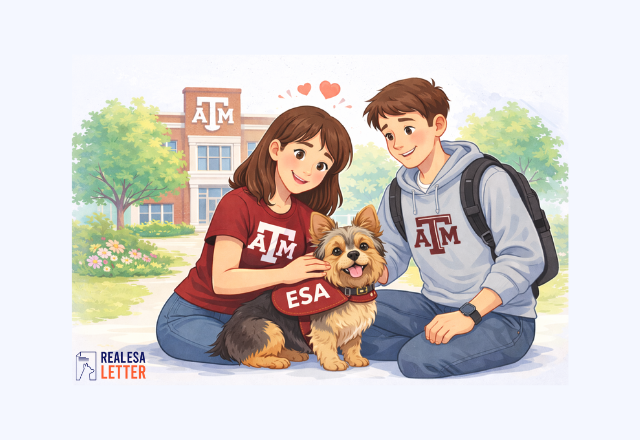
Texas A&M University stands as one of America’s largest educational institutions. Its massive student population creates a high-pressure academic environment where mental health needs are often overlooked.
As demand for mental health accommodations grows nationwide, emotional support animal (ESA) requests among Texas A&M students continue to rise each year. Yet many students remain underserved due to unclear housing policies, misinformation about ESA letters, and uncertainty around their legal rights.
This complete 2026 guide explains how Texas A&M students can qualify for an emotional support animal. Learn your housing rights and get the proper documentation needed to avoid common mistakes that cause rejection
Understanding the Texas A&M Student Population
Texas A&M University’s enrollment has reached unprecedented levels in recent years. The College Station campus hosts 72,560 students as of Fall 2024, making it the largest university in Texas.
The student body includes 57,659 undergraduate students and approximately 14,901 graduate students. About 94% of undergraduates are Texas residents, creating a predominantly in-state student community with diverse backgrounds and mental health needs.
Rapid growth over the past decade has placed noticeable strain on campus infrastructure. Student housing remains limited, with only about 20% of undergraduates living on campus. As a result, many students must secure off-campus housing in a competitive rental market, where affordability and accessibility can be ongoing concerns.
This housing pressure becomes particularly significant for students who rely on emotional support animals (ESAs) or other disability-related accommodations. Navigating university housing policies, private lease agreements, and federal Fair Housing Act protections can add another layer of complexity during an already stressful transition to college life.
Increased enrollment also affects access to campus mental health resources. Longer wait times for counseling appointments and higher demand for disability services mean students must often plan proactively when requesting accommodations. Understanding university policies early can help reduce uncertainty and ensure smoother approval processes.
As Texas A&M continues to grow, awareness of housing policies, disability rights, and available support services becomes increasingly important for students seeking stability and wellbeing throughout their academic journey.
Mental Health Challenges Among College Students at Texas A&M
College students face unique mental health pressures that affect their academic success. Research shows that approximately 77% of college students experience mental health challenges. These conditions significantly impact their daily functioning and academic performance.
Common mental health conditions among college students include anxiety disorders and depression. Students also experience stress-related disorders, ADHD, and various phobias. The transition to college life often exacerbates these existing conditions.
The academic environment at large universities intensifies these challenges. Crowded dining facilities, limited study spaces, and overwhelming course loads contribute to stress. Students at Texas A&M report difficulty finding quiet spaces and managing their workload effectively.
Suicide remains the second leading cause of death among college students nationally. The suicide rate has tripled among young adults since the 1950s. These statistics highlight the urgent need for effective mental health interventions, including college ESA letter accommodations that provide students with emotional support during their academic journey.
The Role of Emotional Support Animals in Student Wellness
Emotional support animals provide crucial therapeutic benefits for students with mental health conditions. An ESA offers comfort, companionship, and emotional stability through its presence. Unlike service animals, ESAs don't require specialized training to perform specific tasks.
Research demonstrates that ESAs significantly reduce anxiety and depression symptoms among college students. Studies show that individuals with secure attachments to their pets experience 25% lower anxiety levels. Regular interaction with pets helps decrease cortisol levels, a key stress marker.
Pet ownership improves overall mental health outcomes for students. About 74% of pet owners report improved mental health due to their animals. For college students specifically, ESAs help with symptom alleviation and social connection.
ESAs serve as social catalysts, helping isolated students connect with their peers. The presence of an animal provides conversation starters and encourages positive interactions. This social support proves essential for students as they adjust to college life.
Texas A&M Emotional Support Animal Policies
Texas A&M follows specific guidelines for emotional support animals on campus. The university distinguishes clearly between service animals and emotional support animals. Understanding these differences is crucial for students seeking accommodations.
Service animals are generally permitted in most campus buildings, including classrooms and libraries, because they perform task-specific assistance for individuals with disabilities. Emotional support animals, however, are typically limited to approved on-campus housing and are not allowed in academic buildings, dining halls, or other public university facilities.
Students seeking ESA accommodations must complete the university’s disability services process, which includes submitting appropriate documentation from a licensed healthcare professional. Approval is not automatic, and requests are evaluated based on medical necessity and housing policies. Following these procedures ensures compliance with university regulations while supporting student wellbeing.
Service Animals vs. Emotional Support Animals
Service animals receive protection under the Americans with Disabilities Act. These animals undergo individual training to perform specific tasks for people with disabilities. Service animals have access to all public areas on campus.
Texas A&M defines service animals as dogs or miniature horses trained for disability-related work. These animals must be harnessed, leashed, or tethered unless this interferes with their duties. The handler must maintain control through voice, signal, or other effective methods.
Emotional support animals operate under different regulations than service animals. ESAs provide emotional support, well-being, comfort, and companionship to their owners. They don't require specialized training, but must be domesticated and well-behaved.
ESAs receive protection under the Fair Housing Act rather than the ADA. This means ESAs have access to residential facilities and their common areas only. They cannot accompany students to classrooms, dining halls, or other public campus spaces.
Texas A&M Housing Accommodation Process
Students seeking to keep an ESA in campus housing must follow specific procedures. The process involves coordination between Disability Resources and the Department of Residence Life. Both departments work together to make informed decisions about assistance animal requests.
Students should submit their accommodation requests as early as possible. The request goes to Disability Resources, which evaluates the documentation. Students must demonstrate both a recognized disability and a disability-related need for the animal.
Required documentation includes a letter from a licensed Texas healthcare professional. The professional must have an established relationship with the student. The letter should detail the patient's needs, treatment plan, and how the animal supports treatment.
Online ESA registrations from outside organizations are not recognized by Texas A&M. The university requires legitimate documentation from qualified Texas-licensed professionals. Students should avoid websites that sell certificates or template letters. Understanding why ESA letters get rejected can help you avoid common mistakes that lead to denied accommodations.
The ESA must have current immunization records from a veterinarian. Students must provide proof of vaccinations before approval. The animal must also be domesticated and demonstrate appropriate behavior in residential settings.
Texas A&M Campus Restrictions and Guidelines
ESAs have specific limitations on where they can go at Texas A&M. These animals are generally limited to residential facilities, including common areas. They cannot access classrooms, laboratories, dining facilities, or other public campus buildings.
The university can exclude or remove an ESA under certain circumstances. If the animal is out of control and the handler doesn't take effective action, removal may occur. Animals that aren't housebroken or pose safety concerns can also be excluded.
In teaching labs with hazardous materials, special considerations apply. Instructors should have interactive conversations with students about potential hazards to the animal. The university works to accommodate students while ensuring safety for all.
Students remain responsible for their ESA's behavior and any damages it causes. The animal must remain under the owner's control at all times. Failure to maintain control can result in the removal of the animal and potential disciplinary action.
Key Requirements for ESA Approval at Texas A&M
Before bringing an emotional support animal to campus, students must complete a formal approval process. ESAs are not automatically permitted and are treated differently from service animals under university policy.
Approval Process
Students must initiate their request through Disability Resources, not Residence Life directly. Emotional support animals are generally limited to approved housing areas and are not allowed in classrooms, dining halls, libraries, or other public campus facilities. Early submission is strongly recommended to avoid housing delays.
Documentation Requirements
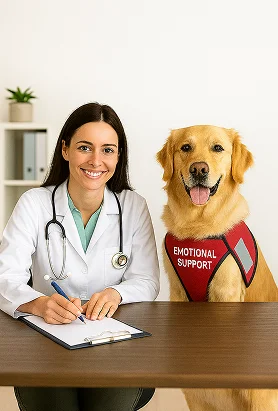
Approval requires documentation from a licensed healthcare professional, such as a psychologist, psychiatrist, physician, or licensed clinical social worker. The documentation must:
- Confirm the student has a qualifying disability under federal law
- Explain how the ESA alleviates symptoms
- Demonstrate a disability-related housing need
- Be current (typically within one year)
The university does not accept generic online certificates or registrations without proper evaluation and an established provider relationship.
Housing Limitations
Even after approval, ESAs are limited to the student’s assigned residential space and designated housing areas. They are not permitted in academic buildings, dining facilities, recreational centers, or other public spaces on campus.
Approval is tied to specific housing assignments, meaning changes in residence may require updated authorization.
Responsibilities for Approved ESAs
Receiving approval carries significant responsibilities. Students remain fully accountable for their animal’s behavior, care, and compliance with university policies.
Care and Supervision
Owners are solely responsible for:
- Daily feeding and exercise
- Veterinary care
- Cleaning up waste immediately
- Ensuring the animal is not left unattended for extended periods
Failure to properly supervise the ESA may result in disciplinary action.
Behavior Standards
The animal must:
- Remain under control at all times
- Not pose a direct threat to others
- Not cause excessive noise or disturbances
- Be housebroken
Repeated behavioral issues can lead to removal of the accommodation.
Vaccinations and Licensing
All ESAs must be:
- Up to date on vaccinations
- Licensed in accordance with local regulations
- Wearing proper identification tags
Students must provide proof of immunizations upon request.
The Growing Need for ESA Services at Texas A&M
The demand for emotional support animals on college campuses has increased substantially. Texas A&M has seen this trend reflected in growing accommodation requests. This growth mirrors national patterns in ESA requests at universities.
Several factors contribute to the rising demand for ESAs among students. Increased awareness of mental health issues plays a significant role. Students now more openly discuss anxiety, depression, and other conditions requiring support.
The COVID-19 pandemic accelerated ESA adoption among college students nationwide. About 66% of ESA owners acquired their animals after March 2020. Many students who adopted pets during remote learning sought to bring them to campus.
Texas A&M's large student population creates a substantial market for ESA services. With over 70,000 students, even a small percentage needing ESAs represents thousands of individuals. Many students who could benefit from ESAs remain unaware of their options.
Current infrastructure limitations at Texas A&M compound the challenge. Limited on-campus housing means many students live in off-campus apartments. Understanding housing rights becomes essential for these students seeking ESA accommodations.
Texas ESA Laws and Student Rights
Texas students have specific rights regarding emotional support animals under federal and state law. The Fair Housing Act provides the primary protection for ESA owners. This federal law prohibits discrimination against individuals with disabilities in housing situations.
Under the Fair Housing Act, landlords must make reasonable accommodations for ESAs. They cannot charge additional pet fees, deposits, or rent for emotional support animals. This protection applies to both on-campus and off-campus housing in Texas.
The Texas Fair Housing Act mirrors federal protections at the state level. Texas landlords cannot deny housing or charge extra fees for legitimate ESAs. Students need proper documentation from a Texas-licensed mental health professional.
Texas ESA law also addresses ESA misrepresentation with serious penalties. Falsely claiming a pet as an ESA can result in fines and misdemeanor charges. The state recognizes the importance of protecting legitimate ESA users from fraud.
Documentation Requirements
A Texas ESA letter serves as the only legally recognized proof of need. The letter must come from a licensed mental health professional practicing in Texas. Acceptable professionals include therapists, psychologists, psychiatrists, doctors, and licensed social workers.
The healthcare provider must have an established relationship with the student. A single consultation typically doesn't meet this requirement. The provider should understand the student's condition and how the ESA alleviates symptoms.
The reputable ESA letter should include specific information about the student's disability. It must explain how the animal provides therapeutic emotional support. The letter should not include specific diagnoses but confirm the need for accommodation.
Students should avoid online services that sell fake ESA letters without proper evaluations. The U.S. Department of Housing and Urban Development clarified that internet documentation alone isn't reliable. Texas A&M doesn't recognize certificates, registrations, or licensing documents from online organizations.
Texas A&M Housing Protection Details
Most rental housing in Texas falls under Fair Housing Act coverage. This includes on-campus dormitories, university apartments, and off-campus rental properties. Students living in housing owned or managed by Texas A&M have clear protections.
Off-campus students should submit accommodation requests directly to their property managers. The process differs slightly from on-campus housing procedures. However, the fundamental rights remain the same under federal law.
Some housing types have exemptions from Fair Housing Act requirements. Single-family homes sold or rented by owners who don't manage multiple properties may qualify. However, most student housing situations don't fall under these limited exceptions.
Insurance policy limitations generally don't justify denying an ESA request. Landlords can only deny based on insurance if their specific policy would be canceled. Alternative coverage options must be explored before denial.
How Students Can Obtain an ESA at Texas A&M
Getting an emotional support animal at Texas A&M requires proper documentation and early planning. Follow these four steps for approval.
Step 1: Consult with a Licensed Mental Health Professional
Meet with a Texas-licensed therapist, psychologist, psychiatrist, or doctor. The professional must have an established relationship with you, not just a single consultation.
They'll evaluate whether you have a qualifying mental health condition. If an ESA would alleviate your symptoms, they'll provide an ESA letter. Be honest about your daily challenges, living situation, and ability to care for an animal.
Step 2: Obtain Required Documentation
Your ESA letter must include:
- Professional's letterhead and Texas license confirmation
- Statement that you have a disability under federal law
- Explanation that the ESA is necessary for equal housing opportunity
- Written within the past year
The letter should not include specific diagnoses. Gather current veterinary and vaccination records for your animal as well.
Step 3: Submit Accommodation Request
Submit your request to Disability Resources as early as possible. They'll review documentation and consult with Residence Life. Include all required forms and respond promptly to any follow-up requests. Early submission prevents processing delays before move-in dates.
Step 4: Understand Your Responsibilities
Once approved, you're responsible for:
- Ensuring your ESA is well-behaved and housebroken
- Any property damage your animal causes
- Following all housing policies and rules
- Addressing roommate concerns if they arise
Your ESA cannot pose health or safety risks to others. Violations can result in the removal of accommodation privileges.
Common Challenges and Solutions at Texas A&M
Students with ESAs at Texas A&M may encounter various challenges. Understanding these potential issues helps prepare for successful ESA ownership. Proactive planning prevents many common problems.
The size of the campus and the structure of university housing can make daily routines more complex than expected. Class schedules, lab requirements, and extracurricular commitments may limit the time available for proper animal care.
Additionally, ESA access restrictions to academic buildings can create emotional gaps during long days away from housing. Navigating documentation timelines and approval processes also requires careful planning.
Being aware of these realities early allows students to make informed decisions about whether an ESA fits their academic and lifestyle demands.
Roommate Conflicts
Living with roommates while having an ESA requires clear communication. Not all students are comfortable living with animals. Allergies, phobias, or personal preferences can create tension.
The best approach involves open dialogue before move-in. Students should discuss expectations, care routines, and boundaries. Establishing ground rules early prevents misunderstandings later.
Housing staff can mediate conflicts when they arise. Students shouldn't hesitate to involve disability services if issues escalate. The university has protocols to balance everyone's needs and rights.
In some cases, alternative housing arrangements may be necessary. The university works to find solutions that accommodate all students involved. Flexibility and compromise often lead to successful outcomes.
Care and Maintenance Responsibilities
ESA ownership comes with significant daily responsibilities. Students must provide food, water, exercise, and veterinary care. Balancing these needs with academic demands requires good time management.
Planning for holidays and breaks is essential. Students need arrangements for their ESA when they travel home. Some may take their animal with them, while others arrange pet sitting.
Financial considerations extend beyond initial costs. Ongoing expenses include food, supplies, and regular veterinary visits. Emergency veterinary care can be expensive and should be budgeted for.
Students struggling with care responsibilities should seek support early. Campus resources may guide time management and care strategies. The goal is to maintain both academic success and animal welfare.
Limited Access Restrictions
ESAs cannot accompany students to classes or most campus facilities. This limitation surprises some students who expected broader access. Understanding these restrictions before getting an ESA is important.
Students needing their animal's support throughout the day might consider alternatives. Psychiatric service dogs have different training and broader access rights. However, they require extensive specialized training.
Some students develop strategies to check on their ESA between classes. Living close to campus or having a flexible schedule helps. Others arrange for trusted friends to check on their animal periodically.
The key is having realistic expectations about ESA limitations. Students should consider their specific needs before pursuing this accommodation. The goal is to find the right support solution for individual circumstances.
Benefits of ESAs for Texas A&M Students
Emotional support animals provide tremendous benefits for college students beyond simple companionship. Research and student experiences demonstrate significant positive impacts on mental health and academic success.
Key benefits include:
- Reduces loneliness and isolation – Texas A&M's large campus can feel overwhelming. An ESA provides constant companionship and emotional connection when students feel isolated.
- Decreases anxiety during stressful periods – Exam weeks, major projects, and social pressures take a toll on mental health. ESAs offer comfort and help students manage stress more effectively.
- Promotes better self-care routines – Caring for an animal creates a daily structure that benefits both the pet and the owner. This routine helps students maintain healthier eating, sleeping, and exercise habits.
- Acts as a social catalyst – Other students often approach ESA owners to ask about their animals. These interactions help shy or socially anxious students connect with peers naturally.
- Improves academic performance – Studies show that emotionally supported students attend classes more regularly. They're also more engaged in their studies and campus activities, leading to better grades.
- Provides 24/7 emotional support – Unlike counseling appointments or therapy sessions, ESAs are available whenever students need comfort, especially during late-night study sessions or lonely weekends.
Alternative Mental Health Resources at Texas A&M
While ESAs provide valuable support, they're just one part of comprehensive mental health care. Texas A&M offers numerous resources for students struggling with mental health challenges. These services complement ESA support.
The university's counseling center provides professional mental health services. Students can access individual therapy, group counseling, and crisis intervention. These services are typically included in student fees.
Campus wellness programs offer stress management workshops and mindfulness training. These programs teach coping skills that benefit all students. Participation is usually free and open to the entire student body.
Peer support groups connect students facing similar challenges. These groups provide safe spaces to share experiences and strategies. Many students find comfort in knowing they're not alone.
The university also partners with local mental health providers. Students needing long-term care or specialized treatment can receive referrals. This ensures continuity of care beyond campus resources.
Therapy animals visit campus during high-stress periods like finals week. These programs differ from ESAs but provide temporary stress relief. Many students appreciate these opportunities to interact with animals.
To sum up, Texas A&M's 70,000+ students face significant mental health challenges, yet many remain unaware of their ESA housing rights. Understanding Texas A&M's emotional support animal policies is crucial for students considering this accommodation.
ESAs provide proven benefits for managing anxiety, depression, and stress, but they also require significant responsibility and commitment. Students should carefully evaluate their needs and consult with licensed mental health providers to determine if an ESA is the right support solution.
For Texas A&M students ready to move forward with an emotional support animal, proper documentation is essential. RealESALetter.com connects students with Texas-licensed mental health professionals who can evaluate their needs and provide legitimate ESA letters that meet university and Fair Housing Act requirements.
With the right preparation and support, an ESA can significantly improve your college experience and mental health outcomes at Texas A&M.

WRITTEN BY
Dr. Avery Langston
Dr. Avery Langston is a licensed clinical therapist with more than 12 years of professional experience in emotional support animal (ESA) assessments, mental health counseling, and evidence-based therapeutic interventions. With a strong foundation in clinical psychology and a passion for mental-health education, Avery has guided thousands of individuals through the ESA qualification process while promoting emotional healing and stability. As a senior content contributor for RealESALetter.com, Avery focuses on writing accurate, accessible, and legally informed articles on ESA rights, housing protections, and mental wellness. Her mission is to help readers understand their ESA benefits clearly and confidently, backed by real clinical expertise.
Share this Article