Sign In / Create Account
What Is an Emotional Support Animal for Anxiety?
An emotional support animal for anxiety is an animal that eases anxiety symptoms through companionship and routine as part of a treatment plan overseen by a licensed mental health professional.


Anxiety disorders affect nearly 1 in 5 U.S. adults each year according to the National Institute of Mental Health. They are among the most common conditions that lead to an ESA recommendation.
An ESA letter from RealESALetter.com documents an anxiety-related condition after evaluation by a licensed mental health professional.
This guide covers how an ESA helps. It covers which anxiety disorders qualify and when anxiety does not qualify. It also covers the steps to a valid letter and the rights that come with it.
Key Takeaways
Two Conditions Must Be Met: Anxiety must limit daily functioning. A licensed clinician must confirm an animal would help.
Ten Minutes Lowers Stress Hormones: Petting an animal reduces cortisol and blood pressure. A trial of 249 students showed the drop in 10 minutes.
Only One Document Is Valid: A signed letter from a licensed mental health professional is the only valid proof. Registries and certificates carry no legal weight.
Housing Rights Changed in 2026: HUD rescinded its prior ESA guidance on May 22 2026. The Fair Housing Act itself remains law and many states keep their own protections.
Severe Panic Points to a PSD: An ESA works through presence alone. Frequent panic episodes may call for a task-trained psychiatric service dog instead.
How Does an Emotional Support Animal Help With Anxiety?
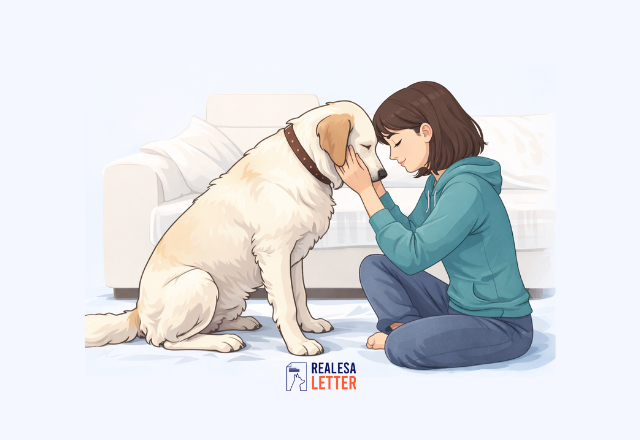
An emotional support animal helps with anxiety by calming the stress response and adding structure to daily life. The effects are real and measurable. They apply to any animal covered by a valid ESA letter issued after a clinical evaluation.
Calming Physiological Response
Petting an animal lowers heart rate and blood pressure and reduces cortisol. A randomized trial of 249 students found that just 10 minutes of petting cats and dogs produced a significant drop in salivary cortisol. Cortisol is the body's main stress hormone. This calming response eases the racing heart and muscle tension that anxiety brings.
Routine and Daily Structure
Caring for an animal creates a predictable daily rhythm. Feeding and walking and grooming happen on a schedule. That structure gives shape to days that anxiety would otherwise scatter. Many people feel more stable and less overwhelmed as a result.
Reduced Isolation
Anxiety often pushes people to withdraw. An animal offers steady companionship without social pressure. That presence counters loneliness and keeps a person engaged with daily life.
Grounding During Anxiety Spikes
The warmth and weight of an animal anchors attention during an anxiety spike. Focusing on something physical can interrupt racing thoughts and pull attention back to the present. Frequent or severe panic episodes may call for trained task support instead. That option is covered later in this guide.
Which Anxiety Disorders Qualify for an Emotional Support Animal?
Anxiety disorders qualify for an emotional support animal when their symptoms meaningfully limit daily functioning. The DSM-5 recognizes several distinct anxiety disorders. A licensed clinician reviews your symptoms and history rather than the label alone.
Generalized Anxiety Disorder
Generalized anxiety disorder involves persistent worry across many areas of life. It can qualify when the worry disrupts sleep or focus or work. GAD is one of the most common conditions behind ESA recommendations.
Panic Disorder
Panic disorder involves sudden episodes of intense fear with physical symptoms. It can qualify when episodes limit where a person feels safe going.
An ESA for panic disorder has its own evaluation considerations and grounding benefits.
Social Anxiety Disorder
Social anxiety disorder centers on fear of judgment in social settings. It can qualify when that fear leads to avoidance that limits daily life. An ESA for social anxiety helps in ways specific to social situations and has its own guide.
Specific Phobias
Specific phobias involve intense fear of a particular object or situation. They can qualify when avoidance meaningfully restricts routines such as travel or work.
The disorder category matters less than its impact. A clinician weighs the full picture before recommending an ESA. You can read more about which conditions qualify for an emotional support animal across all diagnoses.
When Does Anxiety Not Qualify for an ESA?
Anxiety does not qualify for an ESA when it causes no meaningful limits on daily functioning.
A diagnosis alone is not enough. A licensed clinician's assessment of functional impact determines eligibility.
Mild or situational anxiety usually falls short of the standard. Feeling nervous before a presentation is not a qualifying condition. Wanting comfort from a pet is not the test either. The clinician looks for symptoms that disrupt sleep or work or relationships. An honest evaluation protects you. A letter issued without one carries little weight with a landlord.
Steps to Get an ESA Letter for Anxiety
Getting an ESA letter for anxiety takes three steps. You consult a licensed professional. You complete a clinical evaluation. You receive a signed letter if the clinician finds an ESA appropriate.
Consult a Licensed Mental Health Professional
Only a licensed mental health professional can issue a valid ESA letter. You can work with your own therapist or a licensed online provider. The provider must hold a license that covers your state.
Complete the Clinical Evaluation
The clinician reviews your anxiety symptoms and history during the evaluation. They assess how the condition affects your daily functioning. They also consider whether an animal would reasonably help as part of your care.
Receive the Signed Letter
The clinician issues the letter on official letterhead if an ESA is appropriate. A valid letter states the clinician's license details and the date of issue.
Every RealESALetter.com letter includes the clinician's state license number and direct contact information so a landlord can verify an anxiety-related accommodation request independently.
Registration sites and certificates
There is no official ESA registry. The only valid documentation is a signed letter from a licensed mental health professional. Certificates and ID cards and registration listings carry no legal weight. Many of these sites charge for documents that no landlord must accept. Here is how to spot ESA registration scams before paying for one.
What Are Your Rights With an ESA Letter for Anxiety?
An ESA letter for anxiety supports housing accommodation requests under federal law. It does not grant public access rights.
Housing rights under the Fair Housing Act
The Fair Housing Act (42 U.S.C. § 3604) requires housing providers to consider reasonable accommodation requests from people with disabilities. Under HUD's prior guidance in FHEO Notices 2013-01 and 2020-01 landlords were directed to accept a valid ESA letter as sufficient support and to waive pet fees and deposits. On May 22 2026 HUD permanently rescinded both notices through FHEO Assistant Secretary Craig W. Trainor. HUD now assesses complaints using a trained assistance animal standard.
The statute itself remains federal law. Congress has not amended it. Many states also keep independent protections that can cover ESAs regardless of the federal shift. A landlord can still deny a request in limited situations such as direct threat or substantial damage. Here is when a landlord can deny an ESA and what to do about it.
Public Access and Air Travel
An ESA letter does not grant public access rights. Restaurants and stores can refuse entry because those rights come from the ADA and apply to trained service animals. Airlines have not been required to accommodate ESAs in the cabin since the Department of Transportation rule change in 2021. If you need access beyond housing the next section covers the alternative.
Should You Get an ESA or a Psychiatric Service Dog for Anxiety?
An ESA fits anxiety when presence and companionship are enough. A psychiatric service dog fits when you need trained task support such as panic interruption or grounding on command.
A PSD is individually trained to perform tasks tied to your condition. That training brings public access rights and air travel access that an ESA does not have. Severe or frequent panic episodes are the most common reason to consider the upgrade. A PSD letter for anxiety explains the evaluation and what the letter covers.
Conclusion
An emotional support animal is a real and evidence-backed option for managing anxiety. Qualification turns on a licensed clinician's judgment rather than a diagnosis alone. The letter is the only document that carries legal weight.
If your anxiety limits daily life you can start your ESA evaluation online and get a clear answer from a licensed professional.
Frequently Asked Questions
Can any animal be an ESA for anxiety?

Any domesticated animals can serve as an ESA, though dogs and cats are the most common. The animal should be one you can care for safely and that provides genuine comfort.
Does an ESA for anxiety work on airplanes?
No. Since the U.S. Department of Transportation updated its rules in 2021, airlines are not required to accommodate ESAs in the cabin. Only trained service dogs qualify for that access.
Can I have more than one ESA for anxiety?
Yes, if a licensed clinician supports a need for more than one animal. A housing request is still assessed for reasonableness.
Does anxiety automatically qualify for an emotional support animal?
No. A licensed clinician must find that your anxiety limits daily functioning and that an animal would help. A diagnosis alone does not qualify you.
Can a cat be an emotional support animal for anxiety?
Yes. A cat can be an ESA with a valid letter. There is no service cat category under the ADA because service animals must be task-trained dogs. Read more about what makes an emotional support cat a good fit.
How long does an ESA letter for anxiety remain valid?
An ESA letter is generally treated as current for about one year. Most people renew annually so their documentation stays up to date with their evaluation.
Harper Jefcoat is a content writer with 10+ years of experience covering ESA laws, mental wellness, and emotional support animal benefits. As a blog author for RealESALetter, he educates readers on ESA regulations and promotes ethical documentation practices.

Tina Logan is a Licensed Marriage and Family Therapist with 20+ years of clinical experience and an active California Board of Behavioral Sciences license. She conducts ESA and psychiatric service dog evaluations for RealESALetter assessing whether an ESA or task-trained PSD is clinically appropriate.

Don't worry. Your pet stays with you.
Housing law is on your side
- 1A few questions. That's your paperwork
- 2A licensed therapist reviews your case
- 3Official ESA letter, ready to send
Not accepted? Full refund, guaranteed