


14 Basic Dog Commands Every Dog Owner Should Know (With Hand Signals)

37 min read
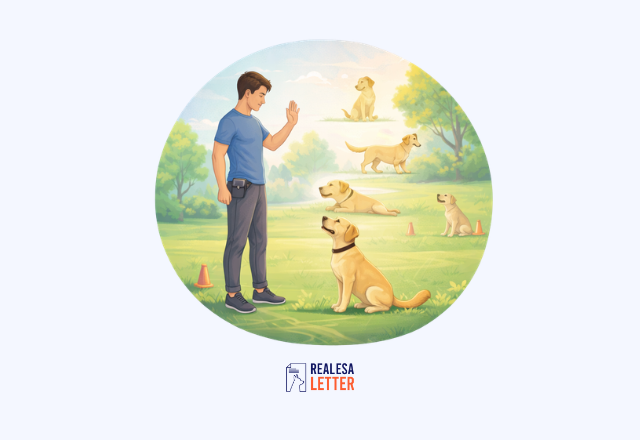
Teaching your dog basic commands is one of the most valuable things you can do as a pet owner not just for good behavior, but for safety, bonding, and your dog's mental well-being.
A dog that reliably responds to "come" can be called back before running into traffic. A dog that knows "leave it" won't swallow something toxic on a walk. And a dog that understands "stay" or "place" can be included in more of your daily life without becoming a source of stress.
Let’s explore 14 essential dog commands, each with clear step-by-step training instructions, the matching hand signal, and real-world applications. Whether you have a brand-new puppy or an adult dog you're working with for the first time, this is your complete reference from command #1 to an off-leash-ready companion.
How long does training take?
Most dogs begin responding to basic commands within 1–2 weeks of consistent daily practice (2–3 short sessions of 5–10 minutes each). Puppies may need slightly longer; adult dogs often learn faster once they understand the process.
All 14 Basic Dog Commands at a Glance
Here's a quick-reference list of all 14 commands covered in this guide, along with the hand signal and primary use for each. Click any command to jump to the full training instructions.
# | Command | Hand Signal | Primary Use | Difficulty |
1 | Sit | Index finger pointing up | Foundation behavior, impulse control | ⭐ Beginner |
2 | Watch Me | Point to your eyes | Focus and attention in distractions | ⭐ Beginner |
3 | Stay | Open palm facing dog (stop sign) | Impulse control, safety | ⭐⭐ Moderate |
4 | Come | Arm sweep inward toward chest | Safety recall, off-leash control | ⭐⭐ Moderate |
5 | Down | Flat hand pointing to floor | Calmness, long-duration settling | ⭐⭐ Moderate |
6 | Stand | Flat hand moving forward (drawer open) | Grooming, vet exams | ⭐ Beginner |
7 | Leave It | Closed fist then open palm away | Preventing dangerous pickups | ⭐⭐ Moderate |
8 | Drop It | Open palm facing up | Releasing items safely | ⭐⭐ Moderate |
9 | Heel | Pat your thigh | Loose-leash walking | ⭐⭐⭐ Advanced |
10 | Wait | Closed fist held stationary | Threshold control, door manners | ⭐⭐ Moderate |
11 | Off | Sweep hand downward | Jumping, furniture boundaries | ⭐ Beginner |
12 | Place | Point to target location | Settling on a mat/bed | ⭐⭐ Moderate |
13 | Quiet | Index finger to lips | Controlling barking | ⭐⭐⭐ Advanced |
14 | Fetch | Throwing motion | Retrieve games, mental exercise | ⭐⭐ Moderate |
What Order Should You Teach Dog Commands?
New dog owners often ask: "Which command do I teach first?" The answer depends on your dog's age and your training goals, but the following 4-week beginner sequence is recommended by professional trainers as the most logical progression:
Week 1 — Foundation (5 minutes, 3x daily)
Start with Sit and Watch Me. These two commands establish focus and impulse control, which makes every other command easier to teach. Once your dog sits reliably and makes eye contact on cue, you have the foundation you need.
Week 2 — Safety Essentials (8 minutes, 2x daily)
Add Stay, Come, and Leave It. These three commands are the most important from a safety standpoint. "Stay" and "Come" work as a pair, your dog holds a position, then returns to you on command. "Leave It" prevents your dog from picking up dangerous items.
Week 3 — Manners (10 minutes, 2x daily)
Introduce Down, Off, and Wait. By this point your dog understands how training works, making these slightly more complex commands easier to absorb. "Down" and "Off" address the two most common behavioral complaints from new dog owners.
Week 4+ — Refinement & Advanced (10–15 minutes, 2x daily)
Work on Heel, Place, Drop It, Quiet, and Stand. These commands refine everyday manners and introduce more complex behaviors. Continue reinforcing earlier commands in new environments with increasing distractions.
💡 Training tip: Always end sessions on a success. If your dog is struggling with a new command, finish with something they know well so the session ends positively. Short, frequent sessions (5–10 minutes) outperform long, infrequent ones every time.
12 Essential Basic Dog Commands Every Dog Should Master
Every dog benefits from learning a core set of commands that create structure, safety, and clear communication. These foundational cues form the building blocks for more advanced training and help your dog navigate daily life with confidence.
From preventing unsafe behavior to encouraging calm manners around people and other animals, mastering these essentials makes both home and public interactions smoother. While every dog learns at a different pace, consistent practice of these key commands lays the groundwork for lifelong obedience.
Below are the 12 must-know commands that every well-trained dog should understand and respond to reliably.
1. Sit: The Foundation Command
Why It Matters: "Sit" is typically the first command dogs learn because it's natural, easy to teach, and serves as the foundation for many other behaviors. A sitting dog is calm, controlled, and positioned for further instruction.
How to Teach Sit:
- Lure Method: Hold a treat close to your dog's nose, then slowly move it up and back over their head. As their head follows the treat, their bottom naturally lowers to the ground.
- Verbal Cue: As their bottom touches the ground, say "sit" in a clear, consistent tone.
- Mark and Reward: Immediately praise ("yes!" or click) and give the treat the moment their bottom hits the floor.
- Practice Sessions: Repeat 5-10 times per session, 2-3 sessions daily, gradually phasing out the lure.
Hand Signal: Hold your index finger pointed upward at shoulder height. Some trainers use an upward sweep of the hand from hip to shoulder.
Common Applications:
- Before meals to encourage patience
- At doorways before going outside
- When greeting visitors to prevent jumping
- Before crossing streets during walks
Pro Tip: Don't repeat the command multiple times. Say "sit" once, wait 3-5 seconds, and if they don't respond, gently guide them into position. This prevents them from learning that commands are optional or that "sit sit sit" is the actual command.
2. Stay: Teaching Self-Control and Patience
Why It Matters: "Stay" teaches impulse control and keeps dogs safe in countless situations, preventing door dashing, maintaining position during grooming, or staying calm when distractions appear.
How to Teach Stay:
- Start with Sit: Begin with your dog in a sitting position.
- Hand Signal: Hold your open palm facing your dog (like a stop sign) while saying "stay."
- Duration First: Initially, wait just 2-3 seconds before releasing with "okay" or "free" and rewarding.
- Gradual Distance: Once they hold for 30 seconds, add distance by taking one step back. Return to reward rather than calling them to break the stay.
- Add Distractions: Gradually introduce mild distractions once duration and distance are solid.
Hand Signal: Hold your open palm flat, facing toward the dog at arm's length — like a stop sign.
Training Progression:
- Week 1: 5-10 seconds at arm's length
- Week 2: 30 seconds, 3-5 feet away
- Week 3: 1 minute, 10 feet away
- Week 4+: 2-3 minutes with mild distractions
Common Mistakes:
- Increasing duration and distance simultaneously (work on one at a time)
- Using an unreliable release word (be consistent)
- Calling your dog to break the stay (always return to them)
3. Come (Recall): The Most Important Safety Command
Why It Matters: A reliable recall command can literally save your dog's life by bringing them back from dangerous situations. It's also essential for off-leash activities and emergencies.
How to Teach Come:
- High-Value Rewards: Use your dog's absolute favorite treats or toys for recall training, this command deserves premium rewards.
- Start Indoors: Begin in a distraction-free environment. Say your dog's name followed by "come" in an enthusiastic, welcoming tone.
- Make It Fun: When they approach, celebrate like it's the best thing ever. Make coming to you more exciting than anything else.
- Never Punish Recall: Even if your dog took 10 minutes to come back, always reward when they arrive. Punishing a recall teaches them not to come.
- Long-Line Practice: Use a 15-30 foot training lead outdoors to practice with distractions while maintaining control.
Hand Signal: Extend one arm fully to the side, then sweep it inward toward your chest in a wide arc.
Advanced Recall Training:
- Practice in various environments (backyard, park, friend's house)
- Add distractions gradually (toys, other people, animals at distance)
- Use different family members calling the dog
- Play hide-and-seek recall games to build enthusiasm
Emergency Recall: Train a separate, special emergency word (like "NOW" or "TREAT") that means drop everything and run to me immediately, rewarded with jackpot treats. Use this sparingly for true emergencies only.
4. Down: Promoting Calmness and Relaxation
Why It Matters: "Down" encourages a relaxed state and is useful for longer duration behaviors like waiting at restaurants, riding in cars, or settling during home activities.
How to Teach Down:
- From Sit Position: Start with your dog sitting.
- Lure to Floor: Hold a treat in your closed fist near their nose, then slowly move it straight down to the floor between their front paws.
- Follow the Lure: As they follow the treat down, their elbows should naturally touch the ground. Some dogs need the lure moved slightly forward.
- Verbal Cue: Say "down" as their elbows touch the floor, then immediately mark and reward.
- Capture Method Alternative: Some dogs respond better to capturing, reward any time you catch them naturally lying down while saying "down."
Hand Signal: Hold your hand flat with palm facing down, then lower it toward the floor in a smooth, deliberate motion.
Troubleshooting Stubborn Dogs:
- Try on a slightly elevated surface (dogs sometimes lie down more readily on couches or beds initially)
- Use a smelly, high-value treat to increase motivation
- Shape the behavior by rewarding progressive lowering (head dip, then one elbow, then both)
- Practice after exercise when dogs are naturally more inclined to rest
5. Leave It: Preventing Dangerous Behaviors
Why It Matters: "Leave it" prevents dogs from picking up harmful items, eating dangerous substances, approaching aggressive animals, or engaging with inappropriate objects. This command has prevented countless emergency vet visits.
How to Teach Leave It:
- Closed Fist Game: Hold a treat in your closed fist and let your dog sniff and paw at it. Wait silently.
- Reward Disengagement: The moment your dog stops trying and looks away, say "yes!" and give a treat from your other hand (not the one they were targeting).
- Add Verbal Cue: Once they consistently look away, add "leave it" just before they disengage.
- Floor Practice: Place a treat on the floor covered by your foot. Say "leave it" and reward when they back off. Gradually reduce foot coverage.
- Real-World Application: Practice with items your dog actually encounters—toys, food wrappers, sticks during walks.
Hand Signal: Make a fist, then open your palm and push it gently away — a "push away" gesture.
Progression Levels:
- Level 1: Treats in closed hand
- Level 2: Treats on floor under foot
- Level 3: Treats on floor with hand hovering
- Level 4: Treats on floor at distance
- Level 5: Real-world items during walks
Important Distinction: "Leave it" means "don't touch" while "drop it" means "release what's in your mouth." Both are valuable commands with different applications.
6. Drop It: Safely Removing Items from Your Dog's Mouth
Why It Matters: Even with perfect "leave it" training, dogs will sometimes grab inappropriate items. "Drop it" allows you to safely retrieve objects without creating resource guarding behaviors or engaging in dangerous tug-of-war games.
How to Teach Drop It:
- Start with Toys: Give your dog a low-value toy they enjoy but aren't obsessed with.
- Offer a Trade: Show a high-value treat near their nose and say "drop it."
- Mark the Release: The moment they open their mouth and drop the toy, say "yes!" and give the treat.
- Return the Toy: Give the toy back after they eat the treat. This teaches that dropping doesn't mean losing forever.
- Increase Value: Gradually practice with more valuable items (tennis balls, favorite squeaky toys, etc.).
Hand Signal: Hold your open palm facing upward beneath the dog's mouth, as if asking them to place the item in your hand.
Advanced Applications:
- Trading for equally desirable toys instead of just treats
- Practicing during excited play sessions
- Using "drop it" before throwing a ball (reinforces the command in high-arousal situations)
Preventing Resource Guarding: Always make drop it a positive exchange, never a punishment. Dogs who learn that giving up items results in good things are less likely to develop protective behaviors around resources.
7. Stand: Essential for Grooming and Vet Visits
Why It Matters: "Stand" teaches your dog to rise from a sit or down position and remain standing without moving. This command is essential for grooming sessions, veterinary examinations, and any situation where your dog needs to hold still while upright. It's also one of the few commands that's easier to teach than it looks.
Hand Signal: Hold your hand flat with palm facing the dog, then slowly move it horizontally away from you like opening a drawer. The forward motion mirrors the forward movement of the dog as they stand.
How to Teach Stand:
- Start in Sit: Begin with your dog sitting directly in front of you.
- Lure Forward: Hold a treat at nose level and slowly move it forward and slightly away from your body. Resist lifting it upward — you want the dog to step forward, not sit up.
- Mark the Stand: The moment all four paws are on the ground and your dog is upright, say "stand" and immediately mark and reward.
- Hold Position: Ask for a brief 2–3 second hold before rewarding. Gradually extend the duration.
- Practice from Down: Once reliable from a sit, practice from a down position this is slightly harder but important for vet visits where dogs are asked to stand from lying positions.
Hand Signal: Hold your hand flat with palm facing the dog, then slowly move it horizontally away from you like pulling open a drawer.
Real-World Applications:
- Holding still during brushing, nail trims, or bathing
- Veterinary examinations and weigh-ins
- Towel drying after a walk in rain
- Competitive obedience (the "stand for exam" exercise)
Common Mistake: Many owners accidentally teach their dog to walk forward instead of standing still. Once they're in the standing position, stop moving the treat and wait for stillness before marking. Movement = no reward.
8. Heel (or Walk Nicely): Enjoying Stress-Free Walks
Why It Matters: Dogs who pull on leash create frustration, potential injury (to both dog and owner), and make walks unpleasant. Loose-leash walking or heeling makes walks enjoyable and provides better exercise for both parties.
How to Teach Heel:
- Choose Your Position: Decide whether you want your dog on your left or right side and be consistent.
- Start Indoors: Begin in a hallway or quiet room without distractions.
- Reward Position: Hold treats at your side and reward your dog for staying near your leg. Use a marker word ("yes!") when they're in the correct position.
- Add Movement: Take 2-3 steps and reward if your dog stays with you. Gradually increase steps between rewards.
- Stop for Pulling: If the leash tightens, stop walking immediately. Resume only when the leash relaxes.
- Change Direction: When your dog starts pulling ahead, turn and walk the opposite direction. This teaches them to pay attention to your movements.
Hand Signal: Pat your thigh firmly with an open palm on the side you want the dog to walk.
Loose-Leash vs. Competition Heel:
- Loose-leash walking: Dog can be 1-2 feet ahead or beside you; leash stays slack
- Formal heel: Dog's shoulder aligns with your leg; used in competitive obedience
Most pet owners benefit from loose-leash walking, which allows dogs to sniff and explore while maintaining manners.
Environmental Practice:
- Quiet neighborhood streets (low distraction)
- Busier sidewalks (moderate distraction)
- Pet stores or outdoor malls (high distraction)
- Parks with other dogs (very high distraction)
9. Wait: Teaching Patience at Thresholds
Why It Matters: "Wait" differs from "stay" in that it's a temporary pause rather than a formal hold. This command prevents door dashing, controls mealtime excitement, and teaches impulse control before your dog exits the car or enters rooms.
How to Teach Wait:
- Doorway Training: With your dog on leash, approach a doorway. As you reach for the door handle, say "wait."
- Block Movement: If your dog tries to push through, gently block with your body or close the door slightly.
- Reward Stillness: Mark and reward when your dog pauses, even for 1-2 seconds initially.
- Release and Proceed: After a brief pause, say "okay" and walk through together.
- Gradual Duration: Slowly increase the wait time before releasing.
Hand Signal: Hold a closed fist stationary, no movement at hip height. The stillness of the signal reinforces the stillness of the behavior.
Real-World Applications:
- Before exiting the house or car
- Before placing food bowl down at mealtimes
- At the top or bottom of stairs
- Before crossing thresholds into rooms
Wait vs. Stay Distinction: "Wait" means pause briefly, stay alert, and expect to move soon. "Stay" means hold position until formally released, regardless of how long that takes.
10. Off: Managing Jumping and Furniture Boundaries
Why It Matters: "Off" tells your dog to remove themselves from furniture, stop jumping on people, or get down from elevated surfaces. This is different from "down," which means lie on the ground.
How to Teach Off:
- Furniture Training: When your dog jumps on furniture uninvited, say "off" in a neutral tone.
- Lure Down: Hold a treat near their nose and guide them to step down to the floor.
- Immediate Reward: Mark and treat the instant all four paws touch the ground.
- Consistent Application: Use "off" every time for furniture, counters, or jumping on people.
- Alternative Behavior: After they comply with "off," immediately redirect to an allowed behavior like "sit."
Hand Signal: Sweep your hand downward in a single, firm motion from chest height to hip height.
Jumping on People:
- Turn away and ignore jumping behavior
- Say "off" only once when they jump
- Reward heavily when all four paws are on the ground
- Ask for "sit" immediately after successful "off"
Common Scenarios:
- Jumping on guests at the door
- Counter surfing in the kitchen
- Climbing on prohibited furniture
- Pawing at people for attention
11. Watch Me (or Look): Building Focus and Attention
Why It Matters: "Watch me" directs your dog's attention to your face, creating eye contact that facilitates communication and allows you to redirect focus away from distractions before they become overwhelming.
How to Teach Watch Me:
- Name Association: Hold a treat near your dog's nose, then bring it up to your eyes while saying "watch me."
- Mark Eye Contact: The moment your dog's eyes meet yours, mark and reward immediately.
- Brief Duration: Start with just 1-2 seconds of eye contact before rewarding.
- Gradual Extension: Slowly increase the duration of eye contact before releasing the reward.
- Add Distractions: Practice in progressively more distracting environments.
Hand Signal: Point two fingers toward your own eyes ("I'm watching you" gesture), then point toward the dog briefly.
Practical Uses:
- Redirecting attention before encountering triggers (other dogs, squirrels, bikes)
- Regaining focus during training sessions
- Calming anxious dogs by creating connection
- Preparing for other commands in challenging environments
Training Tip: Never force eye contact by physically turning your dog's head. Wait patiently for them to choose to look at you, this builds willing attention rather than forced compliance.
12. Place (or Go to Bed): Creating a Calm Zone
Why It Matters: "Place" sends your dog to a specific location (bed, mat, crate) where they settle and relax. This command creates boundaries during meals, manages guest interactions, and provides a calm retreat when household activity increases.
How to Teach Place:
- Target Location: Choose a dog bed, mat, or designated spot and keep it consistent.
- Lure to Spot: Lead your dog to the location using a treat, saying "place" as they step onto it.
- Add Duration: Once they're on the spot, ask for "down" and reward.
- Build Time: Gradually increase how long they remain on their spot before releasing.
- Distance Training: Eventually send them to their place from across the room.
Hand Signal: Point directly at the target location (dog bed, mat) with your whole hand or index finger.
Advanced Applications:
- During meals to prevent begging
- When guests arrive at the door
- During family activities (homework time, TV watching)
- Creating a calm state before bedtime
Boundary Clarity: The dog must have all four paws on their designated spot or bed. If they step off before released, calmly guide them back without reward and try again with shorter duration.
13. Quiet (or Enough): Controlling Excessive Barking
Why It Matters: While barking is natural dog communication, excessive barking creates neighborhood disturbances, indicates anxiety, and disrupts household peace. "Quiet" gives you control over when barking starts and stops.
How to Teach Quiet:
- Identify Trigger: Determine what causes barking (doorbell, outside noises, excitement).
- Allow Brief Barking: Let your dog bark 2-3 times, acknowledging they're alerting you.
- Interrupt Pattern: Say "quiet" in a calm, firm tone (not yelling, which adds to excitement).
- Wait for Silence: The moment barking stops for even 2 seconds, immediately mark and reward.
- Gradual Duration: Slowly increase the silence duration required before rewarding.
Hand Signal: Bring your index finger to your lips in the universal "shh" gesture, or hold a closed fist at lip height.
Teaching "Speak" First:
Many trainers teach "speak" (barking on command) before "quiet" because:
- It gives you control over the start of barking
- Dogs learn barking is a behavior they can control
- "Quiet" becomes the opposite of a known command
- You can practice in controlled situations
Managing Different Bark Types:
- Alert barking: Acknowledge, then redirect to "quiet"
- Demand barking: Ignore completely until silence, then reward
- Anxiety barking: Address underlying stress while teaching "quiet"
- Excitement barking: Use "quiet" combined with calming behaviors like "down"
Important Consideration: Never use punishment for barking, as this can increase anxiety or create confusion about when communication is appropriate.
14. Fetch: Mental Exercise Through Structured Retrieval
Why It Matters: Fetch is more than a fun game — it's one of the most efficient ways to provide physical exercise and mental stimulation in a short time. A structured fetch command also teaches your dog to bring items back reliably, which forms the foundation of more advanced retrieval behaviors. High-energy breeds like Labradors, Golden Retrievers, and Border Collies often need fetch as a daily outlet.
Hand Signal: Mimic a throwing motion with your arm, pointing clearly in the direction of the thrown toy or item.
How to Teach Fetch:
- Two-Toy Method: Use two identical toys. Throw one, and when your dog picks it up, show them the second toy excitedly. When they return toward you (to get toy #2), say "fetch" — then throw the second toy and repeat.
- Short Distances First: Begin by rolling the toy just a few feet away. Distance increases naturally as enthusiasm builds.
- Add "Drop It": When your dog returns with the toy, use your "drop it" command before throwing again. Fetch and drop it become a natural loop.
- Name the Behavior: Once your dog reliably returns with the toy, add the word "fetch" as you throw.
- Vary the Toys: Practice with balls, rope toys, frisbees, and different objects to generalize the retrieve behavior.
Pro Tip: Never chase your dog when they have the toy — this teaches them that keeping the toy starts a fun chase game. Always make returning to you the more exciting option by showing enthusiasm and rewarding generously.
Daily Exercise Guide:
- Small breeds: 5–10 throws per session
- Medium breeds: 10–20 throws per session
- High-energy/working breeds: 20–30 throws, multiple sessions
Training Puppies vs. Adult Dogs: Key Differences
The 14 commands above apply to both puppies and adult dogs, but the approach differs meaningfully depending on your dog's age and history.
Training Puppies (8 weeks – 6 months)
- Keep sessions very short: 3–5 minutes maximum. Puppies have short attention spans, and training should feel like play.
- Start with Sit and Watch Me only in the first 1–2 weeks. Don't rush to add new commands before the first ones are solid.
- Use tiny, soft treats: Small pieces of chicken, cheese, or soft training treats work better than hard biscuits for young puppies.
- Expect regression: A puppy that knew "sit" last week may seem to forget it this week. This is normal. Stay consistent and it will return.
- Socialize simultaneously: Puppy training is most effective when paired with socialization — exposing your puppy to different environments, sounds, people, and animals during the critical window before 16 weeks.
- Avoid "stay" before 12 weeks: Young puppies struggle with duration behaviors. Focus on immediate responses first.
Training Adult Dogs (1 year+)
- Old habits take time to replace: If your dog has spent years jumping on people, "off" will take more repetitions than it would for a puppy learning for the first time. Be patient.
- Sessions can be longer: 10–15 minutes is sustainable for most adult dogs.
- Find the right motivator: Some adult dogs are treat-motivated; others respond better to praise, play, or toys. Identify what your dog finds most rewarding and use it.
- You can absolutely teach an old dog new tricks: Adult dogs often learn commands faster than puppies because they have better focus and impulse control. The key is consistency.
- Address any existing anxiety first: If your adult dog has separation anxiety, fear reactivity, or other behavioral issues, consult a certified trainer or behaviorist before beginning formal obedience work.
Quick rule of thumb: Puppies need shorter, more frequent sessions with simpler commands first. Adult dogs can handle longer sessions and often progress through the full 14-command list faster but may need more repetitions to replace existing habits.
Why Basic Dog Commands Matter for Every Dog Owner
Basic dog commands are more than simple tricks; they are essential tools for safety, communication, and everyday harmony. Commands like “sit,” “stay,” and “come” help prevent dangerous situations, whether it’s stopping your dog from running into traffic or calmly greeting guests at the door.
Clear obedience also reduces stress in public spaces, making walks, vet visits, and travel far easier. Beyond control, training builds mutual understanding and strengthens the bond between you and your dog. A well-trained dog isn’t just obedient; they’re more confident, secure, and integrated into daily life.
Safety First: Commands That Can Save Your Dog's Life
Basic obedience commands serve as essential safety tools that can prevent dangerous situations. A reliable "stay" command stops your dog from running into traffic, while a solid "come" recall can prevent them from approaching aggressive animals or consuming harmful substances. Dogs who respond to "drop it" or "leave it" are protected from ingesting toxic foods, medications, or dangerous objects.
According to professional dog trainers, dogs with consistent command training experience fewer accidents and emergency situations. These commands create an invisible safety net that protects your dog when physical barriers aren't available.
Building a Stronger Human-Dog Bond
Training sessions strengthen the relationship between you and your dog by establishing clear communication patterns. When dogs understand what you expect and receive consistent feedback, they feel more secure and confident. This mutual understanding reduces anxiety, behavioral issues, and creates a calmer household environment.
The training process itself, spending focused time together, celebrating successes, and working through challenges, deepens the emotional connection that makes dogs such beloved companions.
Mental Stimulation and Behavioral Benefits
Dogs are intelligent animals that require mental exercise alongside physical activity. Learning and practicing commands provides cognitive enrichment that prevents boredom-related behaviors like excessive barking, destructive chewing, or hyperactivity.
Well-trained dogs exhibit better impulse control, reduced anxiety, and improved social behavior around people and other animals. The mental discipline developed through command training translates to better behavior in all aspects of your dog's life.
Public Access and Social Opportunities
Dogs with solid basic obedience training can participate in more activities and visit more places. Well-behaved dogs are welcome at outdoor cafes, farmers markets, friend's homes, and community events, making them ideal apartment companions with proper socialization. This expanded social exposure further enhances your dog's confidence and adaptability.
While emotional support animals differ from service animals in training requirements and public access rights, basic command training benefits all dogs regardless of their role. For emotional support animals, reliable command response is particularly important when accompanying owners in various environments, ensuring the dog remains calm and non-disruptive.
Basic Commands for Emotional Support Dogs and Psychiatric Service Dogs
While emotional support animals (ESAs) are not legally required to know specific commands, teaching them basic obedience dramatically improves their effectiveness as a source of comfort and makes them easier to live and travel with.
Psychiatric service dogs (PSDs), on the other hand, must be individually trained to perform specific tasks related to their handler's disability. That task training is built directly on a foundation of reliable basic commands.
The 6 Most Important Commands for ESAs
- Sit & Stay: Essential for calm behavior in apartments, on public transport, and during vet visits. An ESA that can hold a "stay" command reduces stress in situations that might be anxiety-triggering for the owner.
- Come: Reliable recall is critical if your ESA is off-leash at home. Calling them during an anxiety episode or emotional crisis needs to be instantaneous.
- Quiet: Especially important for apartment-dwelling ESA owners. Excessive barking can jeopardize housing accommodations.
- Leave It: Prevents your ESA from disrupting the calm environment you need by chewing, grabbing items, or getting into things they shouldn't.
- Place / Go to Bed: Teaching your ESA to go to a designated spot on command creates a calm, predictable routine that supports your own emotional regulation.
For Psychiatric Service Dogs: Building Toward Task Training
PSDs must perform specific disability-mitigating tasks such as deep pressure therapy (DPT), interrupting repetitive behaviors, or waking their handler from nightmares. Before any task training can begin, the dog must have a solid foundation in all 14 basic commands.
Professional PSD trainers typically require the following before beginning task-specific work:
- Reliable sit, down, and stay in public with distractions
- Solid recall (come) at 30+ feet with distractions
- Loose-leash walking (heel) in busy environments
- Calm behavior around strangers, other animals, and loud noises
Positive Reinforcement Training Methods That Actually Work
Positive reinforcement is one of the most effective and science-backed ways to train a dog. Instead of punishing mistakes, this approach focuses on rewarding behaviors you want to see repeated. Dogs naturally repeat actions that lead to something good, whether that’s treats, praise, toys, or playtime.
By clearly marking and rewarding correct behavior at the right moment, you build faster understanding and stronger motivation. This method not only improves obedience but also strengthens trust and communication between you and your dog.
Over time, consistent positive reinforcement creates a confident, eager learner who responds reliably because they want to, not because they’re afraid of consequences.
Understanding Positive Reinforcement
Positive reinforcement training focuses on rewarding desired behaviors rather than punishing unwanted ones. When dogs receive something pleasant (treats, praise, play) immediately after performing a behavior, they're more likely to repeat that behavior.
This method is supported by decades of animal behavior science and creates confident, eager-to-learn dogs without the stress, fear, or relationship damage associated with punishment-based techniques.
The Power of Timing and Markers
Marker Training Basics:
Timing is critical in dog training. Dogs associate rewards with whatever they were doing in the 1-2 seconds before receiving the reward. Marker words ("yes!") or clicker sounds bridge the gap between behavior and reward, clearly communicating exactly what earned the treat.
How to Use Markers:
- Load the marker by clicking/saying "yes" then immediately giving a treat (repeat 20-30 times)
- During training, mark the exact moment your dog performs the desired behavior
- Follow every mark with a reward (never mark without rewarding)
Reward Hierarchy: Matching Motivation to Difficulty
Not all rewards are created equal. Discover your dog's reward hierarchy to match motivation with training challenges:
Low-Value Rewards:
- Regular kibble
- Mild praise
- Brief petting
Medium-Value Rewards:
- Dog training treats
- Enthusiastic praise
- Short play sessions
High-Value Rewards:
- Real meat (chicken, turkey, beef)
- Cheese or hot dogs
- Favorite toys
- Extended play sessions
Strategy: Use low-value rewards for well-established behaviors in easy environments. Save high-value rewards for new commands, challenging situations, or high-distraction environments.
The 3 D's of Dog Training: Duration, Distance, and Distraction
Effective training progresses systematically through three variables:
- Duration: How long the dog maintains the behavior (a 3-second sit vs. a 2-minute stay)
- Distance: How far away you can be while the dog obeys (sitting at your feet vs. staying while you're across the room)
- Distraction: What's happening in the environment (quiet room vs. busy park)
Critical Rule: Only increase ONE variable at a time. If you add distance, reduce duration and distraction. If you add distraction, return to short duration and close distance.
Session Structure for Maximum Learning
Ideal Training Session Format:
- Length: 5-10 minutes per session
- Frequency: 2-3 sessions daily
- Ratio: 80% easy known commands, 20% new learning
- Ending: Always end on success, even if it means asking for something easy
Short, frequent sessions maintain enthusiasm and prevent mental fatigue. Training after light exercise (a brief walk) often produces better focus than training a hyperactive dog.
Age-Specific Training Considerations: Puppies vs. Adult Dogs
Training approaches should adapt to your dog’s age, energy level, and developmental stage. Puppies and adult dogs can both learn effectively, but their attention spans, habits, and learning speeds differ. Understanding these differences helps set realistic expectations and prevents frustration.
Puppies require shorter, highly positive sessions focused on socialization and basic foundations. Adult dogs may learn commands faster but sometimes need time to unlearn established behaviors. Tailoring your methods to your dog’s life stage leads to smoother progress and stronger long-term results.
Training Puppies (8 Weeks to 6 Months)
Developmental Advantages:
- Rapid learning during critical socialization period
- Fewer established bad habits to overcome
- High motivation to please and bond with owners
- Brain wired for absorbing new information
Puppy Training Approach:
Short Attention Spans: Puppies typically focus for 5 minutes maximum. Multiple brief sessions throughout the day work better than one long session.
Socialization Priority: Between 8-16 weeks, puppies should experience various people, dogs, environments, sounds, and surfaces while learning commands. This creates confident, well-adjusted adult dogs.
Realistic Expectations: Puppies under 6 months often struggle with impulse control. A 12-week-old puppy physically cannot hold a "stay" as long as an adult dog, their brain development isn't there yet.
House Training Integration: Combine command training with potty training by asking for "sit" before going outside and "come" after they eliminate for immediate praise.
Bite Inhibition: Integrate "drop it" and "leave it" training during the mouthy puppy phase when they explore everything with their teeth.
Training Adult Dogs (1 Year and Older)
Common Misconceptions Debunked:
The phrase "you can't teach an old dog new tricks" is completely false. Adult dogs learn commands just as effectively as puppies, sometimes faster because they have better attention spans and impulse control.
Adult Dog Advantages:
- Longer attention span (15-20 minute sessions)
- Better impulse control for commands requiring patience
- Past the hyperactive puppy phase
- Clearer communication of learning difficulties
Overcoming Previous Learning:
Adult dogs may have learned behaviors (good or bad) from previous situations. Breaking old habits requires patience and consistency but is absolutely achievable.
Strategies for Adult Dogs:
- Allow 2-3 weeks for adjustment to new home before intensive training
- Focus on building trust and bond first
- Address any anxiety issues that might interfere with learning
- Celebrate small wins to build confidence
- Be patient with dogs who may have experienced neglect or inconsistent training
Rescue Dog Considerations:
Dogs from shelters or rescue situations may need extra time and patience. Some may have limited previous training, while others might know commands using different words or hand signals. Spend time learning what your rescue dog already knows and build from there.
Common Training Mistakes That Undermine Your Progress
Even with the best intentions, small training mistakes can slow progress or create confusion for your dog. Many setbacks don’t come from a lack of effort, they come from inconsistency, unclear communication, or unrealistic expectations. Dogs learn through repetition, clarity, and timing, so mixed signals can quickly weaken commands you’ve worked hard to build.
The good news is that most training mistakes are easy to fix once you recognize them. By staying consistent, patient, and structured, you can avoid common pitfalls and keep your dog progressing confidently. Below are the most frequent errors that undermine training and how to correct them effectively.
Inconsistency: The Training Killer
The Problem: Using different words for the same command ("come," "come here," "get over here") or allowing behaviors sometimes but not others confuses dogs and dramatically slows learning.
The Solution: Family training meetings where everyone agrees on command words, hand signals, and rules. Create a reference sheet if needed. Every family member must enforce commands the same way.
Repeating Commands: Teaching Dogs to Ignore You
The Problem: Saying "sit, sit, sit, sit" teaches your dog that the command is optional or that "sit sit sit sit" is actually the command.
The Solution: Say the command once clearly, wait 3-5 seconds for response, then either guide them into position or reset and try again. This teaches that commands mean something specific and require action.
Poisoning Your Recall: The Dangerous Mistake
The Problem: Calling your dog to come, then doing something unpleasant (bath time, nail trimming, ending play) teaches them that coming when called leads to bad things.
The Solution: Never use "come" before something unpleasant. Go get your dog for baths or other disliked activities. Always reward recalls heavily, even if they took longer than you wanted. Learn proper nail trimming techniques to make the experience less stressful.
Training When Frustrated or Angry
The Problem: Dogs are incredibly perceptive to human emotions. Training while frustrated results in tense, uncomfortable sessions that create negative associations with training.
The Solution: If you feel frustrated, end the session with something easy and successful, then take a break. Training should be fun for both parties. Consider your energy levels before starting sessions.
Expecting Too Much Too Soon
The Problem: Attempting to practice "stay" at the dog park after two days of training, or expecting perfect "heel" in high-distraction environments before the command is solid at home.
The Solution: Master commands in quiet environments before adding challenges. Build the foundation thoroughly before expecting performance in difficult situations.
Skipping Proofing and Generalization
The Problem: Dogs don't automatically generalize commands across situations. A dog who sits perfectly in the kitchen might not understand "sit" means the same thing at the park.
The Solution: Practice every command in multiple locations, times of day, with different people giving commands, and with various distractions present. This teaches dogs that commands apply everywhere.
Using Punishment or Corrections Incorrectly
The Problem: Punishment requires perfect timing (within 1-2 seconds), must be consistent every time, and often damages the human-dog relationship while creating fear or anxiety.
The Solution: Focus on rewarding correct behaviors heavily while ignoring or redirecting unwanted behaviors. This creates a confident, eager learner rather than a fearful, stressed dog.
Realistic Training Timeline: What to Expect
Training a dog isn’t an overnight transformation; it’s a gradual process built on consistency and patience. Some dogs pick things up quickly, while others need more repetition and encouragement. Progress often happens in small wins rather than big leaps.
You may notice rapid improvement one week and slower progress the next, which is completely normal. The key is staying consistent with short, positive sessions and celebrating steady improvement. Focus on building reliability step by step rather than rushing through milestones.
Week 1-2: Foundation Phase
Goals:
- Dog recognizes their name and looks when called
- Understands marker word or clicker means treat is coming
- Sits on command 80% of the time in quiet environment
- Begins understanding "down"
Training Focus:
- Building enthusiasm for training sessions
- Establishing consistent schedule
- Short, frequent sessions (5 minutes, 3x daily)
- Minimal distractions
Week 3-4: Building Reliability
Goals:
- Consistent sit and down in home environment
- "Stay" for 10-15 seconds at close range
- "Come" works reliably indoors
- "Leave it" with low-value items on ground
Training Focus:
- Extending duration slightly
- Beginning to add distance (1-3 feet)
- Introducing mild distractions (TV on, family walking by)
- Practicing in different rooms
Month 2: Adding Complexity
Goals:
- "Stay" for 30+ seconds with you 10 feet away
- Reliable "come" in fenced backyard
- "Leave it" and "drop it" with higher value items
- Beginning loose-leash walking in quiet areas
Training Focus:
- Practicing outdoors in controlled spaces
- Adding duration and distance (still one variable at a time)
- Introducing moderate distractions
- Beginning to fade lure rewards (use hand signals without treats)
Month 3-6: Proofing and Generalization
Goals:
- Commands work in multiple environments
- Reliable response with moderate distractions
- All seven basic commands solid at home and neighborhood
- Beginning work in higher-distraction environments
Training Focus:
- Practice at parks, pet stores, friend's homes
- Add significant distractions (other dogs at distance, joggers, bicycles)
- Extend duration on stays (2-3 minutes)
- Work on heel/loose-leash in busier areas
Month 6-12: Mastery and Maintenance
Goals:
- Reliable command response in most situations
- Off-leash recall in secure areas
- Polite behavior in public settings
- Commands integrated into daily routine
Training Focus:
- Challenging environments (busy parks, outdoor events)
- Variable reward schedules (random intermittent reinforcement)
- Maintaining skills through regular practice
- Introducing advanced commands or tricks
Important Note: This timeline assumes consistent daily training. Dogs learn at different rates based on breed, age, individual temperament, previous training, and consistency of practice. Some dogs master basics in 6 weeks while others need 4-6 months. Focus on progress, not timelines.
Advanced Command Variations and Tricks
Advanced command variations help strengthen your dog’s responsiveness in different environments and situations. Practice changing tone, distance, and positioning to reinforce reliability. Introduce hand signals alongside verbal cues to improve clarity.
Gradually add distractions to build focus under pressure. Short, consistent sessions improve retention and confidence. Mastering variations ensures your dog responds accurately anywhere, not just at home.
Building on Basic Foundations
Once your dog masters the seven essential commands, you can expand their skills with variations that add nuance and usefulness:
Sit-Stay vs. Sit-Wait:
- Sit-stay: Formal position hold; dog remains until released
- Sit-wait: Temporary pause; dog anticipates next command (useful before doorways or meals)
Come vs. Touch:
- Come: Dog approaches and sits near you
- Touch: Dog touches their nose to your hand or a target (useful for precise positioning)
Down vs. Place:
- Down: Dog lies down wherever they are
- Place: Dog goes to a specific location (bed, mat, crate) and lies down
Useful Intermediate Commands
Watch Me (Focus Command):
Dog makes eye contact with you, useful for redirecting attention away from distractions before asking for other commands.
Wait:
Hold position briefly (at doorways, before meals, in car before exiting), less formal than stay.
Off:
Get off furniture, stop jumping on people, different from "down" which means lie on the ground.
Settle:
Go to your spot and relax (combination of place + down + stay), creates a calm zone during meals, guests, or work time.
Go to Your Spot:
Sends dog to specific location (bed, crate, mat), useful for boundary training and guest management.
Fun Tricks That Reinforce Training
Teaching tricks reinforces the fundamentals while adding variety:
- Shake/Paw: Builds on sit, teaches offered behavior
- Spin: Improves focus and body awareness
- High Five: Variation of shake with timing challenge
- Play Dead: Advanced down with roll-over element
- Speak/Quiet: Controlled barking on cue
These tricks maintain training enthusiasm and strengthen the communication patterns established through basic commands.
In final thoughts, training basic dog commands creates far more than obedience; it establishes communication patterns, strengthens your bond, provides mental enrichment, and ensures your dog’s safety in countless situations.
Whether you're raising an energetic puppy, helping an adult rescue settle into a forever home, or preparing one of the best emotional support dogs to provide meaningful companionship, these foundational commands build the structure needed for a calm, reliable partner.
Remember that training is a journey, not a destination. Dogs continue learning throughout their lives, and maintaining commands requires consistent reinforcement and patience. Celebrate progress, stay steady through challenges, and focus on building trust through clear, positive communication.
If you’re considering registering your dog as an emotional support animal, proper behavior and obedience are essential. While training does not “certify” a dog as an ESA, many owners research how to get a dog ESA certified online when seeking legitimate documentation. Reputable services such as RealESALetter.com connect individuals with licensed mental health professionals who evaluate eligibility in accordance with federal housing guidelines.
The time you invest in training today supports not only everyday obedience but also prepares your dog to thrive in any supportive role they may serve. Start with one command, practice consistently, and build the confident, well-mannered companion you’ll rely on for years to come.
Frequently Asked Questions
Can you train an older dog new commands?

Absolutely yes. Dogs of any age can learn new commands successfully. While puppies are often easier to train due to fewer established habits and high energy for learning, adult and senior dogs frequently learn faster because they have better attention spans and impulse control.
Older dogs may take slightly longer to master complex commands, and senior dogs may need accommodations for physical limitations or sensory changes, but age itself isn't a barrier to learning. Many rescue dogs learn their first commands at ages 5, 7, or even 10+ years old.
What's the difference between leave it and drop it?
Leave it tells your dog not to touch or engage with something they haven't yet picked up; it's preventive. Use leave it when your dog approaches food on the ground, wants to chase a squirrel, or shows interest in garbage during walks. Drop it asks your dog to release something already in their mouth.
Use drop it when your dog has grabbed your shoe, picked up a stick, or has a toy you need them to release. Both commands are essential safety tools addressing different situations; you should train both thoroughly.
How do I train my dog without treats if they're overweight or have allergies?
Several effective alternatives to food treats exist for training. Use portions of your dog's regular meals as training rewards, removing those pieces from daily food allocation to avoid overfeeding. Very small training treats (pea-sized) reduce calorie impact.
Non-food rewards like favorite toy play, tug games, fetch, or permission to sniff interesting spots during walks work wonderfully for play-motivated dogs.
Enthusiastic verbal praise and petting work for affection-motivated dogs. Life rewards, like asking for a sit before opening doors or down before meals, use things dogs already want as reinforcement without adding calories.
Is it ever too late to start training my dog?
It's never too late to begin training. Dogs can learn at any age, and starting training benefits dogs whether they're 8 weeks old or 12 years old. While early training prevents bad habits from forming, older dogs with established behaviors can absolutely learn new commands and even unlearn problematic patterns.
The key is patience, consistency, and appropriate expectations. A 10-year-old dog might need more sessions to learn a command than a puppy, but they'll get there with proper training.
Many rescue organizations successfully train adult dogs who had no previous training, demonstrating that age isn't a limiting factor.
What should I do if my dog suddenly stops responding to commands they knew?
Sudden regression in trained behaviors often indicates an underlying issue requiring attention. Medical problems, particularly pain from injuries, arthritis, ear infections, or dental issues, can make dogs less responsive to commands.
Schedule a veterinary examination to rule out health problems. Environmental stressors like moving, new family members, schedule changes, or loud noises can also disrupt learned behaviors.
Returning to basics in quiet environments with high-value rewards often helps dogs regain confidence. Ensure all family members enforce commands consistently, as mixed signals confuse dogs. If medical and environmental factors are ruled out, consult a professional dog trainer for evaluation.
What are the 7 basic dog commands?
The 7 most commonly cited basic dog commands are: Sit, Stay, Come, Down, Heel, Off, and Leave It. These seven form the foundation of everyday obedience and cover safety, manners, and impulse control. Many trainers also consider Watch Me an essential 8th command, as it establishes focus before all other training.
What order should I teach my dog commands?
Start with Sit and Watch Me in Week 1, then add Stay, Come, and Leave It in Week 2 (the safety essentials). Week 3 introduces Down, Off, and Wait. Week 4 and beyond covers Heel, Place, Drop It, Quiet, Stand, and Fetch. Always master one command before adding the next, and practice each command in multiple environments before considering it reliable.
How long does it take to teach a dog basic commands?
Most dogs begin responding to a new command within 1–2 weeks of consistent daily practice (2–3 short sessions of 5–10 minutes each). However, responding in a familiar, low-distraction environment is different from reliably obeying in real-world situations.
Full reliability in distracting, unpredictable environments typically takes 4–12 weeks of steady practice, depending on the command, the dog, and how consistently the owner trains.
What is the hardest command to teach a dog?
Recall (come) and Heel are widely considered the most difficult basic commands for pet owners to train reliably. Recall is hard because the dog must override exciting distractions to return to you.
Heel requires sustained attention and coordination over distance. Quiet (stopping barking) is also challenging because it requires teaching a dog to stop a self-rewarding natural behavior.
What is the first command to teach a dog?
Sit is almost universally the recommended first command because it's easy for dogs to learn, easy for owners to teach, and serves as the foundation for many other commands.
The Watch Me command is an equally valid starting point, as it establishes the focus and attention needed to make all training more efficient.
Can I train my dog at home without a professional trainer?
Yes, most dog owners can successfully teach all 14 basic commands at home using positive reinforcement methods (treats, praise, toys as rewards).
Professional trainers are valuable for persistent behavioral issues, reactivity, aggression, or task training for service dogs. For basic obedience, consistent daily practice with the methods described in this guide is sufficient for the vast majority of dogs.
Should I use a clicker for training dog commands?
A clicker is a useful training tool, but not required. It serves as a precise marker; the click sound marks the exact moment your dog performed the desired behavior, making it easier for them to understand what earned the reward.
A verbal marker like yes! or good! works just as well if used consistently. The key is precision: mark the behavior the instant it happens, then reward within a few seconds.

WRITTEN BY
Dr. Avery Langston
Dr. Avery Langston is a licensed clinical therapist with more than 12 years of professional experience in emotional support animal (ESA) assessments, mental health counseling, and evidence-based therapeutic interventions. With a strong foundation in clinical psychology and a passion for mental-health education, Avery has guided thousands of individuals through the ESA qualification process while promoting emotional healing and stability. As a senior content contributor for RealESALetter.com, Avery focuses on writing accurate, accessible, and legally informed articles on ESA rights, housing protections, and mental wellness. Her mission is to help readers understand their ESA benefits clearly and confidently, backed by real clinical expertise.
Share this Article