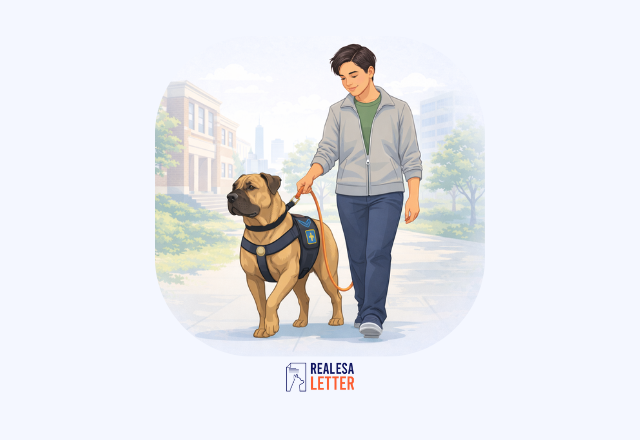


Technically yes, but practically no.
While the ADA doesn't restrict service dogs by breed, the Caucasian Shepherd's protective temperament and stranger suspicion make it unsuitable for service work.
These massive guardian dogs were bred to defend livestock from predators, not to remain calm around strangers in public settings. Their independent nature and natural wariness conflict with the core requirements of service dog behavior.
Let's explore why this breed struggles with service work and what alternatives exist.
What Is the Caucasian Shepherd's Natural Temperament?
The Caucasian Shepherd was bred for livestock guardian work in remote mountain regions. These dogs protected flocks from predators like wolves and bears, making life-or-death decisions without human guidance. Their protective instincts run extremely deep and define their core nature.
This breeding history mirrors that of Kangal dogs and Anatolian Shepherds, which were developed for similar livestock protection roles.
This breed shows fierce loyalty to family members but displays natural suspicion toward strangers. The breed naturally distrusts unfamiliar people and animals, viewing newcomers as potential threats. This wariness served them well as livestock guardians, but it conflicts with service dog requirements.
Independent Decision-Making Problems
These dogs possess an independent personality that translates to stubborn behavior during training. They were developed to work without human direction, and this independence remains strong in modern breeding lines.
Their protective response can emerge suddenly and intensely. Even well-socialized individuals may react defensively to perceived threats. A 150-pound dog showing defensive behavior creates dangerous situations that service dog handlers cannot risk.
Why Socialization Doesn't Solve the Problem
Caucasian Shepherds require extensive socialization from early puppyhood. However, even with proper socialization, their natural suspicion often persists. The breed's genetic programming runs very deep.
They typically accept family members and regular visitors. However, new people in public settings trigger their guardian instincts, making public access work extremely challenging.
Why Don't Caucasian Shepherds Make Good Service Dogs?
The Caucasian Shepherd's natural temperament conflicts with service dog requirements on multiple levels. Service dogs must remain calm and friendly around unfamiliar people constantly, while these dogs view strangers with inherent suspicion.
Stranger Reactivity Issues
Service dogs encounter countless strangers during daily activities. The Caucasian Shepherd's natural guarding response triggers in crowded environments like shopping malls, restaurants, and public transportation. The dog may perceive normal interactions as threats.
Even non-aggressive wariness creates problems. Other people notice and become uncomfortable around suspicious dogs, defeating the purpose of seamless public integration.
Selective Obedience During Training
The breed's independent nature makes consistent obedience challenging. They question commands and decide whether to comply. Caucasian Shepherds often display selective obedience, performing well in familiar settings but ignoring commands in novel or stressful situations.
Professional trainers consistently report that the dogs' instincts override training in critical moments. This unreliability disqualifies them from service work despite their intelligence.
Size Creates Control Problems
Adult Caucasian Shepherds weigh between 100 and 170 pounds. Many service dog handlers have physical limitations or mobility issues. If the dog reacts defensively, the handler may lose physical control, creating liability concerns and safety risks.
Their sheer size limits where they can work effectively. Small spaces, crowded areas, and public transportation become problematic.
How Long Does It Take to Train a Caucasian Shepherd as a Service Dog?
While standard service dog training takes six to twenty-four months, Caucasian Shepherds often require significantly longer. Many never complete the full training program successfully. Professional trainers report much higher failure rates with guardian breeds.
Basic Obedience Challenges
Caucasian Shepherds learn basic commands like sit, down, and stay quickly. However, their willingness to comply consistently remains a major problem. These dogs were bred to make independent decisions, causing selective obedience.
They might perform perfectly at home but refuse commands in public. Distraction training proves particularly difficult as their natural alertness to potential threats overrides obedience commands.
Task Training Limitations
Caucasian Shepherds possess the intelligence to learn mobility assistance tasks. However, they don't naturally enjoy pleasing their handlers through work. They view their role as protection, not assistance.
The breed may perform trained tasks in familiar environments, but reliability decreases dramatically in novel or stressful situations. Their natural suspicion of strangers interferes with their focus on their handler.
Public Access Training Failures
Public access training reveals the fundamental incompatibility between Caucasian Shepherds and service work. These dogs naturally view crowded public spaces as threatening situations, triggering constant stress responses.
Even well-socialized Caucasian Shepherds show tension in public settings. Their body language communicates discomfort and suspicion to others. Most Caucasian Shepherds fail public access testing completely. Trainers cannot overcome the breed's deeply ingrained protective nature.
Do Breed Restrictions Apply to Caucasian Shepherd Service Dogs?
Caucasian Shepherds appear on virtually every breed restriction list. Insurance companies, housing developments, and airlines all flag this breed, creating substantial practical barriers despite ADA protections.
Housing Discrimination
Finding housing with a Caucasian Shepherd service dog proves nearly impossible. Most landlords ban this breed automatically, as their insurance policies specifically exclude coverage for guardian breeds.
While the Fair Housing Act requires reasonable accommodations, courts recognize that extreme insurance costs constitute undue hardship. Even when landlords want to accommodate, their insurance companies refuse. Service dog handlers often struggle to find any housing, defeating the service dog's purpose of enabling independence.
Travel Restrictions
International travel with a Caucasian Shepherd service dog is virtually impossible. Most countries ban this breed completely, regardless of service dog status. Canada, the United Kingdom, and many European nations prohibit them.
Within the United States, some cities ban Caucasian Shepherds. While the ADA protects service dogs from breed discrimination, handlers must research every destination's laws. Domestic air travel presents additional challenges, as airlines require extensive documentation and some refuse to transport them regardless of service dog status.
What Are Better Alternatives for Caucasian Shepherds?
The Caucasian Shepherd excels in roles matching their instincts rather than service work.
Property Guardian Work
Caucasian Shepherds naturally excel at property protection. Their imposing appearance alone prevents most trespassing attempts. These dogs require large properties with secure fencing and experienced handlers who understand guardian breeds.
Emotional Support Animals
Caucasian Shepherds can serve as emotional support animals with proper training. Emotional support animals provide comfort through their presence at home and don't require public access training.
However, emotional support animals lack service dog legal protections and cannot enter public places that prohibit pets. Housing accommodations still face insurance restriction challenges. Understanding the key differences between ESAs and service dogs helps clarify which option suits your needs.
While Caucasian Shepherds can potentially fill this role, reviewing the best breeds for emotional support work may reveal better options with fewer housing restrictions.
Why Therapy Work Doesn't Suit This Breed
Therapy dogs visit hospitals, schools, and nursing homes. Caucasian Shepherds rarely succeed in these programs.
Their size intimidates vulnerable populations, and their natural stranger wariness creates barriers. Therapy dogs must show immediate friendliness toward all people, traits that oppose the Caucasian Shepherd's temperament.
Should You Choose a Caucasian Shepherd as Your Service Dog?
Choosing a Caucasian Shepherd as a service dog requires honest evaluation. While you may love this breed's loyalty and protective nature, these same traits disqualify them from service work.
Why Protection and Service Work Don't Mix
Many people attracted to Caucasian Shepherds seek a protective service animal. However, this dual role violates fundamental service dog principles. The ADA explicitly states that protection work doesn't qualify as service dog tasks.
Caucasian Shepherds cannot suppress their protective instincts reliably. Even if they seem calm at home, public settings trigger guardian behaviors. If you genuinely need protection, consider separate solutions—a home security system and a guard dog at home.
What Professional Trainers Say
Professional service dog organizations universally avoid Caucasian Shepherds. Trainers with decades of experience recognize the breed's fundamental incompatibility. Their consistent rejection of this breed reflects hard-earned knowledge.
When consulted about Caucasian Shepherds for service work, professionals have witnessed countless failures despite extensive training efforts. If you're considering training your own service dog, understand that the investment of time and money with this breed yields poor results.
Temperament testing reveals why they fail service dog programs. Caucasian Shepherds score poorly on metrics measuring stranger friendliness, environmental adaptability, and trainability—all critical for service dog success.
Guardian Breeds vs. Service Breeds
Guardian breeds and service breeds were developed for opposite purposes. Caucasian Shepherds were created to independently defend livestock. Service breeds were developed to cooperate closely with humans.
Guardian breeds questioning authority, make independent decisions, and distrust strangers. Service breeds eagerly, please handlers, follow directions reliably, and welcome everyone. You cannot train away thousands of years of selective breeding.
What Documentation Challenges Do Caucasian Shepherd Handlers Face?
Caucasian Shepherd service dog handlers face unique documentation challenges. While the ADA doesn't require certification, this breed's reputation forces handlers to document everything meticulously.
Proving Legitimacy
Handlers face constant skepticism about their dog's legitimacy. The breed's reputation makes people assume it's a fake service dog. While businesses can only ask two ADA-permitted questions, they often challenge further, claiming the dog appears aggressive or threatening.
Maintaining impeccable public behavior becomes absolutely critical. One incident of barking, lunging, or defensive posturing proves doubters right. Many handlers carry extra documentation voluntarily to prevent access challenges.
Housing Documentation Requirements
Landlords request far more documentation for Caucasian Shepherds than other breeds—proof of extensive training, liability insurance, and behavioral assessments. Your healthcare provider's letter alone rarely satisfies housing providers.
Many landlords require separate liability insurance covering the Caucasian Shepherd specifically. Standard renter's insurance often excludes this breed completely. Even with comprehensive documentation, housing options remain extremely limited.
RealESALetter.com provides legitimate documentation from licensed healthcare professionals for housing accommodations. However, even proper documentation may not overcome Caucasian Shepherd breed restrictions.
Travel Documentation Impossibilities
International travel requires navigating conflicting regulations. Many countries ban the breed outright, making documentation irrelevant. Countries that don't ban the breed often require extensive additional documentation costing thousands of dollars and taking months.
Airlines impose their own requirements beyond government regulations. The U.S. Department of Transportation forms don't address breed-specific restrictions adequately. You must research each airline and destination separately.
Why Documentation Burdens Make This Breed Impractical
The documentation requirements create exhausting ongoing burdens, contradicting the service dog's purpose of enabling independence. Every housing application, travel plan, and public outing requires extensive preparation.
Traditional service dog breeds face minimal documentation challenges. Their appearance and behavior communicate their purpose clearly. Choosing a Caucasian Shepherd means accepting documentation burdens that other handlers avoid.
Can a Caucasian Shepherd Be an Emotional Support Animal?
Yes, and this is where the Caucasian Shepherd genuinely fits far better than service dog work.
As an emotional support animal, a Caucasian Shepherd does not need to pass public access tests, maintain neutrality around strangers in retail environments, or suppress its guardian instincts in crowded spaces. Its role is simpler and more natural: providing comfort, companionship, and a calming presence to its owner within the home.
For individuals dealing with anxiety, PTSD, depression, or other emotional and psychological conditions, the Caucasian Shepherd's deep loyalty and strong attachment to its handler can be genuinely therapeutic.
These dogs bond intensely with their family. That unwavering devotion, the same trait that makes them difficult in public service work, becomes an asset in a home environment where the owner simply needs to feel safe and less alone.
What Changes With ESA Status
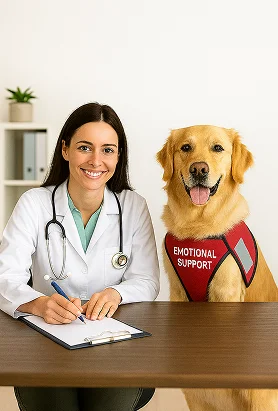
An ESA designation does not require the dog to perform specific trained tasks. It requires a licensed mental health professional to confirm that the animal provides emotional benefit as part of the owner's treatment. This is a realistic bar for a breed like the Caucasian Shepherd, provided the dog is not aggressive and is manageable within the living space.
One important consideration: because ESAs are not service animals, they do not carry ADA public access rights. Housing is the primary legal protection, and landlords must make reasonable accommodations under the Fair Housing Act.
Caucasian Shepherds appear on many insurance breed restriction lists, making housing a genuine challenge even with ESA status. It is worth researching your landlord's insurance policy before relying solely on your ESA letter for accommodation. Before applying, it is worth checking the ESA letter pricing to find a plan that fits your situation.
Choosing the right animal for an ESA role is a decision worth taking seriously before committing. A broader look at the full range of types of animals as ESA helps you weigh which species genuinely fits your living situation and emotional needs.
Get ESA Letter for Your Caucasian Shepherd No breed restrictions with a valid ESA letter. |
In summary, the Caucasian Shepherd can technically qualify as a service dog under ADA regulations. However, this breed faces significant challenges that make it impractical for service work.
Their protective nature and stranger suspicion conflict with service dog requirements. The independent temperament complicates training and reliability. Their massive size creates handling difficulties, housing barriers, and travel restrictions.
Most handlers will find better success with traditional service dog breeds. Labrador Retrievers, Golden Retrievers, and German Shepherds offer proven track records. These breeds naturally possess traits that psychiatric service dogs and other service work demands.
The Caucasian Shepherd excels in roles matching their instincts rather than service work. Understanding the differences between service dogs and ESAs helps you identify the right role for this breed. Handlers seeking service dogs should consider breeds specifically developed for cooperative work.
Understanding breed characteristics helps make informed decisions about service animals. The right match between handler needs and dog temperament increases success dramatically.

WRITTEN BY
Dr. Avery Langston
Dr. Avery Langston is a licensed clinical therapist with more than 12 years of professional experience in emotional support animal (ESA) assessments, mental health counseling, and evidence-based therapeutic interventions. With a strong foundation in clinical psychology and a passion for mental-health education, Avery has guided thousands of individuals through the ESA qualification process while promoting emotional healing and stability. As a senior content contributor for RealESALetter.com, Avery focuses on writing accurate, accessible, and legally informed articles on ESA rights, housing protections, and mental wellness. Her mission is to help readers understand their ESA benefits clearly and confidently, backed by real clinical expertise.
Share this Article