Sign In / Create Account
NYCHA Has a 25-Pound Pet Limit. Does It Apply to an Emotional Support Animal?
No. The 25-pound limit is a pet rule, and an approved emotional support animal is not a pet under NYCHA's policy. NYCHA runs about 335 developments across all five boroughs, and it has its own forms for animals. An ESA letter in New York works in NYCHA housing, but you file it NYCHA's way. The right to keep the animal comes from state and federal law; New York ESA laws covers that side.

What does NYCHA's pet policy actually restrict in New York City?
NYCHA allows one dog or one cat per household, caps dogs at 25 pounds at full growth, bans three breeds, and requires registration before the animal moves in.
The one-pet, 25-pound rule
A household may keep one dog or one cat, not both. Any dog registered on or after February 1, 2010 may not exceed 25 pounds as an adult. Earlier registrations were held to 40 pounds.
Breeds, registration and spay/neuter
NYCHA prohibits pit bulls, Rottweilers and Doberman pinschers, purebred or mixed. Every dog and cat must be spayed or neutered, vaccinated for rabies and registered on NYCHA Form 040.505; dogs also need a DOHMH license.
Why the 90-day pet law does not apply
New York City's 90-day pet law (Admin Code § 27-2009.1) does not cover NYCHA. A private landlord who knows about an openly kept pet for 90 days may lose the right to enforce a no-pet clause. In NYCHA, an unregistered animal is a lease violation.
How do you ask NYCHA to approve an emotional support animal?
You register the animal as an assistance animal on NYCHA Form 040.505, and the pet limits stop applying once it is approved. An ESA letter from RealESALetter.com, written by a New York-licensed clinician in line with Executive Law § 296, gives NYCHA the disability-related need its verification step asks about.
The same form, a different box
NYCHA uses one form, 040.505, for pets and assistance animals (NYCHA ACOP Chapter 14). File it through the NYCHA Self-Service Portal or your property management office. If your disability is not observable, NYCHA may also require Form 040.426, Medical Verification, from a health care professional (NYCHA reasonable accommodation forms).
An ESA letter supports that form; it does not replace it. Residents in Manhattan can see how an ESA letter in Manhattan is issued. NYCHA says an online certificate alone is not acceptable
What a NYCHA property manager can and cannot do
A NYCHA property manager can:
- require the completed 040.505 form before the animal moves in
- request Form 040.426 for a non-observable disability
- require spay/neuter, rabies vaccination and a DOHMH dog license
- require you to secure the animal during inspections
A NYCHA property manager cannot:
- apply the weight cap to an approved assistance animal
- refuse an assistance animal for breed alone
- count it against the one-pet limit
- demand your diagnosis or medical records
Every RealESALetter.com letter lists the clinician's New York license number and license type, the clinician detail NYCHA's assistance-animal policy (ACOP Chapter 14) requires for a non-observable disability.
After you file
NYCHA must answer in writing; its policy sets no deadline. A replacement animal needs Form 040.299B. Animals may not be left alone over 24 hours. Section 8 voucher holders ask their private landlord about the animal; NYCHA handles only program accommodations (Form 059.109).
Where do you get help in New York City if NYCHA denies or ignores your request?
Start with NYCHA's grievance process, then the NYC Commission on Human Rights or the New York State Division of Human Rights; HUD is now a weak third route for an untrained ESA.
Inside NYCHA first
Ask the property management office for the denial in writing. NYCHA's grievance procedure (ACOP Chapter 12) begins with an informal settlement at the development and can reach an impartial hearing officer. You can also call Services for People with Disabilities at 212-306-4652.
City, state and federal offices
Since May 22, 2026, HUD finds cause in animal cases only when the animal is trained, so city and state agencies are stronger routes. HUD's public housing rule (24 CFR § 5.303) still exempts assistance animals from pet rules.
Who to call (by address) | What they do | Deadline |
|---|---|---|
NYCHA: Customer Contact Center, 718-707-7771 | Registration and grievances | Register before move-in |
City of New York: Commission on Human Rights, 212-416-0197 | NYC Human Rights Law complaints, including against NYCHA | 1 year |
New York State: Division of Human Rights, 844-697-3471 | State Human Rights Law complaints | 3 years (acts after Feb 15, 2024) |
HUD: New York Regional Office, 26 Federal Plaza, 1-800-496-4294 | Fair Housing Act complaints | 1 year; court within 2 years |
Conclusion
NYCHA's pet rules are strict, but they regulate pets; an approved emotional support animal is filed on NYCHA's own form as an accommodation. If NYCHA refuses, the city and state offices above take complaints. Before you file, you can check whether you qualify for an ESA.
FAQs for NYCHA residents in New York City
What happens if NYCHA rejects my emotional support animal paperwork?

Ask for the reason in writing. Most rejections are a missing Form 040.426, a vendor certificate instead of a clinician's letter, or no spay/neuter proof. Fix the gap and refile; a denial on complete paperwork goes to the grievance procedure.
Can I keep a registered pet and an emotional support animal in NYCHA housing?
Yes, if both are approved separately. NYCHA allows one registered dog or cat per household plus an assistance animal. Each needs its own 040.505 registration.
Does NYCHA's breed list stop a pit bull from being my emotional support animal?
Not by itself. The ban applies to pets, and an approved assistance animal is exempt from it. NYCHA can still remove any animal it finds dangerous or threatening.
Dr. Avery Langston is a health and wellness writer with 12+ years of experience covering ESA rights, housing laws, and mental health. As a senior contributor for RealESALetter, she helps readers understand ESA regulations and legal protections.
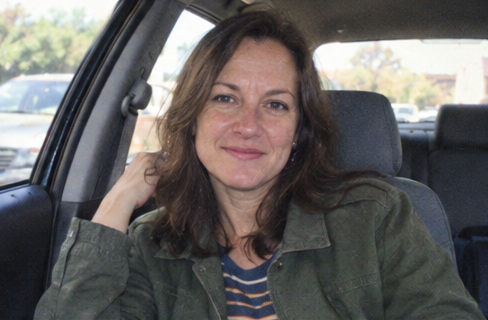
Stephanie W. is a Licensed Clinical Social Worker (LCSW) whose professional focus includes trauma recovery, behavioral health assessment, emotional regulation, and crisis support. Her approach combines trauma-informed care with practical therapeutic strategies designed to help clients understand emotional patterns, strengthen coping skills, and navigate challenging experiences.

Don't worry. Your pet stays with you.
Housing law is on your side
- 1A few questions. That's your paperwork
- 2A licensed therapist reviews your case
- 3Official ESA letter, ready to send
Not accepted? Full refund, guaranteed