


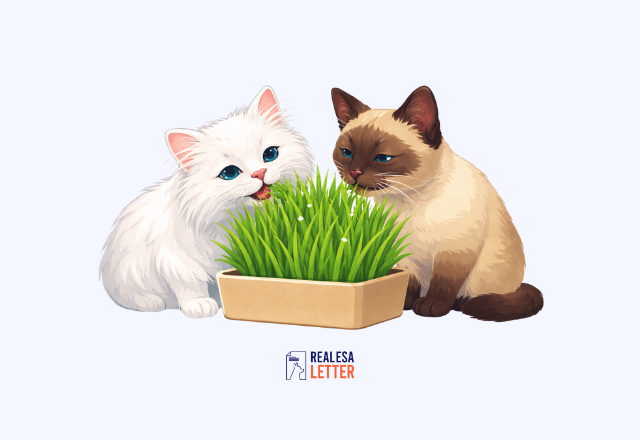
You have probably watched your cat walk straight past their food bowl and start chewing on a patch of grass in the yard. It might look strange, but this behavior is completely natural and dates back thousands of years. Wild cats often eat grass to help digestion, manage hairballs, and obtain trace nutrients.
Indoor cats, however, rarely have access to safe, pesticide-free grass. That is why choosing the best cat grass for your home matters more than many pet owners realize.
Whether your cat struggles with hairballs, shows signs of digestive discomfort, or simply enjoys chewing on fresh greens, the right cat grass can support their well-being. Different varieties, such as wheatgrass, oat grass, barley, and rye, offer slightly different textures, nutrients, and growing conditions.
In this guide, you will learn why cats eat grass, how to choose the best type for your pet, the differences between popular cat grass varieties, and how to grow it safely at home.
What Is Cat Grass?
Cat grass is a general term for several grass varieties that are safe, beneficial, and specifically grown for domestic cats to eat. It is not a single plant species but a category that includes wheatgrass, oat grass, barley grass, rye grass, orchard grass, alfalfa, and spelt wheatgrass.
These plants all belong to the cereal grain family and are entirely different from the lawn grass growing in your backyard, which may carry pesticides, fertilizers, and other chemicals that are harmful to cats.
The term "cat grass" is sometimes used interchangeably with "pet grass" or "kitty grass" in commercial settings, but the underlying plant varieties remain consistent. Most cat grass products are sold as seed packets or pre-grown trays.
When grown from seeds, the process is simple: soak the seeds overnight, plant them in shallow soil, water regularly, and most varieties are ready for your cat to enjoy within 10 to 14 days.
It is also important to clarify what cat grass is not. Cat grass is not catnip. While catnip (Nepeta cataria) is a member of the mint family that triggers a short-lived euphoric behavioral response in cats, cat grass provides steady nutritional and digestive benefits without any psychoactive effect.
The two products are often sold side by side in pet stores, which creates confusion, but they serve completely different biological purposes. If your goal is to support your cat's digestion, reduce hairballs, or supplement their nutrition, cat grass is what you need. If your goal is play stimulation and enrichment, catnip handles that role.
Another common misconception is that cats eat grass because something is wrong with them. Current veterinary research does not support this. Grass eating is a normal, healthy behavior seen in both wild and domestic cats across the world.
Growing cat grass at home simply gives your cat access to a clean, safe version of something they are biologically inclined to seek out.
Why Do Cats Eat Grass? The Science Explained
Knowing why cats seek out grass helps you make a more informed choice about which variety to offer and how often to make it available. Despite being obligate carnivores whose digestive systems are built primarily for processing meat, cats have a long evolutionary relationship with plant matter that goes back far beyond domestication.
Digestive Support and Gut Motility
Grass is rich in insoluble fiber, which physically stimulates the smooth muscle lining of the intestinal tract and helps move food through the digestive system more efficiently. Cats that have regular access to cat grass often show improved bowel consistency, reduced episodes of constipation, and more predictable litter box behavior.
The fiber in cat grass works differently than the soluble fiber found in commercial cat food, providing a mechanical benefit that complements rather than duplicates what a standard diet already delivers.
Hairball Prevention and Expulsion
This is arguably the most practical reason cat owners introduce cat grass into the home. Cats spend a significant portion of their day grooming, swallowing loose fur in the process. Over time, this fur accumulates in the stomach.
Without adequate fiber intake, it compacts into hairballs that must be vomited up. Cat grass adds bulk and insoluble fiber to the digestive system, helping fur move through the intestinal tract naturally and exit via the litter box rather than being vomited. Long-haired cat breeds and cats that groom heavily benefit most from consistent access to cat grass, particularly wheatgrass.
Nutritional Supplementation
Commercial cat food, even premium formulations, does not always replicate the complete micronutrient profile that cats historically accessed through varied prey and incidental plant matter. Cat grass contains chlorophyll, folic acid, beta-carotenes, vitamins A, C, and E, B vitamins, zinc, magnesium, and various plant-based enzymes.
Folic acid in particular plays a role in oxygen transport within the blood and supports healthy cell production. Chlorophyll has natural detoxifying properties and contributes to fresher breath as a side benefit. These compounds support everything from immune function to coat quality and energy metabolism.
Instinctual Behavior
A peer-reviewed study published in PMC by researchers at the University of California, Davis found that only about 27% of cats vomit after eating plants, and the vast majority showed no signs of illness beforehand, suggesting grass consumption is an instinctive behavior rather than a response to sickness.
The researchers proposed that grass eating evolved as a mechanism to increase muscle activity in the digestive tract and expel intestinal parasites, a behavior also observed in wild carnivores and primates.
Even in well-cared-for indoor cats that carry no parasite burden, this instinct remains deeply wired. You are unlikely to eliminate the behavior entirely, which is exactly why providing a safe indoor source of grass is the right approach.
Behavioral Enrichment
For indoor cats especially, chewing on fresh grass provides meaningful sensory stimulation. The texture, smell, and taste engage the cat's senses in a way that standard kibble and commercial treats simply do not.
Researchers writing in Science (AAAS) specifically recommend that cat owners grow or buy indoor grass to give cats a safe, non-poisonous outlet for this deeply ingrained natural behavior. For cats that show signs of boredom such as excessive vocalization, destructive scratching, or compulsive grooming, adding cat grass to their environment is a low-cost, high-impact enrichment tool.
The 7 Main Types of Cat Grass: A Full Comparison
Not all cat grass is the same. Each variety offers a different nutritional profile, growth timeline, leaf texture, flavor profile, and durability. These differences are the foundation for choosing the best cat grass for your cat's individual needs.
Some varieties are ideal for cats with specific health concerns, others are best suited to beginners growing for the first time, and a few should be avoided entirely despite being commercially available.
- Wheatgrass (Triticum aestivum)
Wheatgrass is the most widely recognized and broadly recommended cat grass variety. Its broad, lush, thick blades are rich in chlorophyll, vitamins A, C, and E, amino acids, and high levels of insoluble fiber.
This fiber content is what makes wheatgrass particularly effective at improving gut motility and reducing the frequency of hairball-related vomiting over time. Cats that eat wheatgrass regularly tend to pass fur through their stool more consistently rather than vomiting it up.
Wheatgrass is often described as the all-rounder for everyday feline wellness because it addresses multiple health needs simultaneously: digestion, hairball control, and baseline micronutrient supplementation. It is especially well-suited for long-haired cat breeds that groom extensively.
The main challenge with wheatgrass is its susceptibility to mold when overwatered. Growing it in a well-draining tray, keeping the soil moist but not saturated, and ensuring adequate air circulation around the tray will prevent most mold issues. If mold does appear, discard the tray and start a fresh batch rather than attempting to salvage it.
Growth Timeline: 10 to 14 days from seed to usable height.
Best For: Hairball reduction, long-haired breeds, cats needing regular digestive support.
- Oat Grass (Avena sativa)
Oat grass is one of the most nutritionally complete cat grass varieties available and also the fastest to germinate. It is high in protein and soluble fiber, and delivers a strong profile of B vitamins, iron, manganese, zinc, and magnesium.
It also contains naturally occurring GABA, an amino acid associated with nervous system support that research suggests may help reduce anxious and stress-related behaviors in animals.
The blade structure of oat grass is softer and thinner than wheatgrass, and its aroma carries a slightly sweet quality that many cats find immediately appealing. This makes it particularly well-suited to picky eaters who turn away from more robust grasses. Oat grass germinates faster than any other common variety, typically producing usable growth within 7 days, which is useful when you need to replace a tray quickly.
Its primary limitation is longevity. Oat grass reaches maturity faster and also declines faster than wheat or barley, meaning trays need to be replaced more frequently. Cat owners who choose oat grass as their primary variety often keep two or three trays staggered at different stages of growth.
Growth Timeline: 7 to 10 days from seed to usable height.
Best For: Picky eaters, anxious cats, cats needing B vitamin support, beginners.
- Barley Grass (Hordeum vulgare)
Barley grass is one of the most beginner-friendly and nutritionally reliable cat grass options. It is prebiotic-rich, containing beta-glucans that actively support the gut lining, promote growth of beneficial gut bacteria, and help restore digestive balance after disruption.
This makes barley grass particularly valuable for cats recovering from a course of antibiotics, which deplete gut flora, or for cats with ongoing mild digestive sensitivity.
Barley grass has the highest fiber content of the three primary varieties and is one of the tallest-growing options, reaching heights of up to 14 inches under good conditions. It delivers potassium and vitamin C alongside its fiber content, providing immune-supportive benefits beyond simple digestive support. Its moderate growth timeline and strong durability make it one of the most reliable day-to-day options for cat owners.
Barley has a slightly sweeter flavor profile than wheatgrass and is generally well-accepted by cats who are new to cat grass. It is also less prone to mold than standard wheatgrass, which gives it an advantage in more humid growing environments.
Growth Timeline: 7 to 12 days from seed to usable height.
Best For: Digestive sensitivity, post-antibiotic recovery, cats with soft stools, beginners.
- Spelt Wheatgrass (Triticum spelta)
Spelt wheatgrass is an ancient grain variety that has gained a dedicated following among experienced cat grass growers. It shares the core nutritional characteristics of standard wheatgrass, including strong chlorophyll content, vitamins, amino acids, and fiber, but is hardier in its growth habit and significantly more resistant to mold.
For cat owners who have struggled with standard wheatgrass developing mold before their cat can finish a tray, spelt is the practical solution. Spelt wheatgrass grows slightly more slowly than standard wheat and produces somewhat denser blades. It is higher in fiber than regular wheatgrass, which enhances its digestive benefits.
In humid climates or homes where airflow is limited, spelt consistently outperforms standard wheat and delivers a longer-lasting, cleaner tray.
Growth Timeline: 10 to 16 days from seed to usable height.
Best For: Humid growing environments, mold-prone trays, owners who want longer-lasting grass.
- Orchard Grass (Dactylis glomerata)
Also known as crow's foot grass, orchard grass is thinner and more fibrous than the cereal grain varieties. It is exceptionally durable and provides consistent roughage over an extended period, staying healthy longer into the season than faster-growing grasses.
Most cats enjoy its texture, and because it grows more slowly and compactly than barley or wheat, it tends to hold up well against repeated nibbling without deteriorating quickly.
Orchard grass requires only moderate sunlight and consistent moisture to thrive, making it suitable for homes with limited natural light. It is not as nutritionally dense as wheatgrass or barley, but its durability makes it a reliable option for cat owners who want a low-maintenance grass that does not need frequent replacing.
Growth Timeline: 10 to 14 days from seed to usable height.
Best For: Cats needing long-lasting roughage access, low-maintenance growing situations.
- Alfalfa (Medicago sativa)
Alfalfa is one of the most nutrient-dense options in the cat grass category, though it functions more as a supplement than a grazing grass. It is high in beta-carotenes, which cats convert to retinol to support healthy cell function, immune response, and eye health. Alfalfa also provides a strong mineral profile including calcium, potassium, and phosphorus, nutrients that complement a standard commercial diet.
Because of its nutritional potency, alfalfa is best offered in small measured amounts rather than as a free-grazing tray. Many cat owners sprinkle a small quantity directly over food rather than growing a standalone tray. It is easy to grow and germinates quickly, but its strength means moderation matters.
Growth Timeline: 5 to 7 days to sprout when grown as microgreens.
Best For: Supplemental daily nutrition, immune support, cats on targeted wellness plans.
- Rye Grass
Rye grass is included here as a clear warning rather than a recommendation. Despite being widely available in mixed seed packets and some commercial cat grass kits, multiple reputable sources advise against growing rye grass for cats. The stiff, serrated stems can irritate the esophagus and intestinal tract during ingestion.
When rye grass is allowed to go to seed, the seed heads can become lodged in a cat's mouth, nasal cavity, or throat, sometimes requiring veterinary removal. If you currently grow rye grass for your cat, switching to any of the varieties listed above is a straightforward improvement to their safety.
How to Choose the Best Cat Grass: 6 Key Factors
With multiple varieties available and a range of commercial products competing for attention on pet store shelves, narrowing down the right choice requires a clear framework. These six factors address the most important variables in the decision, from your cat's specific health profile to the practicalities of your growing environment.
Factor 1: Match the Grass to Your Cat's Health Need
The most useful starting point is identifying what specific benefit you are trying to deliver. Different grass varieties have genuinely different strengths, and matching the variety to the need produces better results than choosing randomly.
Cats that vomit hairballs frequently benefit most from wheatgrass, which has the highest insoluble fiber content and the most direct mechanical effect on moving fur through the digestive tract.
Cats with soft stools, digestive sensitivity, or those recovering from antibiotics respond well to barley grass, which supports the gut lining through its prebiotic beta-glucan content.
Cats that are anxious, picky about food, or reluctant to try new things are most likely to accept oat grass because of its softer texture and sweeter aroma. Cats that need nutritional supplementation beyond their standard diet benefit from alfalfa, used in small measured doses alongside their meals.
If your cat has no specific health concern and you are introducing cat grass for the first time, any of the three primary varieties work well. A mixed seed tray covering wheat, oat, and barley simultaneously gives you useful information about which type your cat prefers and provides a broad nutritional base.
Factor 2: Ease of Growing
If this is your first time growing cat grass, choosing a forgiving variety removes the risk of early discouragement. Oat grass and barley grass are the best entry points. Both germinate reliably within a week, tolerate minor inconsistencies in watering, and produce visible progress quickly enough to confirm you are doing it correctly.
Wheatgrass and spelt wheatgrass produce the most nutritionally dense results but require slightly more patience and attention to drainage. Mold is the primary failure point with wheatgrass, and it is almost always caused by overwatering or poor air circulation around the tray. Addressing those two variables eliminates most problems.
Factor 3: Always Choose Organic Seeds
Organic certification matters more for cat grass than for most garden plants because your cat is consuming this product directly and regularly. Non-organic seeds may carry residual pesticides, synthetic fertilizers, or fungicide treatments applied during commercial seed processing. These chemicals accumulate in the blades of the grass as it grows and are ingested every time your cat nibbles.
The point of growing cat grass is to add something beneficial to your cat's diet. Introducing pesticide residues directly contradicts that goal. Always verify that seeds carry certified organic labeling and research the supplier before purchasing. Some products use marketing language like "natural" or "chemical-free" without meeting the standards required for organic certification.
Factor 4: Check Seed Viability and Expiration
Cat grass seeds have a finite shelf life, and germination rates decline significantly as seeds age past their expiration date. Purchasing seeds from a supplier with high product turnover reduces the risk of buying old stock.
When growing from seeds purchased in-store, check the expiration date printed on the packaging before planting. Seeds stored in warm, humid conditions degrade faster than their printed date suggests.
If a tray of seeds fails to germinate or produces weak, sparse growth, stale seeds are the most likely cause. Starting fresh with a new batch from a different supplier will usually resolve the problem.
Factor 5: Growing Conditions and Available Space
Most cat grass varieties are well-adapted to indoor growing and do not require specialized equipment. A shallow tray or pot with drainage holes, quality potting soil, a spot with indirect natural light, and consistent watering is sufficient for all of the recommended varieties. Overwatering is the most common mistake, and clear trays make it easier to monitor moisture levels at the root zone.
For cat owners who are deciding between keeping their cats indoors or allowing outdoor access, the comparison between indoor vs. outdoor cats raises important safety considerations.
Outdoor cats may encounter lawn grasses treated with herbicides or pesticides, making indoor cat grass an important alternative regardless of how much outdoor time your cat gets.
A two-tray rotation system is the most practical approach for consistent availability. Start a new tray every 7 to 10 days so that when one tray declines, a fresh one is already established and ready. This eliminates any gap in access and means your cat always has viable, nutritious grass available.
Factor 6: Respect Your Cat's Individual Preferences
Cats have strong individual preferences that do not always align with what is nutritionally optimal. Some cats show immediate enthusiasm for wheatgrass and return to it repeatedly throughout the day.
Others walk past it entirely and go straight for oat grass. A small number of cats take several days of exposure before engaging with cat grass at all, particularly if they have never had access to it before.
When introducing cat grass for the first time, placing the tray in a location your cat already visits regularly gives them the opportunity to investigate on their own terms without pressure.
Offering two or three varieties simultaneously during the introduction period helps you identify preferences quickly. In multi-cat households, a mixed seed tray or multiple small trays of different varieties accommodates varying tastes without requiring separate growing setups for each cat.
How to Grow Cat Grass at Home: Step-by-Step
Growing cat grass indoors is one of the most accessible wellness practices a cat owner can adopt. It requires no special gardening skills, minimal equipment, and produces reliable results within two weeks. The following method works for all recommended varieties including wheatgrass, oat grass, barley grass, and spelt wheatgrass.
What You Need:
- Certified organic cat grass seeds (wheatgrass, oat, barley, spelt, or a blend)
- A shallow tray or pot (2 to 3 inches deep) with drainage holes
- Quality potting soil or seed-starting mix
- A spray bottle or gentle watering can
- A location with indirect natural light
Step 1: Soak the Seeds Place your measured seeds in a small bowl of clean water and leave them to soak for 8 to 12 hours. Soaking softens the outer seed coat, activates germination processes, and produces noticeably faster and more even sprouting compared to planting dry seeds. This step is particularly important for wheatgrass and barley, which have harder seed coats.
Step 2: Prepare Your Tray Fill your tray with approximately 2 inches of lightly moistened potting soil. Spread the soil evenly and press it down gently to eliminate large air pockets. Cat grass seeds have shallow root systems, so deep containers offer no advantage and simply increase the amount of soil needed.
Step 3: Spread and Cover the Seeds Drain the soaked seeds and scatter them evenly and densely across the surface of the soil. Press them gently into the top layer of soil without burying them.
The seeds should be visible on the surface or covered by no more than a thin layer of additional soil. Dense planting produces a full, lush tray that your cat will find more inviting.
Step 4: Create a Germination Environment Water the tray gently using a spray bottle until the surface soil is moist. Cover the tray loosely with plastic wrap or a small humidity dome and set it in a warm location out of direct sunlight. This enclosed environment retains moisture and warmth during the critical first days of germination.
Step 5: Monitor and Uncover Check the tray daily. Once you see the first green shoots emerging, typically within 2 to 4 days for oat and barley and 3 to 5 days for wheat, remove the cover and move the tray to a spot with indirect natural light.
Step 6: Water Consistently Water the tray once daily or whenever the top layer of soil begins to feel dry. The goal is consistently moist soil, never wet or waterlogged. Overwatering is the primary cause of mold growth, so err on the side of slightly less water rather than more.
Bottom watering, by placing the tray in a shallow dish of water and allowing the soil to absorb moisture from below, is an effective method for preventing surface mold.
Step 7: Offer to Your Cat Most varieties reach an ideal height of 3 to 4 inches within 10 to 14 days. At this point, place the tray in a consistent, accessible location and allow your cat to approach and investigate at their own pace.
If your cat does not show immediate interest, placing the tray near their food bowl or favorite resting spot increases the likelihood of engagement.
Ongoing Maintenance: Cat grass does not re-seed itself after reaching maturity. Once the grass begins to yellow or decline, typically within 2 to 3 weeks of reaching full height, replace the tray with a freshly grown batch. Keeping a second tray in earlier stages of growth at all times eliminates any gap in availability.
Cat Grass vs. Catnip: What Is the Difference?
This is one of the most frequently asked questions among new cat owners, and the confusion is understandable. Both products are sold in the pet care aisle, both involve growing plants for your cat, and both are marketed as beneficial additions to a cat's life. However, they work through entirely different biological mechanisms and serve completely different purposes.
Cat grass refers to cereal grain grasses such as wheatgrass, oat grass, and barley that cats consume for nutritional and digestive benefits. The effect is gradual and cumulative.
Regular access to cat grass over days and weeks produces measurable improvements in digestion, coat quality, and hairball frequency. The cat chews the grass, swallows some, may vomit some of it, and the fiber and micronutrients in what is absorbed contribute to ongoing wellness.
Catnip (Nepeta cataria) works through a completely different pathway. The active compound in catnip, nepetalactone, binds to receptors in a cat's nasal tissue and triggers a temporary behavioral response that includes rolling, vocalizing, rubbing, and euphoric-looking behavior.
The effect lasts roughly 10 to 15 minutes and requires a refractory period of 30 minutes or more before the cat can respond to catnip again. Approximately 30% of cats carry a genetic variation that makes them unresponsive to catnip entirely, while virtually all cats will engage with cat grass to some degree.
The practical takeaway is that neither product replaces the other. Many cat owners provide both as part of an enriched indoor environment. Cat grass handles the nutritional and digestive role. Catnip handles the play stimulation and behavioral enrichment role. If budget or space requires choosing one, cat grass delivers more measurable health benefits over time.
Feature | Cat Grass | Catnip |
Plant Family | Cereal grains (wheat, oat, barley) | Mint family (Nepeta cataria) |
Primary Benefit | Nutritional, digestive, hairball support | Behavioral stimulation |
Effect on Cat | Gradual, cumulative health improvement | Temporary euphoric response |
Duration of Effect | Ongoing with regular access | 10 to 15 minutes per session |
Cats That Respond | Virtually all cats | Approximately 70% of cats |
Safe Daily Use | Yes | Yes, in moderation |
Safety: Is Cat Grass Always Safe?
For healthy adult cats, cat grass from approved varieties is safe to consume on a daily basis. The caveat is that safety depends on the variety chosen, how the grass is grown, and what surrounds it in your home. Each of these variables is fully within your control as a cat owner.
Toxicity Risks from Nearby Plants
The most significant safety risk associated with cat grass is not the grass itself but the plants growing nearby. Cats that develop a habit of chewing on fresh plant material may apply that behavior indiscriminately to other houseplants within their reach.
Many common indoor plants are acutely toxic to cats, including lilies of all varieties, pothos, philodendron, peace lilies, and dieffenbachia. Lily toxicity, in particular, can cause rapid kidney failure and is considered a veterinary emergency. Keeping your cat's grass tray in a clearly designated, isolated location, away from any other houseplants, eliminates this risk.
This consideration also connects to broader questions about long-term feline wellness. Knowing how long cats live and what contributes to a healthy lifespan reinforces why avoiding preventable toxin exposures throughout your cat's life matters significantly.
Quantity and Compulsive Grazing
Most cats self-regulate their cat grass intake, nibbling casually throughout the day rather than consuming large quantities in a single sitting.
If your cat begins consuming grass in noticeably large amounts on a daily basis, this pattern may reflect an underlying digestive issue or nutritional gap in their diet rather than a simple preference. A veterinary consultation is the right response to compulsive or dramatically increased grass consumption.
Vomiting After Eating Grass
Occasional vomiting after consuming cat grass is normal and expected. Cats lack the digestive enzymes needed to break down the cellulose in grass, and the stomach responds by expelling it.
This process also helps remove accumulated hair and other indigestible material. What warrants attention is frequent forceful vomiting, vomit that contains blood, or vomiting accompanied by lethargy or appetite loss.
These signs indicate something beyond normal grass-processing and require veterinary evaluation. If you are weighing over-the-counter interventions during a period when your cat seems unwell, it helps to understand what Benadryl for cats involves, since many medications considered routine for humans require careful veterinary guidance before use in cats.
Chemical Contamination
Non-organic seeds, soils containing synthetic additives, or trays placed near cleaning product storage can all introduce chemicals into your cat's grass supply. Always use certified organic seeds, clean potting soil without added fertilizers, and store your growing trays in areas free from household chemical exposure.
This is particularly important because cats typically lick their paws after interacting with any surface, meaning chemical residues on the tray or surrounding area can be ingested even if the cat does not eat the grass directly.
Cat Grass for Emotional Support Cats
Cats play a deeply significant role for people managing anxiety, depression, PTSD, chronic stress, and a range of other mental health conditions. The benefits of emotional support animals are well-established in clinical literature, and cats in particular offer consistent, non-demanding companionship that reduces cortisol levels, lowers heart rate, and provides reliable grounding during difficult emotional moments.
Cats can serve as emotional support animals, and many cat owners have formalized this relationship through a legitimate ESA letter that provides housing protections under the Fair Housing Act. A physically healthy cat is a more present and engaged companion.
Cats experiencing digestive discomfort, frequent hairball vomiting, or nutritional deficiencies are less calm, less interactive, and less available for the kind of consistent companionship that makes an ESA relationship meaningful.
Integrating cat grass into your cat's daily routine is a simple, low-cost wellness practice that directly supports both your cat's physical health and their ability to fulfill their role in your life. A cat that feels well is more relaxed, more socially engaged, and better able to provide the emotional support you depend on.
If you are still figuring out how to get a legit ESA letter for your cat, RealESALetter.com connects you with licensed mental health professionals who can evaluate your need and issue valid documentation. Maintaining the ongoing health of your emotional support cat goes hand in hand with that process.
The cost of owning a cat is a real consideration for many pet owners, and cat grass is one of the most affordable ongoing wellness additions you can make to your cat's routine.
A packet of organic cat grass seeds typically costs a few dollars and produces multiple successive trays. Compared to veterinary visits for chronic hairball issues, digestive problems, or nutritional deficiencies, the return on investment is substantial.
Quick Reference: Best Cat Grass by Use Case
Your Goal | Best Cat Grass Type |
Reduce hairballs | Wheatgrass |
Picky or sensitive eaters | Oat grass |
Digestive sensitivity or post-antibiotic recovery | Barley grass |
Mold-prone or humid environments | Spelt wheatgrass |
Longest-lasting supply with minimal maintenance | Orchard grass |
Supplemental daily nutrition | Alfalfa |
Multi-cat household with varying preferences | Mixed seed tray (wheat, oat, barley) |
First-time grower | Oat grass or barley grass |
In summing up, choosing the best cat grass comes down to three things: knowing your cat's specific health needs, selecting a high-quality organic seed variety that addresses those needs, and maintaining a consistent growing routine that ensures fresh grass is always available.
Wheatgrass, oat grass, and barley grass are the three varieties that deliver the most reliable, well-documented benefits for the widest range of cats. Spelt wheatgrass is the best option when mold resistance is a concern. Orchard grass provides exceptional durability. Alfalfa is a powerful nutritional supplement when used in moderation. Rye grass should be avoided regardless of availability.
The investment in cat grass is small. The benefit to your cat's digestion, coat quality, hairball frequency, and overall daily comfort is real and measurable over time. Start with a single tray of organic oat or barley seeds if you are new to this.
Within two weeks, you will have a fresh green resource that your cat will return to again and again, and within a few months, you will have a clear picture of which variety they prefer and what effect it has on their health.
Your cat cannot tell you what they need. Providing the right cat grass, chosen thoughtfully and grown consistently, is one of the most direct ways to show them you are paying attention.
Frequently Asked Questions
What is the best cat grass for indoor cats?

The best cat grass for indoor cats depends on your cat's specific needs. Wheatgrass is the top choice for general wellness and hairball reduction due to its high insoluble fiber and chlorophyll content.
Oat grass is the better option for picky eaters or anxious cats because of its softer texture and appealing aroma. Barley grass suits cats with digestive sensitivity or those recovering from illness.
For most first-time growers, a mixed tray covering all three gives a reliable starting point and lets your cat reveal their preference naturally.
How often should I give my cat cat grass?
Cat grass can be made available to your cat on a daily basis. There is no need to ration it for healthy cats, as most self-regulate their intake.
Replace the tray every two to three weeks, or sooner if mold appears or the grass begins to yellow and wilt. Keeping a rotation of two trays at different stages of growth eliminates gaps in availability.
Is it normal for cats to vomit after eating cat grass?
Yes, occasional vomiting after eating grass is normal and is part of the natural digestive process. Cats lack the enzymes to break down grass cellulose, and vomiting expels the undigested material along with accumulated hair and other stomach contents.
However, frequent or forceful vomiting, blood in vomit, or vomiting combined with lethargy or reduced appetite should be evaluated by a veterinarian.
What is the difference between cat grass and catnip?
Cat grass refers to cereal grain grasses grown for nutritional and digestive benefits. Catnip is a member of the mint family that triggers a short-lived euphoric behavioral response through a different biological pathway.
They are not interchangeable. Cat grass delivers cumulative health benefits over time. Catnip provides temporary play stimulation. Both are safe for healthy cats and can be offered together.
Can cat grass help with hairballs?
Yes. Cat grass, particularly wheatgrass, is one of the most effective natural approaches to managing hairballs. The insoluble fiber stimulates intestinal motility and helps fur move through the digestive tract and exit via the litter box rather than being vomited. Long-haired breeds and cats that groom heavily benefit most from consistent, daily access to cat grass.
What type of cat grass is easiest to grow?
Oat grass and barley grass are the most beginner-friendly options. Both germinate within a week, require minimal equipment, and tolerate minor inconsistencies in watering without failing.
Oat grass sprouts the fastest but needs more frequent replacement. Barley grass takes a few extra days to establish but lasts longer and handles humidity better than oat grass.
Is organic cat grass really necessary?
Yes, strongly recommended. Non-organic seeds may contain residual pesticides, synthetic fertilizers, or fungicide treatments that your cat ingests every time they nibble the grass.
Since the entire purpose of cat grass is to add something beneficial to your cat's diet, using chemically treated seeds directly undermines that goal. Always choose certified organic seeds from a reputable supplier.
Can I grow cat grass if I have other houseplants?
Yes, but place your cat grass tray in a location clearly separate from all other houseplants. Cats that develop a nibbling habit with grass may apply it to nearby plants, some of which are acutely toxic.
Lilies, pothos, philodendron, peace lilies, and dieffenbachia are among the most common toxic houseplants. Keep these completely out of reach and designate a specific, isolated spot for your cat grass tray.

WRITTEN BY
Dr. Avery Langston
Dr. Avery Langston is a licensed clinical therapist with more than 12 years of professional experience in emotional support animal (ESA) assessments, mental health counseling, and evidence-based therapeutic interventions. With a strong foundation in clinical psychology and a passion for mental-health education, Avery has guided thousands of individuals through the ESA qualification process while promoting emotional healing and stability. As a senior content contributor for RealESALetter.com, Avery focuses on writing accurate, accessible, and legally informed articles on ESA rights, housing protections, and mental wellness. Her mission is to help readers understand their ESA benefits clearly and confidently, backed by real clinical expertise.

Share this Article