Sign In / Create Account
Emotional Support Animal Letter - Asking Your Doctor
To ask a doctor for an ESA letter, schedule a dedicated appointment with your treating mental health professional or doctor. Be open and honest about your diagnosis and clearly explain how having an animal supports your mental health or plays a role in your treatment plan.

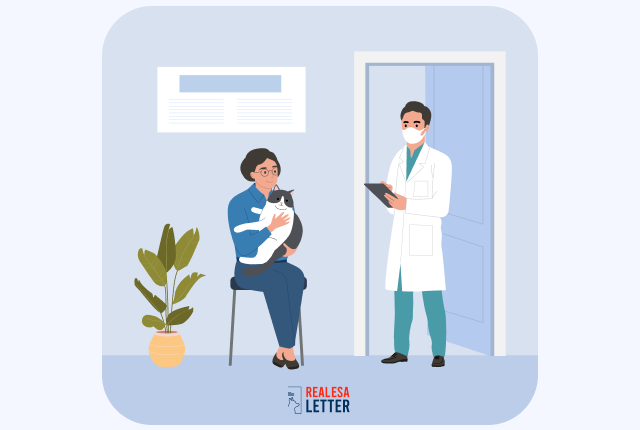
A genuine ESA letter gives you the legal standing to bypass pet fees and restrictions under the Fair Housing Act but it starts with an honest and thorough conversation with your healthcare provider.
Now let's look at what steps to follow when requesting an ESA letter from your doctor.
1. Understand What Qualifies You for an ESA Letter
An ESA letter is not a pet registration. It's a clinical document issued by a licensed mental health professional stating that you have a disability and that an emotional support animal is medically necessary for you.
Many people confuse ESAs with service animals, which are different in important ways. Service animals require specific task training, while ESAs provide therapeutic emotional support and do not need to be trained. This distinction matters because it affects what your doctor will evaluate and what accommodations your ESA is entitled to receive.
To qualify for an ESA letter, a licensed clinician must determine that:
- You have a recognized mental health condition or disability (e.g., anxiety, depression, PTSD, OCD, bipolar disorder, autism spectrum disorder, ADHD)
- Your condition substantially limits at least one major life activity (such as work, school, or housing stability)
- Having an emotional support animal is part of your treatment and helps alleviate symptoms of your condition
The clinician can be a psychiatrist, psychologist, therapist, or other licensed mental health professional. Different providers have different backgrounds and expertise. Understanding who qualifies to write ESA letters helps you know what type of provider would be best for your situation.
What Qualifies
According to HUD (Housing and Urban Development) guidance, most DSM-5 mental health conditions qualify, including:
- You have a recognized mental health condition or disability (e.g., severe anxiety, depression, PTSD, panic disorder, OCD, bipolar disorder, autism spectrum disorder, ADHD, adjustment disorder)
- Your condition substantially limits at least one major life activity - meaning it impacts your ability to work, maintain housing, attend school, or perform other critical functions
- Having an emotional support animal is part of your documented treatment plan - your doctor believes the animal's presence alleviates symptoms
If you're wondering whether your specific mental health condition qualifies, detailed guidance on how to determine your ESA eligibility can help clarify whether your situation meets these criteria.
How to Document Your Clinical Need
Before your appointment, write down:
- Your diagnosis and symptoms - "I was diagnosed with generalized anxiety disorder 3 years ago. I experience panic attacks 2-3 times per week, insomnia 4+ nights weekly, and difficulty leaving my home."
- How long you've struggled - "My condition has been ongoing since [year]. Previous treatments include [medication/therapy/etc.]."
- How your pet specifically helps - "When I feel anxiety rising, my dog sits next to me and my heart rate slows. At night, knowing my dog is nearby helps me sleep. My dog motivates me to go for walks, which my therapist says is important for managing my symptoms."
- How this impacts your housing - "My current living situation requires my landlord to approve my pet as an ESA for me to keep my animal. This housing stability is important to my mental health management."
Pro Tip: Focus on function, not outcomes. Say "My pet helps me manage my anxiety symptoms" not "My pet cures my anxiety." Doctors respond better to realistic, evidence-based statements.
2. How to Book Your Appointment for an ESA Letter
Don't ask for an ESA letter as an afterthought at the end of a routine visit. Your doctor needs dedicated time to:
- Understand your mental health history
- Assess your condition
- Evaluate whether an ESA is clinically appropriate
- Make a professional judgment
- Document everything properly
Asking for an ESA letter at the end of a 15-minute check-up signals that you haven't thought this through. Your doctor may assume you're just trying to avoid pet fees.
How to Schedule
What to say when booking:
"I'd like to schedule an appointment to discuss my mental health condition and whether an emotional support animal might be appropriate as part of my treatment. I want to give you enough time to really evaluate my situation."
Schedule 20-30 minutes, not a standard 15-minute slot. This signals to your doctor that you're serious and gives them space to ask questions.
What to Do If Your Doctor Refuses to Write ESA Letter
Some doctors decline to write ESA letters because:
- Scope of practice - They don't feel qualified to assess mental/emotional disabilities
- Institutional policy - Their healthcare system prohibits it
- Lack of familiarity - They're not familiar with housing accommodation ESA letters
This doesn't mean you're ineligible. It means you need a different provider. You have several viable options:
Option 1: Mental Health Specialist
Asking your doctor for a referral to a mental health specialist (therapist, psychologist, counselor, clinical social worker) is often the most straightforward path.
Finding mental health professionals who specialize in ESA evaluations connects you with providers who understand both the clinical and legal requirements. A specialist's ESA letter is often stronger than a medical doctor's for mental health conditions because it comes from someone with direct expertise in assessment.
Option 2: Telehealth Evaluation
Seeking a legitimate telehealth ESA evaluation from a licensed provider in your state is another option. However, it's crucial to understand which online ESA letter services are actually legitimate versus which are scams, since this is an area with significant fraud.
A real telehealth evaluation includes a clinical assessment with a licensed professional in your state, not just a questionnaire and instant letter.
The key distinction: legitimate telehealth providers conduct real evaluations; fraudulent "registration" sites simply sell documents.
3. What to Say to Your Doctor for Writing ESA Letter
The biggest mistake people make is asking for an ESA letter at the end of a regular visit. Schedule a 20 to 30 minute appointment specifically for this discussion.
Come in with clear examples of how your pet actually helps your anxiety or depression and be honest with your doctor about your mental health. They are evaluating whether it is clinically appropriate not whether you deserve it.
What to Say (Exact Conversation Starters)
Many people freeze up when talking to their doctor about ESAs. Here are proven conversation starters:
Option 1 - Simple and Direct:
"I have [anxiety/depression/PTSD], and I've noticed that my [dog/cat] really helps me manage my symptoms. I'm wondering if you think an emotional support animal letter would be appropriate for my situation, especially with my housing needs."
Option 2 - Focused on Specific Benefit:
"My mental health condition has been making it difficult for me to feel stable at home. Having my pet nearby has made a real difference. When I feel an anxiety spiral coming, my dog's presence helps me calm down. Would an ESA letter be something you'd consider recommending?"
Option 3 - Addressing Housing Concerns:
"My landlord has a no-pet policy, but I believe my pet is essential to managing my mental health. I think formalizing this with an ESA letter would help both my treatment and my housing stability. Do you think that would be appropriate?"
Option 4 - For Those Already in Treatment:
"We've talked about my [condition] in our sessions. I've been considering whether an emotional support animal might help complement my current treatment. Based on what you know about my situation, do you think an ESA letter would be beneficial?"
How to Frame the Conversation
Do this:
- Be honest about your struggles
- Be specific about how your pet helps
- Stay calm and collaborative
- Listen to your doctor's clinical concerns
- Respect their professional judgment
- Allow your doctor to ask questions
- Let your doctor make the clinical decision
Don't do this:
- Pressure or push your doctor
- Exaggerate your symptoms
- Mention you've tried other ESA services
- Act desperate or dishonest
- Get defensive if your doctor asks questions
- Rush the appointment
- Try to minimize your doctor's concerns
Remember: Your doctor's job is to determine if an ESA is clinically appropriate for your specific condition. This is a clinical decision, not an administrative one. If your doctor declines, it may be because they genuinely believe an ESA won't help your specific situation, and that's worth listening to.
What If Your Doctor Recommends a Mental Health Specialist?
Many doctors will recommend you see a mental health specialist (therapist, psychologist, counselor, clinical social worker) for ESA evaluation. This is actually a positive sign - it means:
- Your doctor takes your request seriously
- A specialist will have more expertise in mental health conditions
- A specialist's ESA letter carries more weight for mental health issues
- You'll get a proper clinical evaluation
Finding the right mental health specialist is your next step. Look for licensed mental health professionals who have experience with ESA letters since they'll understand both the clinical requirements and what landlords/housing authorities need to see. This ensures your letter will be accepted and legally defensible.
When connecting your doctor and the mental health specialist:
- Ask your doctor to send your medical history and diagnosis to the specialist
- Let both providers communicate about your condition
- Be honest with the specialist about all your symptoms
- Provide them with examples of how your pet helps
Know What Your Doctor Must Include in ESA Letter
Once your doctor agrees, ensure your letter contains these 5 components - then verify it before submitting.
The 5 Required Components
- Official Letterhead - Provider's name, license number, contact info
- Your Information - Full name, date written, confirmation you're their patient
- Your Disability - Statement that you have a mental health condition (diagnosis NOT required)
- Disability-Related Need - Statement that your animal helps alleviate symptoms
- Professional Signature - Provider's signature, credentials, phone number
Red Flags: What NOT to Trust
Online registries ($50-200 "official registrations") - Scams with no legal value.
"100% Approval Guaranteed" - Legitimate providers don't guarantee anything before evaluation.
No evaluation period - Real letters require clinical assessment, not instant approval.
Cosmetic certificates/registrations - Your landlord needs a clinical letter, not registration documents.
Generic forms - Real ESA letters are individualized and clinical.
Quick Verification Checklist
Before submitting to your landlord:
- Verify provider's license on your state's mental health licensing board
- Check official letterhead with contact information
- Confirm signature and credentials match the license
- Ensure date is current (typically valid 1 year)
- Verify language discusses disability and therapeutic support (not pet ownership)
Your valid ESA letter requires landlords to override "no pets" policies, waive pet fees, and treat your ESA as a reasonable accommodation.
How to Know If Your Doctor Will Say Yes
There is no guaranteed way to predict whether a doctor will approve an ESA letter because the decision depends on their professional clinical judgment. However, certain factors can make approval more likely, while others may raise concerns during the evaluation.
The most common reason doctors decline an ESA letter is that the request is framed as a way to avoid pet fees rather than as part of a treatment plan.
Doctors respond better when the conversation stays focused on how the animal’s presence helps manage specific symptoms.
Your chances are strongest when:
- You have a documented mental health condition
- You've been in treatment (therapy, medication, or both)
- You can explain specifically how your pet helps
- You approach it professionally and clinically
- You give your doctor time to evaluate
- You're honest about your situation
Your chances are weakest when:
- You've never been in mental health treatment
- You can't explain how the animal specifically helps
- You ask impulsively or seem dishonest
- You frame it as avoiding pet fees
- You pressure your doctor
Know About ESA Letter Fees and Renewal
ESA letter fees can vary widely depending on the provider, location, and level of service. Some providers charge higher fees in high-demand or strictly regulated areas, while lower-cost options may not always include a proper clinical evaluation or a licensed mental health professional.
From a clinical perspective, licensed mental health professionals may also set their fees based on the time required for evaluation, documentation, and follow-up care. In many cases, the cost reflects a proper assessment of the individual’s mental health needs rather than just the issuance of a document.
On average, ESA letters typically range from $100 to $200. ESA letter renewal fees in the market generally fall between $75 to $150 per year, depending on whether the service is provided through online telehealth platforms or in-person consultations.
Many established telehealth services price an ESA letter at a flat rate of around $149, which typically includes a licensed mental health professional evaluation and official documentation if the individual qualifies. Renewal is usually offered at around $99, covering the periodic reassessment and follow-up that keep documentation valid.
What matters is that the fee reflects a real clinical assessment, not just the issuance of a document.
In summary, getting an ESA letter could be an easy and effortless process if you choose a legitimate and authentic service provider for it. Many companies that offer to provide an ESA letter online also incorrectly suggest that you need to register your animal, which is not required.
RealESALetter.com, provides a streamlined telehealth process where you complete a simple intake questionnaire and then connect with a licensed mental health professional for a proper clinical evaluation. If you qualify, you receive a reliable ESA letter issued on official letterhead with full provider credentials.
To enjoy the benefits, you just need to complete the evaluation process and receive a valid ESA letter from a licensed professional.
Frequently Asked Questions
Can my regular doctor write an ESA letter?

Yes, a primary care doctor can write a valid ESA letter if they are licensed and familiar with your mental health history. The key requirement is that the provider is licensed to assess mental or emotional conditions, so many doctors refer patients to a mental health specialist instead. A specialist's letter also tends to carry more weight with landlords because it comes from someone with direct expertise in mental health assessment.
What is the difference between an ESA letter and a prescription?
An ESA letter and an ESA prescription are the same thing, both are clinical documents from a licensed mental health professional. The document states that you have a qualifying mental health condition and that an emotional support animal is medically necessary for your treatment.
It's called a prescription because it comes from a licensed provider, but it is not a pharmaceutical prescription and does not involve medication.
Harper Jefcoat is a content writer with 10+ years of experience covering ESA laws, mental wellness, and emotional support animal benefits. As a blog author for RealESALetter.com, he educates readers on ESA regulations and promotes ethical documentation practices.

Darren Rafel is a licensed clinical social worker with active LCSW licenses across 13 states, including California, New Jersey, Texas, Florida, and Arkansas. He conducts ESA evaluations with direct clinical experience using pet therapy as part of mental health treatment.

Need an ESA Letter?
Get evaluated by a licensed therapist
- 1Answer a few quick questions
- 2A licensed therapist reviews your case
- 3Receive your official ESA letter
Money-back guarantee if not accepted.