Sign In / Create Account
PSD Letter for Anxiety: How to Get One and What It Covers
A Psychiatric Service Dog (PSD) letter for anxiety is a formal document from a licensed healthcare professional. It verifies that you have a mental health disability and require a trained psychiatric service dog to help manage and mitigate your symptoms.

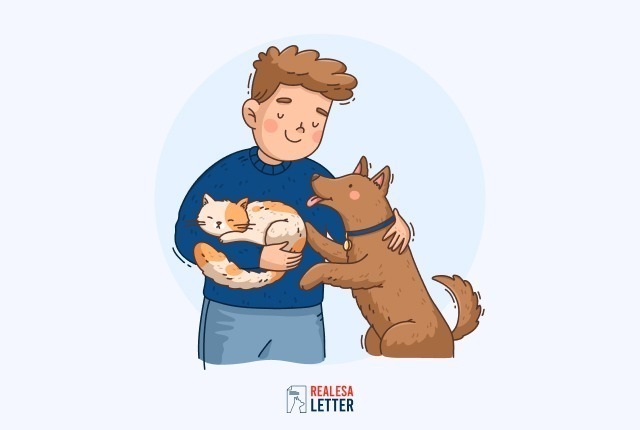
PSD letter for anxiety is clinical documentation used for reasonable housing accommodations under the Fair Housing Act and workplace or public access rights under the ADA.
This guide covers whether your anxiety qualifies, what symptoms the evaluator looks at, what the letter protects, and how the process works.
Does Anxiety Qualify for a PSD Letter?
Yes, anxiety can qualify for a PSD letter. The condition must substantially limit one or more major life activities. That is the legal threshold under the Americans with Disabilities Act (ADA) and the Fair Housing Act (FHA).
Not every person with anxiety meets this bar. Someone who experiences mild nervousness before presentations likely does not qualify. But someone whose anxiety makes it impossible to sleep through the night, hold a job, or leave their apartment without a panic attack very likely does.
The key question is not which diagnosis you have. It is how severely that diagnosis affects your daily functioning.
Generalized anxiety disorder (GAD), social anxiety disorder, panic disorder, agoraphobia, and PTSD-related anxiety can all potentially qualify, provided the functional impact is significant enough. If your anxiety is rooted in trauma, you may also want to review what qualifies for a service dog for PTSD, as the evaluation criteria overlap closely.
To understand the full scope of what a PSD letter is and how it works legally, see our full PSD letter guide.
What Anxiety Symptoms Qualify?
Licensed mental health professionals who conduct PSD evaluations are specifically looking for functional impairment. A diagnosis on paper is not enough. The following anxiety symptoms are among the most commonly cited qualifying factors:
Sleep disruption. Chronic insomnia, nightmares, hypervigilance at night, or an inability to sleep without significant medication or intervention. If your anxiety routinely prevents you from getting restorative sleep, that is a major life activity substantially limited.
Inability to work or maintain employment. Panic attacks during meetings, inability to commute, difficulty concentrating due to persistent worry, or having lost jobs due to anxiety-related absences or breakdowns. Work is explicitly listed as a major life activity under the ADA.
Difficulty leaving the home. Agoraphobia, avoidance behaviors, or severe social anxiety that causes you to cancel plans, miss medical appointments, or go days without stepping outside.
Panic in crowds or public spaces. Hyperventilation, dissociation, and overwhelming fear responses. Physical symptoms such as a racing heart, nausea, or dizziness triggered by stores, public transit, restaurants, or other community settings also count.
Persistent and intrusive worry. When anxiety is so constant and consuming that it impairs concentration, decision-making, or your ability to engage in routine tasks of daily living.
Avoidance of necessary activities. Skipping medical care, avoiding social obligations that affect your well-being, or being unable to perform self-care because anxiety makes it too overwhelming.
If several of the above describe your daily life, there is a strong case that your anxiety substantially limits major life activities. A psychiatric service dog task-trained to assist you could be medically appropriate.
What the PSD Letter Covers for Anxiety Handlers
A valid PSD letter provides two significant legal protections for people with anxiety.
- Fair Housing Act (FHA) - Housing Access
Under the FHA, landlords and housing providers must make reasonable accommodations for tenants with disabilities who require assistance animals. A PSD letter documenting your anxiety-related disability gives you the right to:
- Keep your psychiatric service dog in housing that otherwise has a no-pets policy
- Avoid pet deposits and pet fees that other tenants pay
- Live with your dog even in buildings with breed or size restrictions
This protection extends to most housing types, including apartments, condominiums, co-ops, student housing, and some short-term rentals. Landlords are permitted to request documentation. Your PSD letter serves as that documentation. They cannot demand your specific diagnosis or medical records.
- ADA - Public Access
Under the ADA, a trained psychiatric service dog has the legal right to accompany you in most public places. This includes restaurants, grocery stores, hotels, retail shops, airports, and more. Businesses may only ask two questions:
- Is this a service animal required because of a disability?
- What work or task has the dog been trained to perform?
For anxiety handlers, common trained tasks include deep pressure therapy during panic attacks, guiding the handler away from triggering environments, interrupting repetitive or harmful behaviors, and performing room checks to reduce hypervigilance at home.
Important: Unlike emotional support animals, psychiatric service dogs must be individually trained to perform a specific task related to your disability. The PSD letter documents your need.
Your dog's training determines ADA public access eligibility. If you are wondering whether you can train your dog yourself rather than using a professional program, read our guide on whether you can train your own PSD.
How the Evaluation Works for Anxiety
Getting a PSD letter involves a clinical evaluation with a licensed mental health professional (LMHP). This is typically a psychologist, licensed clinical social worker (LCSW), licensed professional counselor (LPC), or psychiatrist.
The evaluator is not simply checking whether you have an anxiety diagnosis. They are conducting a clinical assessment of functional impairment: how does your anxiety affect your ability to engage in major life activities? Here is what that process involves:
Clinical history review. The LMHP will want to understand the nature, duration, and severity. How long have you been experiencing symptoms? Have they worsened? What treatments have you tried?
Functional impact assessment. This is the core of the evaluation. The clinician will explore how anxiety affects your sleep, work, relationships, and daily routines. They will also assess your ability to participate in community life. Be specific. The more concrete examples you can provide, the more accurately the letter will reflect your situation.
Task appropriateness determination. The evaluator will assess whether a psychiatric service dog is a clinically appropriate intervention for your specific presentation. They may ask about your living situation, whether you have or are getting a dog, and what tasks the dog would perform.
Documentation and letter issuance. If the LMHP determines you meet the criteria, they issue a letter on their professional letterhead. The letter states that you have a disability that substantially limits major life activities and that a psychiatric service dog is recommended as part of your treatment.
You do not need to already own a dog to get a PSD letter. You also do not need a pre-existing relationship with the therapist in most cases, though some states have specific requirements.
ESA Letter vs. PSD Letter for Anxiety
Both ESA letters and PSD letters can be issued for anxiety. They provide very different protections, and understanding the difference matters.
An emotional support animal letter documents that you have a mental health condition and that the companionship of an animal provides therapeutic benefit. ESAs do not require task training. ESA letters only provide FHA housing protections.
They do not grant public access rights under the ADA, and airlines are no longer required to accommodate ESAs in the cabin. If in-cabin travel with your dog matters to you, a PSD is the only protected option.
A PSD letter documents that you have a disability and that a specifically task-trained psychiatric service dog is a medically necessary intervention. PSDs have both housing rights (FHA) and public access rights (ADA).
Getting a PSD letter requires demonstrating greater functional impairment and having a dog capable of performing trained tasks. It is also worth noting that a PSD is distinct from a therapy dog. If you are unsure of the difference, see our breakdown of therapy dog vs. PSD, as therapy dogs carry no federal access rights.
For anxiety specifically, if your primary need is housing accommodation and your anxiety is moderate, getting an emotional support animal letter online may be sufficient. If your anxiety is severe enough to substantially limit major life activities and you need your dog with you in public spaces such as workplaces, medical facilities, and stores, then a PSD letter is the appropriate path.
In summary, Anxiety can qualify for a PSD letter when it substantially limits how you sleep, work, or move through daily life. The letter itself is straightforward: a licensed professional evaluates your symptoms, assesses the functional impact, and documents that a psychiatric service dog is a necessary part of your care.
Once you have it, you gain real legal protections in housing and public spaces that an ESA letter alone cannot provide. If your anxiety has been holding you back, this is one of the most practical steps you can take.
If you are looking for a legitimate PSD letter for anxiety, connect with a licensed mental health professional at RealESALetter.com for a clinical evaluation and get your PSD letter online the same day.
Frequently Asked Questions
Does my anxiety automatically qualify me for a PSD letter?

No. An anxiety diagnosis alone is not enough. To qualify, your anxiety must substantially limit one or more major life activities such as sleeping, working, leaving your home, or caring for yourself. The evaluation is designed to assess functional impairment, not just the presence of a diagnosis.
What tasks can a psychiatric service dog perform for anxiety?
Common trained tasks for anxiety include deep pressure therapy (DPT) during panic attacks, tactile stimulation to interrupt dissociation, and guiding the handler away from triggering environments.
They may also include waking the handler from nightmares, performing perimeter checks to reduce hypervigilance, and retrieving medication. The task must be directly related to your specific anxiety symptoms.
Do I need an official diagnosis of anxiety before getting a PSD letter?
No, you do not necessarily need an official diagnosis of anxiety before getting a PSD letter. You must meet with a licensed mental health professional who can make a clinical determination based on your condition and symptoms.
If you already have a diagnosis from a previous provider, you can share it during your evaluation. If not, the LMHP may still complete a clinical interview and assessment to understand your symptoms and functional impairment.
What matters most is how your condition affects your daily functioning, which the clinician can evaluate even without prior documentation. RealESALetter.com connects you with a licensed mental health professional who conducts a proper clinical evaluation and issues a valid PSD letter if you qualify.
Dr. Avery Langston is a health and wellness writer with 12+ years of experience covering ESA rights, housing laws, and mental health. As a senior contributor for RealESALetter, she helps readers understand ESA regulations and legal protections.

Precious Lester is a licensed mental health counselor and qualified supervisor licensed by the Florida Board of Clinical Social Work, Marriage and Family Therapy and Mental Health Counseling, with active licenses across 21 states.

Wherever you travel, your dog goes with you.
Trained, documented, federally protected
- 1A few questions. That's your paperwork
- 2A licensed therapist reviews your case
- 3Official PSD letter, ready to send
Not accepted? Full refund, guaranteed