Sign In / Create Account
FSA and HSA Rules for Psychiatric Service Dogs-2026
Psychiatric service dog (PSD) expenses qualify for FSA and HSA reimbursement under IRS Publication 502, provided the dog is individually trained to perform tasks for a diagnosed psychiatric disability and you have a Letter of Medical Necessity (LMN) from a licensed clinician.

A trained psychiatric service dog is one of the most expensive pieces of medical equipment you will ever own, and the IRS treats it as exactly that: the costs of buying, training, and maintaining the dog are qualified medical expenses you can pay with pre-tax dollars.
This guide covers what qualifies, what doesn't, how FSA and HSA rules differ, what your LMN must say, and how to file a claim that survives an audit.
Key Takeaways
Eligibility: PSD expenses are qualified medical expenses under IRS Publication 502 when the dog is task-trained for a diagnosed disability.
What qualifies: The dog's purchase, task training, veterinary care, food, grooming, and working gear are all reimbursable; ordinary pet costs like insurance and boarding are not.
The gate: A Letter of Medical Necessity issued before the expense is incurred is what plan administrators check first.
ESAs differ: Emotional support animals that provide comfort without trained tasks generally do not qualify.
Account choice matters: FSA funds mostly expire each plan year, while HSA funds roll over forever, a real difference for a multi-year expense.
Claim defense: A complete claim file holds three things, the signed LMN, itemized receipts, and documentation of the dog's trained tasks.
Do Psychiatric Service Dogs Qualify as a Medical Expense Under IRS Rules?
Yes. IRS Publication 502 lists the costs of buying, training, and maintaining a guide dog or other service animal as qualified medical expenses when the animal assists a person with a diagnosed disability.
The IRS applies the same standard the Americans with Disabilities Act uses: the dog must be individually trained to do work or perform tasks for a person with a disability. A psychiatric disability counts the same as a physical one, a dog trained to interrupt panic attacks with deep pressure therapy, wake its handler from night terrors, or retrieve medication meets the test just as a mobility dog does.
The IRS confirmed this position in its own guidance on service animals for taxpayers with disabilities. Two conditions carry the entire eligibility question: a diagnosed medical or psychiatric condition, and specific trained tasks that mitigate it.
If you're at the beginning of that process, the first step is to qualify for a psychiatric service dog letter online through an evaluation with a licensed mental health professional, the clinical documentation comes before the tax benefits do.
For a full breakdown of what qualifies a dog in the first place, see our guide to what a psychiatric service dog is and how to qualify.
Why ESAs Usually Don't Qualify for FSA and HSA Funds, and PSDs Do
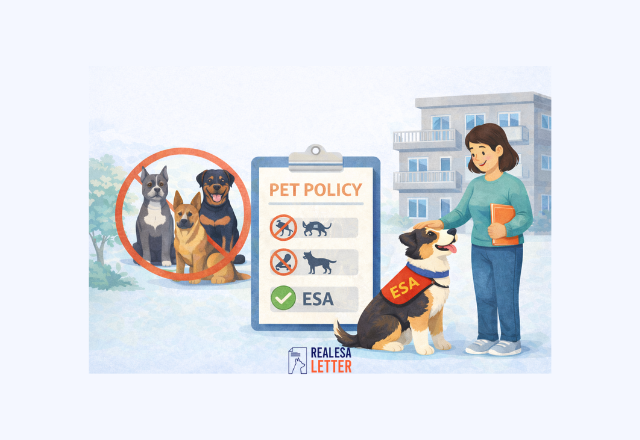
Emotional support animals generally do not qualify for FSA or HSA funds, because the IRS follows the task-training standard: comfort alone is not a trained task. An ESA that helps you by its presence, without performing specific, trained work tied to your condition, falls outside the plain language of Publication 502. Plan administrators apply this line strictly.
That doesn't make ESA-related reimbursement impossible, but it requires stronger medical substantiation and depends heavily on administrator discretion.
If you're unsure which category your animal falls into, start with the difference between a service dog and an ESA, the distinction decides your tax treatment.
FSA vs HSA for a Psychiatric Service Dog: Which Rules Apply?
Both accounts apply the same IRS eligibility test to your PSD, the difference is how the accounts themselves work.
Here are the rules side by side for 2026.
FSA Rules for a Psychiatric Service Dog
An FSA covers PSD expenses within one plan year, on a use-it-or-lose-it basis.
- Any employee whose employer offers a health FSA can use it for qualified service dog expenses, no special health plan required.
- The 2026 FSA contribution limit is $3,400, with a maximum carryover of $680 if your plan allows one.
- Unused FSA funds above the carryover are forfeited at the end of the plan year, so FSA money suits expenses you can complete within the year: the evaluation, a training program, or annual vet care.
- Your full annual FSA election is available on day one of the plan year, even before you've contributed it.
HSA Rules for a Psychiatric Service Dog
An HSA lets you accumulate pre-tax funds across years toward large PSD costs, because HSA balances never expire.
- Only people enrolled in a high-deductible health plan (HDHP) can contribute to an HSA.
- The 2026 HSA contribution limit is $4,400 for self-only coverage and $8,750 for family coverage, plus a $1,000 catch-up at age 55 and older.
- HSA funds roll over indefinitely and the account is yours even if you change jobs, the right vehicle for saving toward a service dog's purchase price over multiple years.
- You can only spend what you have actually contributed to the HSA.
If you have access to both accounts, assign each expense to one account before you spend, the same receipt cannot be reimbursed from both.
Which Psychiatric Service Dog Expenses Are FSA and HSA Eligible, and Which Aren't
Purchase, training, veterinary care, food, and grooming all qualify, but only as costs of maintaining a working service animal, not a pet. Publication 502's coverage runs from acquisition through ongoing upkeep:
Eligible | Not eligible |
Purchase or adoption cost of the dog | Costs for a pet that performs no trained tasks |
Task-training programs, classes, and training equipment | Pet insurance premiums |
Veterinary care and prescribed medications | Boarding or pet-sitting for convenience |
Food and grooming that maintain the working animal | Toys and non-working accessories |
Working gear, vest, harness, leash used for tasks | Licensing done for ordinary pet ownership |
The dividing principle is the IRS's "but for" test: expenses count when you would not have paid them but for the disability the dog mitigates. Food for a working service dog is medical maintenance; the same bag of food for a house pet is not. Keep itemized receipts for every line item, categories don't get reimbursed, receipts do.
PSD Housing Fees vs FSA/HSA Eligibility: What HUD Changed in 2026, and What the IRS Didn't
HUD's 2026 rule change affects what landlords can charge for your psychiatric service dog, it does not affect what your FSA or HSA covers.
Before May 22, 2026: Under HUD's FHEO Notice 2013-01 and FHEO-2020-01, assistance animals, including psychiatric service dogs, were categorically exempt from pet deposits, pet rent, and pet fees under the Fair Housing Act. |
After May 22, 2026: HUD permanently rescinded both notices, replacing the automatic fee exemption with an individualized, ADA-style assessment of each accommodation request. Your right to live with a task-trained PSD remains protected; fee outcomes now depend on that review. |
Your FSA and HSA are unaffected: Pet deposits and pet rent were never qualified medical expenses under IRS Publication 502, before the rescission or after. Your dog's purchase, training, and care remain FSA and HSA eligible exactly as before. |
The Letter of Medical Necessity for FSA and HSA Service Dog Claims: What It Must Say
An LMN from a licensed mental health professional or physician must state your diagnosed condition and that the service dog is required to treat or mitigate it, and it must exist before you incur the expense.
FSA and HSA administrators recognize qualified expenses only from the date the letter is issued; retroactive letters are not accepted.
RealESALetter.com clinicians document the diagnosed condition and the dog's trained tasks, the two elements FSA and HSA administrators check before approving a psychiatric service dog claim.
A complete LMN Identifies:
- Your diagnosed medical or psychiatric condition
- The clinician's statement that a service dog is medically necessary to treat or mitigate it
- The clinician's license credentials and signature
- The issue date
Most administrators expect the letter to be the current plan on annual renewal for ongoing expenses like food and vet care.
Does a Self-Trained PSD Qualify for FSA and HSA Reimbursement?
Yes, the ADA does not require professional training, and a self-trained psychiatric service dog qualifies for FSA and HSA purposes if it performs specific tasks for a diagnosed disability.
Owner training changes what you claim, not whether you can claim. Your reimbursable line items become the structured training program fees, task-training equipment, and working gear rather than a professional organization's package price.
Documentation matters more for self-trainers: a training log recording the tasks taught and demonstrated strengthens your claim file if an administrator asks how the dog qualifies as a service animal.
The full self-training process is covered in our guide to training your own psychiatric service dog.
How to Submit an FSA or HSA Claim for Your PSD, and Survive an Audit
A complete claim file contains three things: the signed LMN, itemized receipts for each expense, and documentation of the dog's trained tasks.
Administrators and the IRS scrutinize animal-related claims more closely than typical medical expenses, so build the file before you need it:
Secure the LMN first.
Qualified expenses count from its issue date forward, nothing before.
Pay with your FSA/HSA card or file a reimbursement claim.
Do it through your administrator's portal, attaching the receipt and LMN when requested.
Keep itemized records.
Keep vet invoices, training receipts, food and grooming purchases, in a dedicated folder alongside the LMN.
Retain everything for audit defense.
If a claim is denied, an appeal with the LMN, receipts, and task documentation resolves most disputes.
Every RealESALetter.com PSD letter includes the clinician's state license number and direct contact information, which plan administrators can verify independently during claim review.
The Bottom Line
Psychiatric service dog expenses are FSA and HSA eligible under IRS Publication 502 when two things are true: the dog is task-trained for a diagnosed condition, and a Letter of Medical Necessity exists before you spend. The IRS rules haven't changed even as housing rules have, so the sequence stays the same: documentation first, then pre-tax spending, then careful receipts.
If you haven't completed that first step yet, get evaluated for a psychiatric service dog letter before your next dog-related expense, so every dollar after it counts.
Frequently Asked Questions
Can I use both my FSA and HSA for the same service dog expense?

No. A single expense can only be reimbursed once, from one account. You can split different expenses across the two accounts, but the same receipt cannot be claimed twice.
Is a psychiatric service dog tax-deductible instead?
FSA/HSA spending and tax deductions are separate mechanisms. Pre-tax account funds are the simpler route for most people; itemized medical expense deductions follow different thresholds and cannot double-count expenses already paid with pre-tax dollars.
Does my FSA or HSA cover the psychiatric service dog evaluation itself?
Yes. The clinical evaluation with a licensed mental health professional, the appointment that produces your Letter of Medical Necessity, is itself a qualified medical expense you can pay with FSA or HSA funds, and every later service dog claim depends on the documentation it produces.
What are reimbursable PSD expenses under an FSA or HSA account?
Reimbursable psychiatric service dog expenses under both FSA and HSA rules include the dog's purchase or adoption cost, task-training programs and equipment, veterinary care, food, grooming, and working gear like a vest or harness, everything IRS Publication 502 treats as buying, training, and maintaining a service animal. Costs of ordinary pet ownership, such as pet insurance, boarding for convenience, or toys, are not reimbursable.
What happens if my FSA or HSA claim for a service dog is denied?
Appeal through your FSA administrator or HSA provider with the Letter of Medical Necessity, itemized receipts, and the dog's task-training documentation. Service dog claim denials most often happen when the LMN is missing, expired, or dated after the expense was incurred.
Dr. Alex Morgan is a specialized writer focusing on animal assisted therapy, ESA rights, and psychiatric service dogs. With extensive research experience, he helps readers navigate ESA and PSD documentation and understand service animal rights accurately at RealESALetter.

Tina Logan is a Licensed Marriage and Family Therapist with 20+ years of clinical experience and an active California Board of Behavioral Sciences license. She conducts ESA and psychiatric service dog evaluations for RealESALetter assessing whether an ESA or task-trained PSD is clinically appropriate.

Don't worry. Your pet stays with you.
Housing law is on your side
- 1A few questions. That's your paperwork
- 2A licensed therapist reviews your case
- 3Official ESA letter, ready to send
Not accepted? Full refund, guaranteed